
Cloud Economics for AI Workloads: What Executives Get Wrong About Cost
Most executives approve AI cloud spending based on the wrong numbers.
They compare a GPU instance's hourly rate to a data center rack cost. They calculate training costs and present them as the AI budget. They benchmark against competitors' announced model launches without understanding the ongoing inference bill. They sign multi-year cloud commitments before they understand their actual workload shape.
Then they wonder why the economics never close.
Cloud costs for AI workloads are structurally different from traditional SaaS or data workloads. The failure modes are different. The optimisation levers are different. And the vendor lock-in risks are deeper than most executives realise until it's too late to renegotiate.
Here's what actually matters.
The Mistake Executives Make First: Confusing Training With Operating Cost
When a company announces it trained a model, the cost headline is always the training run. GPT-4 reportedly cost over $100M to train. Llama 3 70B cost Meta tens of millions. These numbers are real and they're large.
They're also almost irrelevant to your AI budget.
Unless you're a frontier model lab, you're not training foundation models from scratch. You're fine-tuning existing models, running inference against third-party APIs, or deploying open-source weights on your own infrastructure. The dominant cost in any production AI system isn't training - it's inference.
Inference is what happens every time a user submits a query, every time your fraud model scores a transaction, every time your document processing pipeline reads a contract. It happens continuously. At scale. And it compounds.
A company running 10 million inference calls per day at $0.002 per call spends $7.3M per year on inference alone. A company that optimises that cost by 40% saves $2.9M without changing a single line of product code. That's the number executives should be focused on - not the one-time training cost that appears in the press release.
GPU Instance Economics: The Comparison That Misleads
The standard executive pitch for cloud AI goes like this: an NVIDIA H100 costs $30,000–$40,000 to buy. On AWS, the same GPU runs at about $32/hour on an ml.p4d.24xlarge. At 730 hours per month, that's roughly $23,000 per month, or $276,000 per year - well above hardware cost. Therefore cloud is expensive.
This analysis is wrong in almost every way.
First, the on-premises comparison ignores the full stack. Raw GPU cost excludes: networking ($5,000–$15,000 per node for InfiniBand), storage (NVMe at scale is expensive), power and cooling (AI clusters run at 10–40kW per rack), facility and space, systems engineers to manage the cluster (one FTE at $200,000+ per year), and the 18-month lead time to procure and install. A realistic all-in cost for a comparable on-prem cluster is 2–3x the GPU hardware cost, deployed over 3–5 years, with no flexibility to scale down.
Second, cloud GPU utilisation is rarely 100%. If you're paying for an H100 instance but it's idle 40% of the time because your workload is bursty, your effective cost per GPU-hour is 67% higher than the rack rate.
Third, the comparison only matters for stable, predictable workloads. If you genuinely need 500 H100s continuously for three years, on-premises or co-location is worth modelling seriously. If your AI workload is experimental, seasonal, or still finding product-market fit, cloud's flexibility premium is worth paying.
The right comparison isn't cloud versus hardware. It's cloud versus the full-cost alternative, matched to your actual workload shape and risk tolerance.
This is a Premium Article
Sign up for a Premium membership to read this article and get full access to strategic intelligence on technology and business.
Already a member? Sign in
Related Articles
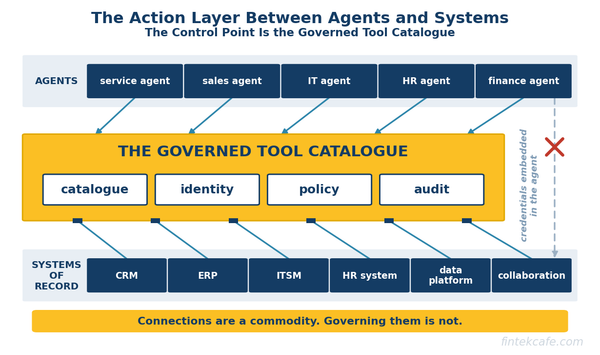
Integration Platforms Are the Quiet Winners of the Agent Era
Agents act through integrations. iPaaS and API vendors hold the connectors, credentials and audit trails, and MCP makes governing that layer worth more.
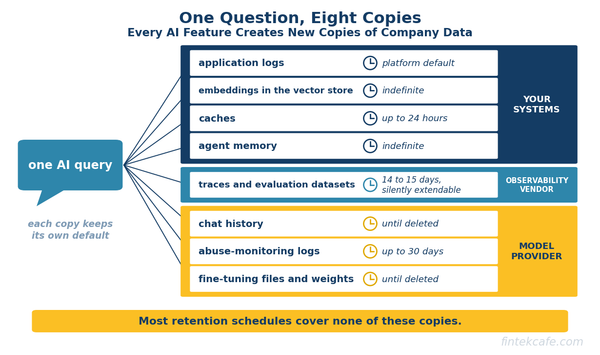
What Happens to Your Data Inside AI Systems: Retention, Deletion and the Copies Nobody Tracks
Every AI feature copies company data into prompts, logs, embeddings and memory. Where each copy lives, what vendors retain, and how to make deletion real.
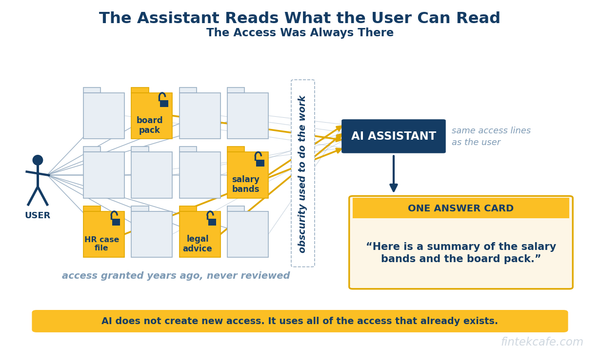
Data Classification: The Step Every Enterprise AI Rollout Skips, and What It Costs Later
Why AI assistants expose overshared data, how data classification fixes it, what to label first, and a 90-day plan for executives.