
AI Pricing Models Are Breaking: The Per-Seat SaaS Era Is Ending
The renewal conversation goes the same way at every enterprise software vendor right now. The customer has deployed AI features that the vendor packaged into the existing per-seat license. Adoption is high. Productivity is measurable. The customer is therefore paying for fewer seats than the year before, because each remaining seat does the work of two or three. The vendor's net revenue retention has gone negative on accounts where the underlying product is performing better than ever.
This is not a transition problem that will resolve itself with better packaging. It is a pricing model failure. Per-seat pricing rested on a single assumption: that the human was the unit of value. AI agents kill that assumption. One human supervising five agents creates more output than five humans did, but the SaaS vendor still charges for one seat.
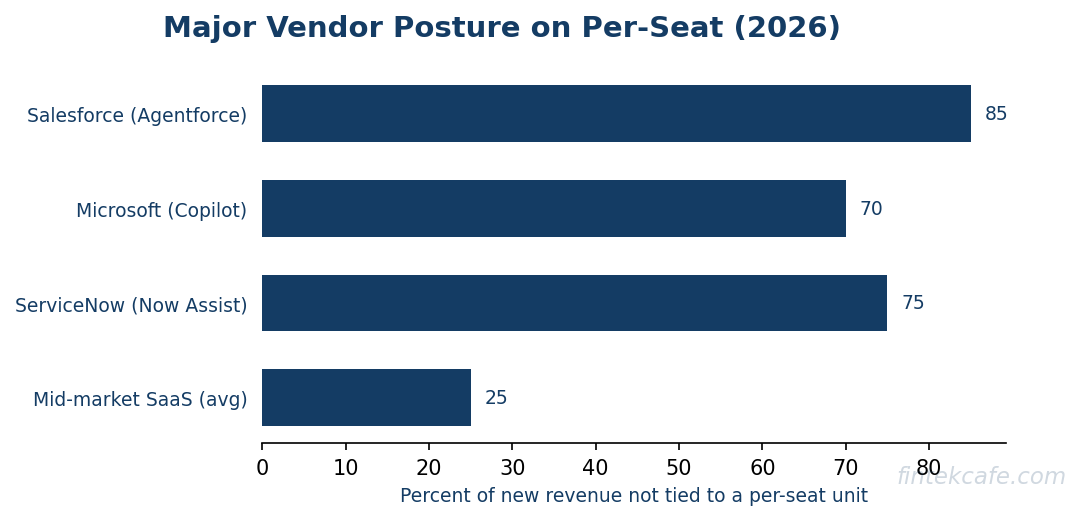
The vendors with serious AI strategies have already accepted that per-seat is finished. Salesforce, Microsoft, and ServiceNow are not experimenting with consumption pricing. They are moving to it. The mid-market SaaS vendors that built their growth model on per-seat expansion are about to discover that their unit economics no longer work, and most of them have not yet updated their public guidance to reflect what is happening in actual renewals.
Why Per-Seat Worked for Twenty-Five Years
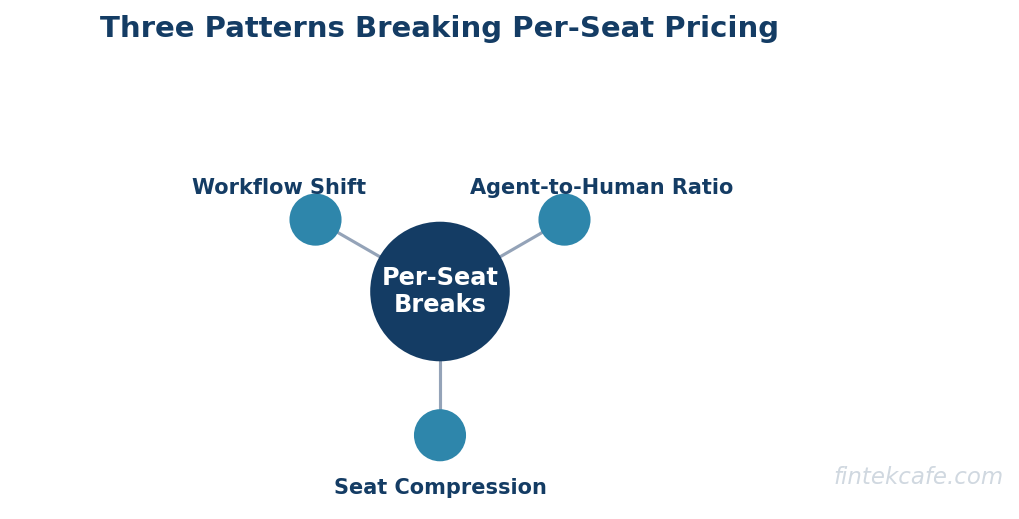
Per-seat pricing emerged because it solved three problems at once for the vendor and one problem for the buyer.
For the vendor, it provided predictable revenue, a clean expansion vector, and an alignment between cost of service and price. Adding a seat cost the vendor almost nothing in compute or storage, but yielded fixed incremental revenue. Customer growth automatically translated into vendor growth. Sales motions optimized around landing a small seat count and expanding it.
For the buyer, it offered budget predictability. Procurement could forecast next year's software spend by forecasting headcount. The model required almost no measurement infrastructure. If usage was light, the buyer slightly overpaid. If usage was heavy, the buyer slightly underpaid. The deviations averaged out, and the simplicity was worth the inefficiency.
The model held because the human was indeed the unit of value. A salesperson with a CRM closed more deals than a salesperson without one. A support agent with a ticketing platform handled more cases than one without. A marketer with an automation tool ran more campaigns. Each seat represented a human whose output the software was amplifying.
The math has changed.
What AI Agents Break
An AI agent is not a seat. It is software performing work that previously required a human. When a sales development team replaces three of five SDRs with an AI agent that books meetings around the clock, the work output goes up while the seat count goes down. Under a per-seat model, the vendor is now selling less software to a customer doing more work.
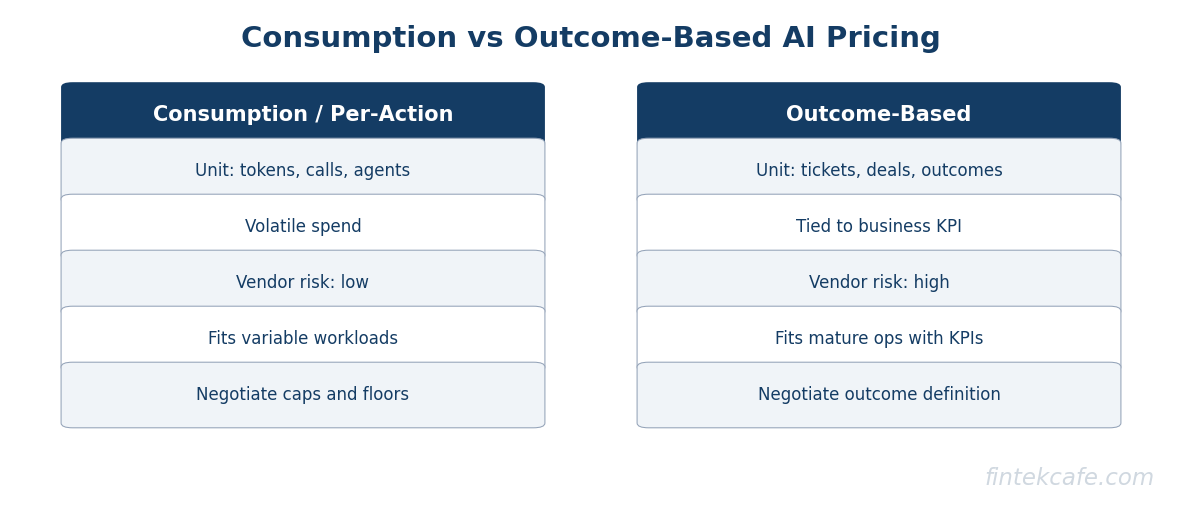
The breakage is not theoretical. It is showing up in three measurable patterns across the industry.
The first pattern is seat compression. Customer-service organizations using AI co-pilots routinely run with thirty to fifty percent fewer agents than they did two years ago, while handling equal or higher ticket volumes. The seat count compresses. The vendor revenue tied to seat count compresses with it.
The second pattern is what vendors privately call the agent-to-human ratio. Inside customer organizations, the typical pattern is no longer one human using one software tool. It is one human supervising or directing several AI agents, each running inside the software platform. The platform is doing more work than ever, but the seat count understates that work by an order of magnitude.
The third pattern is the workflow shift. Tasks that previously required a human to log in, click through a sequence of screens, and complete the workflow are now executed by AI agents on behalf of the human. The agent never logs in as a separate seat. It runs under the human's credential or a service account. From the vendor's perspective, the seat appears the same. From the work-output perspective, the seat is doing five times the work.
Per-seat pricing prices the seat. The seat is no longer the unit that matters.
This is a Premium Article
Sign up for a Premium membership to read this article and get full access to strategic intelligence on technology and business.
Already a member? Sign in
Related Articles
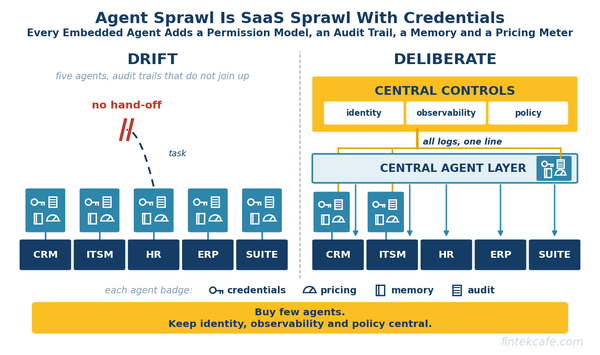
Every Software Vendor Now Sells an Agent, and Most Enterprises Should Buy Very Few of Them
Buying an agent from every system of record recreates SaaS sprawl one layer up. How CIOs should choose, and which controls must stay central.
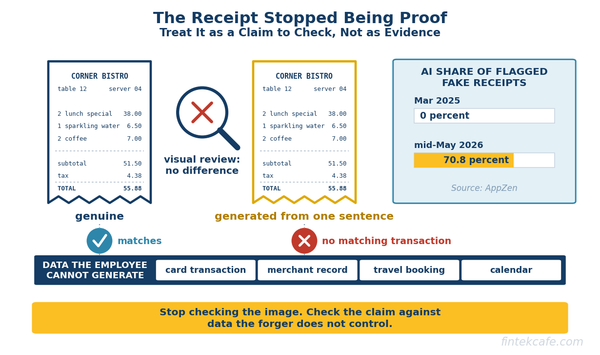
AI-Generated Fake Receipts: How Expense Fraud Changed and How Finance Teams Catch It
AI-generated fake receipts now beat visual review. How expense fraud changed, which detection still works, and the controls to use by company size.
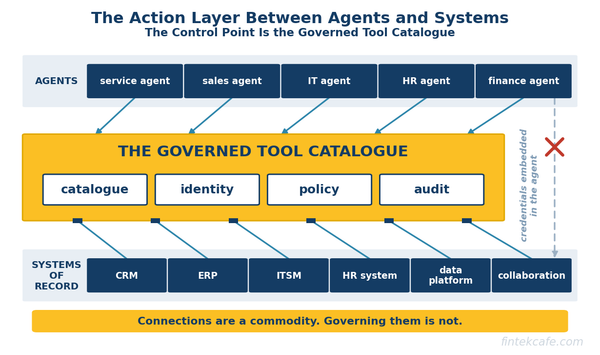
Integration Platforms Are the Quiet Winners of the Agent Era
Agents act through integrations. iPaaS and API vendors hold the connectors, credentials and audit trails, and MCP makes governing that layer worth more.