
Who Keeps the AI Productivity Gain: Customers, Workers or Margins?
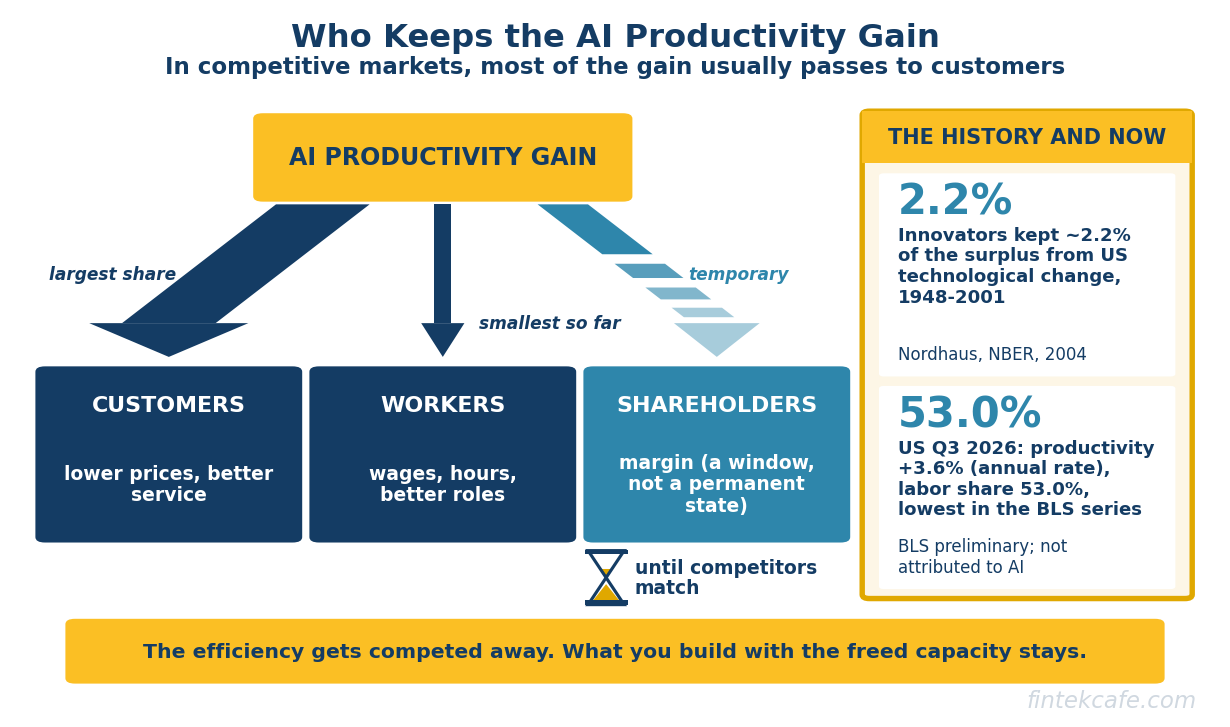
US labor productivity grew at a 3.6 percent annual rate in the third quarter of 2026, as output rose 3.7 percent while hours worked barely moved, according to the Bureau of Labor Statistics' preliminary release of November 5, 2026. In the same release, real hourly compensation rose 1.1 percent, and labor's share of nonfarm business output fell to 53.0 percent, which the agency describes as the lowest level in the series. The BLS does not attribute any of this to AI, and neither should anyone else yet. But the release frames the question every AI business case avoids: when work gets cheaper to do, who ends up with the difference?
Every AI investment memo promises a productivity gain. Almost none says who keeps it. There are only three candidates: customers, through lower prices or better service at the same price; workers, through higher wages or shorter hours; and shareholders, through wider margins. The split between them decides whether an AI programme is a strategy or merely a cost line that competitors will match.
The thesis of this piece: in competitive markets, most of the gain passes to customers through lower prices within a few years, so the durable advantage is not the efficiency itself but what a company does with the capacity it frees, and how fast it reprices before competitors force it to. Margin gains are real but temporary unless something protects them. Worker gains so far are small. The decision for a CEO and CFO is not whether to capture the gain, which competition largely decides, but where to bank it while the window is open, where to reinvest it, and when to give it away on purpose.
The Three Claimants, and the Historical Default
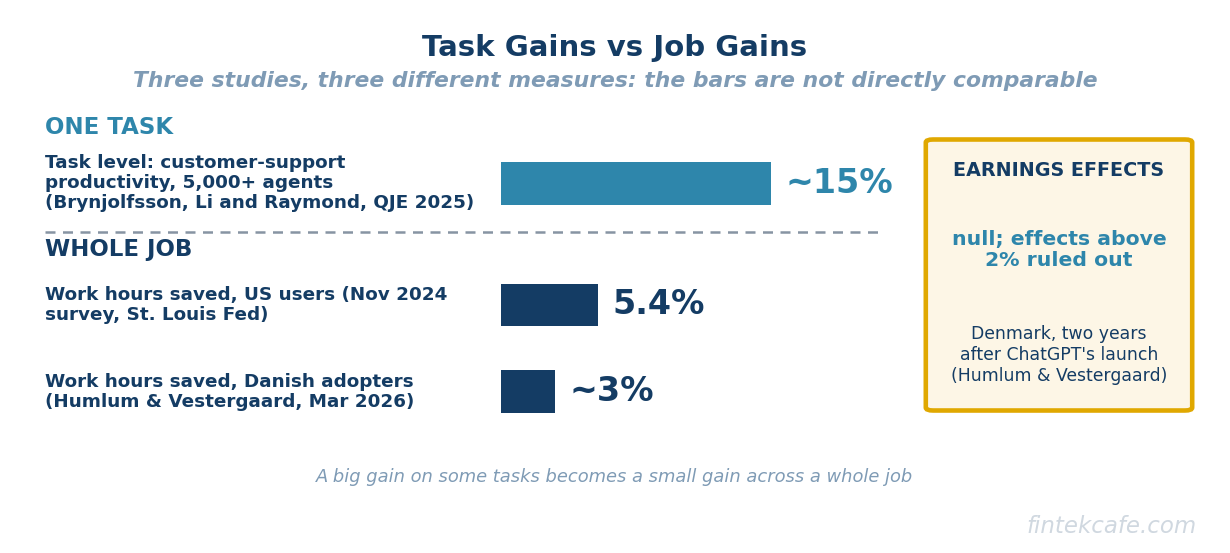
History has a strong default answer, and it is not shareholders. The Yale economist William Nordhaus, in an NBER working paper published in 2004 ("Schumpeterian Profits in the American Economy"), estimated that innovators in the US nonfarm business sector captured only about 2.2 percent of the total surplus created by technological change between 1948 and 2001. The rest went mostly to consumers, through lower prices and better products. The NBER's own summary of the paper concedes that the estimates "may seem implausibly low," and later work has argued about the exact share, but no serious estimate reverses the direction: in competitive markets, the gains from new technology flow overwhelmingly to buyers.
The mechanism is simple. When one firm cuts its cost of serving a customer, it enjoys a margin windfall. When its competitors adopt the same tool, and general-purpose technologies are by definition available to everyone, the cost advantage disappears and competition pushes prices down towards the new, lower cost. The windfall lasts as long as the adoption gap lasts.
General-purpose technologies also arrive slowly in the statistics. Robert Solow wrote in the New York Times Book Review in July 1987 that "you can see the computer age everywhere but in the productivity statistics." Paul David's 1990 study of electrification, "The Dynamo and the Computer," showed that factories took decades to reorganize around electric motors before productivity jumped. Economists now call this the productivity J-curve: firms invest first in reorganization, which depresses measured output, and the gains arrive later.
That history gives executives a useful map of the three claimants:
| Claimant | How they capture the gain | When they win |
|---|---|---|
| Customers | Lower prices, more for the same price, better service | Competitive markets, transparent costs, commoditized outputs, powerful buyers |
| Workers | Higher wages, fewer hours, better roles | Scarce complementary skills, tight labor markets, strong bargaining power, AI that augments rather than replaces |
| Shareholders | Wider margins, returned capital | Switching costs, proprietary data or distribution, regulatory barriers, slow competitor adoption |
The rest of this piece applies that map to the evidence so far, industry by industry, and turns it into decisions.
This is a Premium Article
Sign up for a Premium membership to read this article and get full access to strategic intelligence on technology and business.
Already a member? Sign in
Related Articles
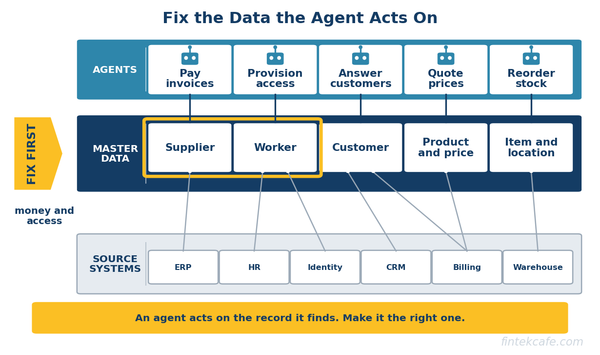
Master Data for AI: Why Agents Fail on Bad Reference Data, and What to Fix First
Master data for AI agents: why agents fail on bad reference data, which domains to fix first, and the quality bar each agent use case needs.
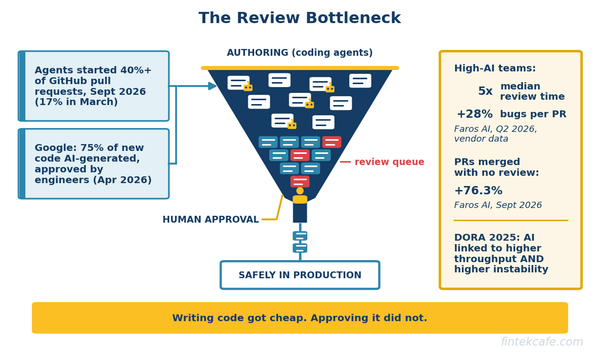
The Review Bottleneck: When Coding Agents Write Faster Than Engineers Can Approve
Coding agents made writing code cheap. Reviewing and owning it did not get cheaper. Why approval is the new constraint and what a CTO should change.
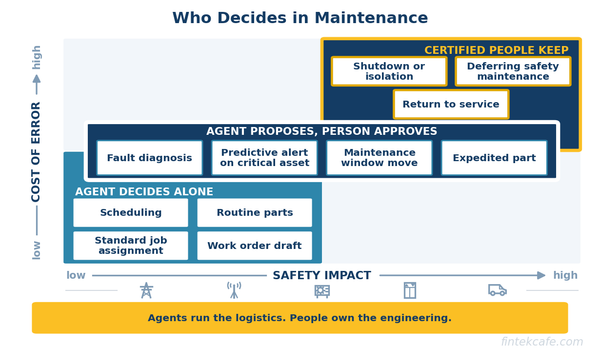
AI in Field Service and Maintenance: What Predictive and Agentic Tools Can Decide, and What Technicians Keep
AI in field service and maintenance for executives: which decisions agents can take alone, which they propose, and which stay with technicians.