
Why Most Enterprise AI Projects Fail Before They Start
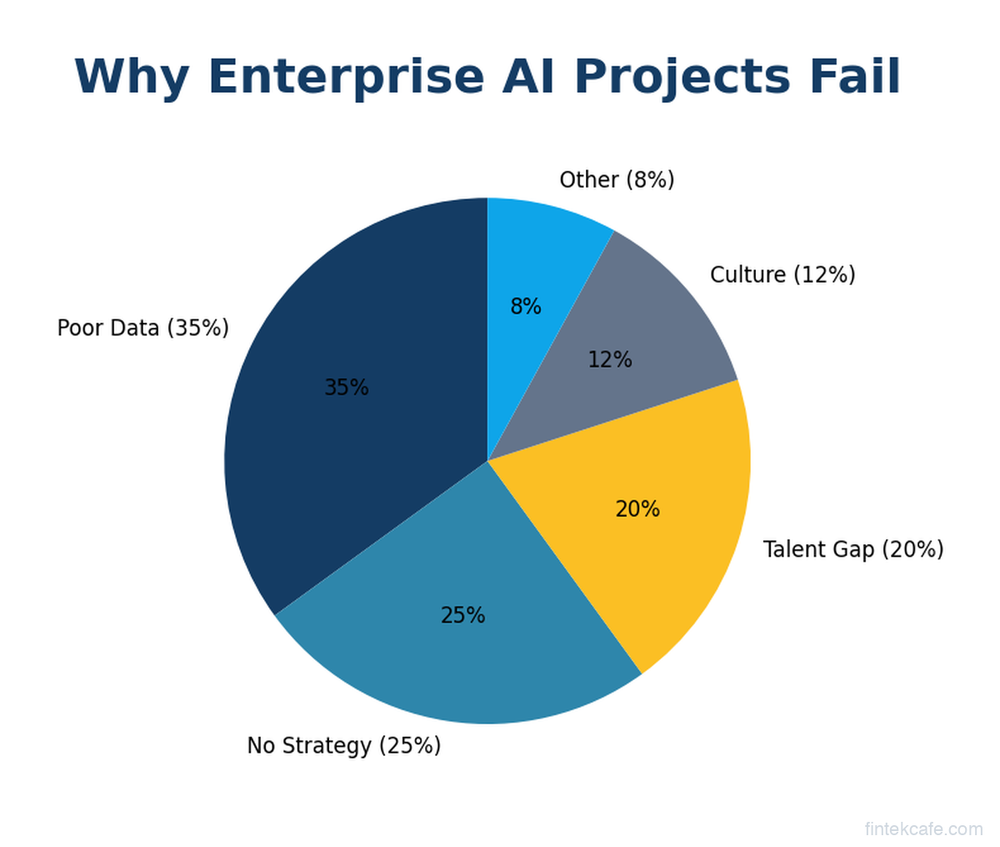
Here's a statistic that should bother anyone planning an AI initiative: according to Gartner, roughly 85% of AI projects fail to deliver their intended business value. McKinsey puts the number slightly lower but arrives at the same conclusion. The vast majority of enterprise AI projects either never reach production, or reach production and fail to generate measurable ROI.
The reflex explanation is "AI is hard." The technology is immature, the talent is scarce, the data is messy. There's truth in all of that. But the evidence from dozens of organizations attempting AI initiatives points to a different conclusion: the real problem is upstream of the technology.
Most enterprise AI projects fail because they start with the wrong question. They start with "How can we use AI?" instead of "What business problem costs us the most, and could AI solve it better than our current approach?"
The distinction sounds subtle. It's not. It's the difference between a million-dollar experiment and a million-dollar investment.
The "Solution Looking for a Problem" Trap
Every hype cycle produces the same organizational behavior. A new technology captures executive attention. The CEO reads about it in the Wall Street Journal, hears about it at a conference, watches a competitor announce an initiative. They walk into a meeting and say: "What's our AI strategy?"
This question, innocuous and well-intentioned, triggers a cascade of bad decisions.
The technology team scrambles to identify AI use cases. They brainstorm dozens of possibilities. Chatbots for customer service. Predictive analytics for sales. Document processing for legal. Fraud detection for finance. Demand forecasting for operations. The list is long, exciting, and completely disconnected from any rigorous analysis of business impact.
A use case gets selected, often based on which team has the most enthusiasm or which demo impressed the executives most. A proof of concept is built. The POC works beautifully in a controlled environment with clean data and a sympathetic audience. Leadership is impressed. Budget is allocated for production deployment.
And then reality hits.
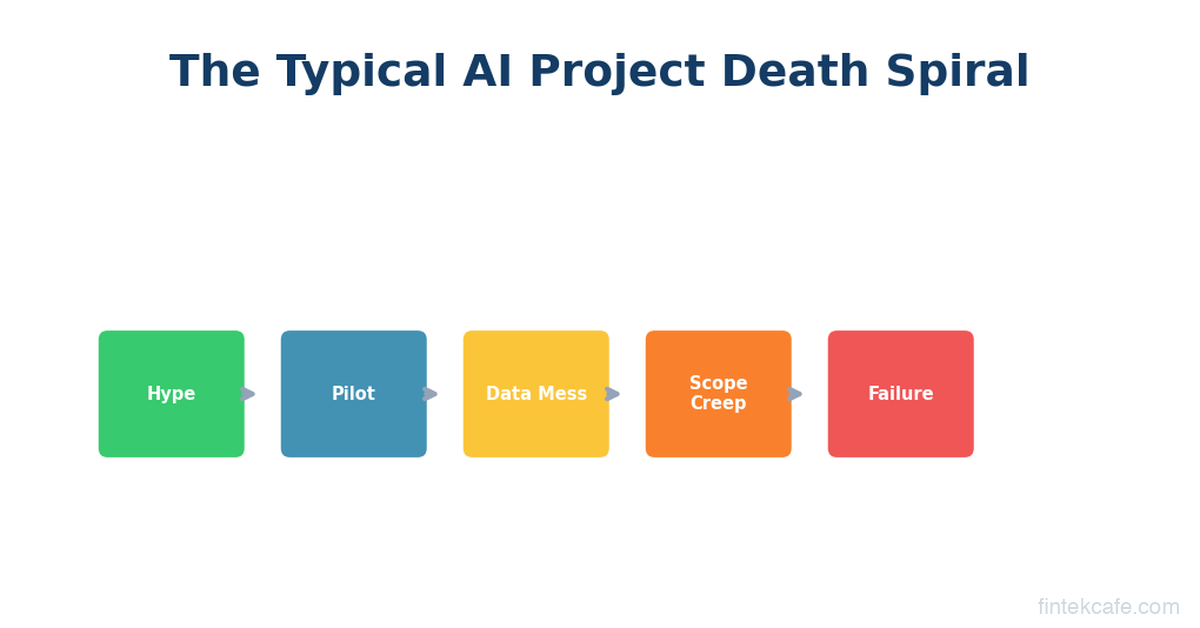
The production data is nothing like the POC data. Integration with existing systems takes three times longer than estimated. The model's accuracy in the real world is 15 percentage points lower than in the lab. The end users don't trust the output and develop workarounds to avoid using it. Six months later, the project is quietly shelved, and the organization concludes that "AI isn't ready for our industry."
AI was fine. The problem selection was wrong.
Why POCs Succeed and Production Fails
The gap between proof of concept and production deployment is where most AI projects die. Understanding why reveals the structural challenges that organizations underestimate.
POCs use clean, curated data. Production uses the real thing. A POC team manually selects and cleans a sample dataset that represents the ideal scenario. Production data includes edge cases, missing fields, format inconsistencies, duplicate records, and data that's been corrupted by years of manual entry. A fraud detection model trained on clean historical data may fail spectacularly when confronted with the messy, incomplete transaction records that exist in the actual production database.
POCs operate in isolation. Production requires integration. The POC runs as a standalone system. The production version needs to integrate with the CRM, the ERP, the data warehouse, the customer portal, the reporting system, and the compliance monitoring platform. Each integration point is a potential failure mode. Each system has different data formats, different availability guarantees, and different update cycles.
POCs don't need to handle scale or latency. Processing 1,000 records in a POC is different from processing 10 million records daily in production. A model that takes 30 seconds to generate a prediction is fine in a demo. It's useless in a real-time customer interaction that needs a response in under 200 milliseconds.
POCs skip the human element. The POC is evaluated by the project team, who built it, understand it, and want it to succeed. Production deployment means putting the tool in front of end users who didn't ask for it, don't understand it, and will revert to their existing process at the first sign of imperfection.
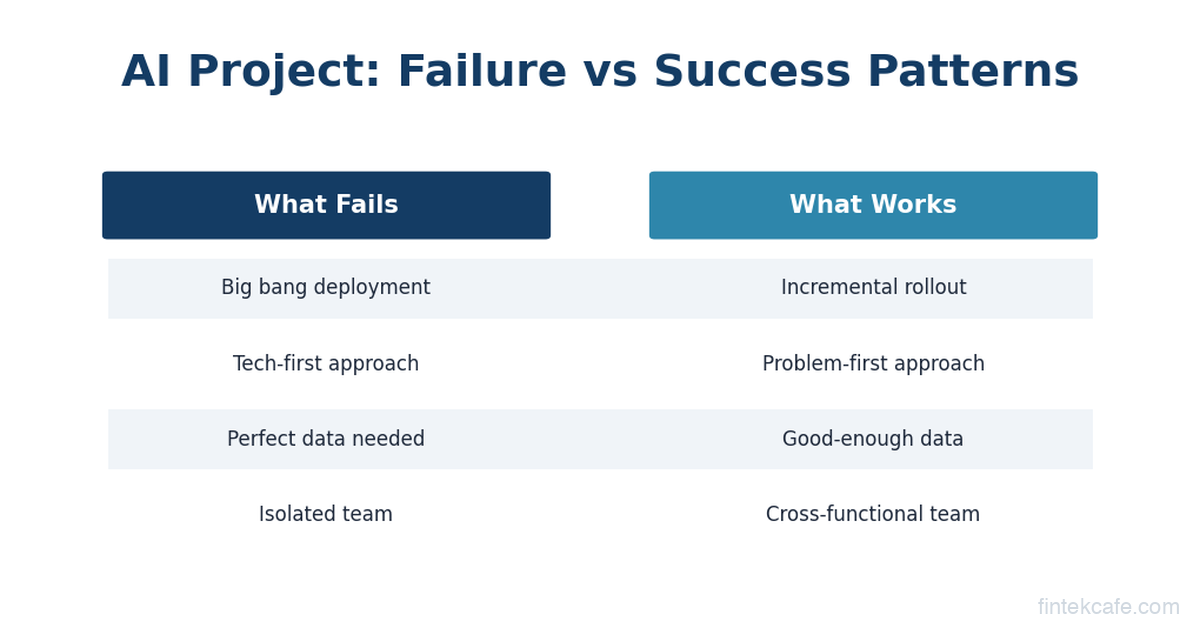
The companies that successfully cross the POC-to-production gap share a specific trait: they plan for production requirements from day one, before writing a single line of model code. They start with the integration architecture, the data pipeline, the latency requirements, and the user workflow. The model is the last thing they build, not the first.
This is a Premium Article
Sign up for a Premium membership to read this article and get full access to strategic intelligence on technology and business.
Already a member? Sign in
Related Articles
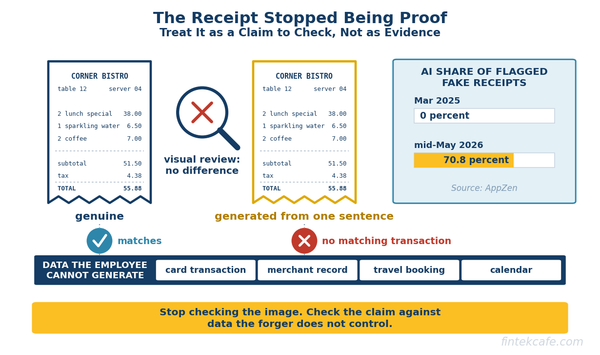
AI-Generated Fake Receipts: How Expense Fraud Changed and How Finance Teams Catch It
AI-generated fake receipts now beat visual review. How expense fraud changed, which detection still works, and the controls to use by company size.
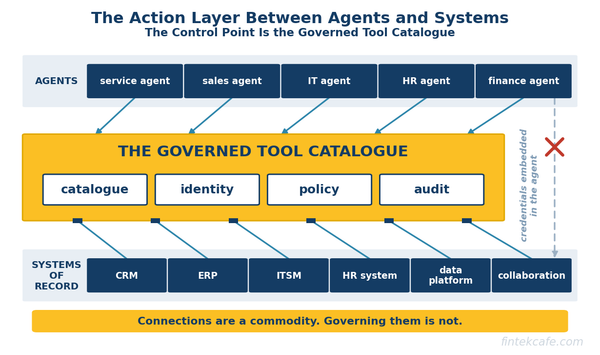
Integration Platforms Are the Quiet Winners of the Agent Era
Agents act through integrations. iPaaS and API vendors hold the connectors, credentials and audit trails, and MCP makes governing that layer worth more.
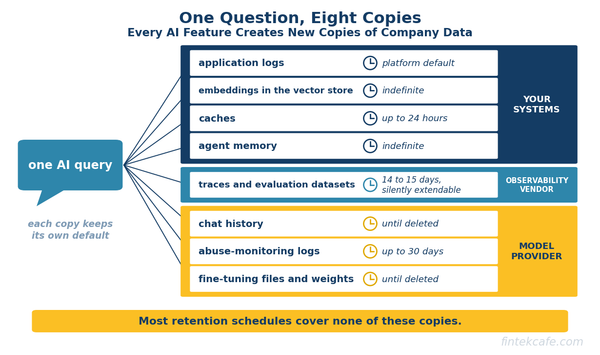
What Happens to Your Data Inside AI Systems: Retention, Deletion and the Copies Nobody Tracks
Every AI feature copies company data into prompts, logs, embeddings and memory. Where each copy lives, what vendors retain, and how to make deletion real.