
Technology for Business and Finance Executives: Understand the Technology Driving Your Industry
Understand the Technology Driving Your Industry
For professionals, business executives, and decision makers building the future in technology and finance.
Every major business decision today has a technology component. Cloud migrations, API integrations, vendor contracts, cybersecurity audits, data strategy. The executives who understand what's underneath these conversations make better decisions, negotiate better deals, and lead their organizations with more confidence.
But most technology education is built for engineers. It assumes you want to write code, configure servers, or build applications. You don't. You need to understand what your teams are building, what your vendors are selling, and what your competitors are investing in — clearly enough to ask the right questions and make the right calls.
This course is built for that. Twelve structured modules covering the technology stack that runs modern business and finance. Written for executives who are smart, motivated, and busy. No code. No command lines. Just the knowledge you need to lead effectively in a technology-driven industry.
Who This Is For
Finance Executives Navigating Digital Transformation
Your bank, fund, or insurance company is spending millions on technology — cloud platforms, data pipelines, digital channels, cybersecurity tools. You sit in meetings where terms like "API gateway," "Kubernetes," and "zero trust" are used with the assumption that everyone understands them. This course gives you the structured knowledge to participate in those conversations as a decision maker, not a bystander. You'll understand what you're approving, what you're buying, and where the real risks sit.
Business Leaders Making Technology Decisions
You're evaluating SaaS vendors, signing cloud contracts, approving infrastructure budgets, or leading a build-vs-buy discussion. The technology choices your organization makes today will define its capabilities and cost structure for years. This course gives you the vocabulary, the frameworks, and the judgment to make those decisions well — and to spot when a vendor is overselling or your team is underestimating complexity.
Product Managers at Fintech Companies
You work at the intersection of business and engineering, and you know that the product managers who understand the technology layer deeply are the ones who ship better products and earn more trust from their teams. This course fills the gaps between what you picked up on the job and what a structured technology education actually covers — from how databases work to what DevOps really means to how authentication systems protect your users.
Banking Professionals Adapting to New Technology
The financial services industry is being reshaped by technology — from core banking modernization to open banking APIs to AI-driven compliance tools. Whether you're in operations, risk, compliance, or relationship management, the professionals who understand the technology layer have a career advantage. This course is designed to give you that advantage without requiring you to become a technologist.
What You'll Learn
After completing this course, you will be able to:
- Evaluate cloud infrastructure proposals and understand what you're actually buying when a vendor says "cloud-native" or "multi-region"
- Ask the right questions during vendor demos and contract negotiations — the questions that separate informed buyers from easy targets
- Understand API-first architecture and why it matters for your business strategy, your partnerships, and your competitive positioning
- Navigate cybersecurity and compliance conversations with confidence — from encryption standards to SOC 2 audits to incident response planning
- Make informed build vs buy vs partner decisions by understanding the real tradeoffs in cost, control, speed, and long-term flexibility
- Understand how modern software is built, deployed, and maintained — from code commits through CI/CD pipelines to production monitoring
- Lead technology strategy discussions with CTOs, CIOs, and engineering teams from a position of knowledge rather than deference
- Assess technical debt and its impact on business priorities — and understand why your engineering team keeps asking for time to "pay it down"
Course Format
- Self-paced written modules — read anywhere, anytime, on any device
- 12 modules, approximately 6 hours of reading total
- Short video supplements (1-3 minutes each) for key concepts — architecture diagrams, workflow animations, framework overviews
- Quiz after each module to test understanding and reinforce retention
- "Questions to Ask Your Team" sidebar in every module — ready-to-use in your next meeting
- Comparison tables, real company case studies, and downloadable templates
- Updated for 2026
The 12 Modules
- The Executive's Technology Landscape — Why every finance executive is now a technology executive, whether they chose it or not. The build vs buy vs partner framework for evaluating any technology decision. How to read a technology landscape and understand where your organization sits within it.
- SaaS — What You're Actually Buying — What multi-tenancy means for your data and your negotiating position. Subscription economics and how SaaS vendors make money. Vendor lock-in and the contract clauses that create it. How to evaluate SaaS deals and avoid the traps that cost organizations millions.
- Cloud Computing — Where Your Data Lives — AWS, Azure, and GCP explained for non-engineers. The difference between IaaS, PaaS, and SaaS and when each model fits. Regions, availability zones, and why they matter for latency and compliance. Cloud cost management — why bills spiral and how to control them.
- APIs — How Software Talks to Software — What a REST API actually is and why it matters for your business. Webhooks and real-time data flows. API-first businesses like Stripe and Plaid, and why API strategy is business strategy. Open Banking APIs and their impact on financial services.
- Authentication & Identity Management — SSO, OAuth, and SAML explained without the acronym soup. Multi-factor authentication and why SMS codes are the weakest option. Zero trust architecture and what it means for your organization. Biometrics, passwordless authentication, and where the industry is heading.
- Enterprise IT Fundamentals — Block storage vs object storage and why it matters for cost and performance. Content delivery networks and how they make global applications fast. Load balancers, caching, and the architecture decisions that determine whether your systems scale. Disaster recovery planning and what "five nines" actually costs.
- Databases — Where Business Data Lives — SQL vs NoSQL and when each makes sense. Data lakes, data warehouses, and data pipelines — the infrastructure behind every analytics and AI initiative. Data governance, data quality, and why "we have the data" usually means "we have a mess."
- DevOps & Software Delivery — CI/CD pipelines and why modern software ships daily instead of quarterly. Containers and Kubernetes — what they are and why your engineering team cares about them. Monitoring, alerting, and incident management. What it means when your CTO says "we need to invest in DevOps."
- Cybersecurity for Executives — Encryption at rest and in transit — what it protects and what it doesn't. Firewalls, penetration testing, and vulnerability management. SOC 2, ISO 27001, and the compliance frameworks that clients and regulators require. Incident response planning and cyber insurance — the executive's responsibilities when something goes wrong.
- Networking Fundamentals — DNS, HTTP/HTTPS, and TLS — how the internet actually works underneath your applications. TCP/IP for non-engineers. VPNs, latency, and why geography still matters in a "cloud-first" world. DDoS attacks and how organizations defend against them.
- Vendor Evaluation & Tech Due Diligence — How to write an RFP that gets useful responses. Contract negotiation for technology deals — the clauses that matter and the ones vendors hope you'll skip. Proof of concept vs pilot — when to use each and how to evaluate results. Red flags that signal a vendor isn't what they claim.
- Building a Technology Strategy — How to map your current technology stack and identify gaps. Understanding technical debt and making rational decisions about when to address it. Technology budgeting that aligns with business priorities. Building a technology roadmap. How to work effectively with your CTO or CIO — asking the right questions, setting the right expectations, and building the right relationship.
Pricing
$147 — One-Time Payment
Lifetime access to all 12 modules, quizzes, video supplements, downloadable templates, and all future updates. Pay once, own it forever.
Early-Bird: $97 — available to the first 100 buyers (2-week window). Same course, same lifetime access, lower price for early supporters.
Enroll Now — Lifetime Access →
Executive Bundle — $147
Get both Technology for Executives and AI Basics for Executives together. Two complete courses, 23 modules, covering the full technology and AI landscape that every modern executive needs to understand. Save $47 versus buying separately.
All-Access — $197
All three FinTekCafe courses: Technology for Executives, AI Basics for Executives, and the Digital Payments Masterclass. 33 modules covering technology, AI, and payments. The most comprehensive executive technology education available online. Save $94 versus buying all three separately.
$15/month — FinTekCafe Pro Membership
Access every premium article in the FinTekCafe Pro library — fintech analysis, salary guides, neobank deep dives, and more. Pro members also get 20% off all courses. New material added regularly. Cancel anytime.
All options include a 30-day money-back guarantee. If you complete fewer than four modules and don't find the course worth the investment, email us within 30 days and we'll issue a full refund — no questions asked.
Frequently Asked Questions
How long does this course take to complete?
Plan for roughly 6 hours of core reading across all 12 modules — about 25-35 minutes per module at a focused reading pace, plus the short video supplements. There's no fixed schedule and no deadline. Some people work through it in a weekend. Others do one module per week over three months. The content stays accessible indefinitely, so you can go at whatever pace fits your calendar.
Do I need a technical background?
No. This course is designed specifically for professionals who don't code and don't have engineering degrees. Module 1 starts from first principles — what the technology landscape looks like, how to think about technology decisions, and how the pieces connect. Every concept is explained in business terms first, with technical detail layered in where it's useful. If you can follow a financial model, you can follow this course.
I already understand some of these topics. Will the whole course still be valuable?
Most executives have a solid grasp of one or two areas — maybe cloud because they led a migration, or cybersecurity because they went through an audit. But almost everyone has blind spots. The value of this course is comprehensive, structured coverage across the full stack. Even in modules where you have some familiarity, the "Questions to Ask Your Team" sidebars and the vendor evaluation frameworks tend to surface angles you haven't considered.
How is this different from an MBA technology course or a LinkedIn Learning series?
MBA courses teach technology at a strategic level but often skip the operational details that matter when you're actually making decisions. LinkedIn Learning courses tend to teach individual tools or concepts in isolation, optimized for completion certificates rather than deep understanding. This course sits in between — strategic enough to inform executive decisions, detailed enough that you'll actually understand what's happening. It's written by practitioners, not professors, and updated for what the technology landscape actually looks like in 2026.
Is the content specific to financial services?
The course is relevant to executives in any industry, but examples and case studies lean toward financial services, fintech, and banking because that's the FinTekCafe audience. If you work in finance, the examples will feel directly applicable. If you work in another industry, the technology concepts are universal — only the case studies will be sector-specific.
What format are the video supplements?
Short clips, typically 1-3 minutes each, that illustrate key concepts visually — architecture diagrams, workflow animations, framework overviews. They supplement the written modules rather than replace them. You can complete the course entirely through reading if you prefer, but the videos help concepts click faster, especially for visual learners.
Can my company purchase this for a team?
Yes. We offer corporate pricing for teams of five or more. Contact us for per-seat pricing, invoicing, and any custom requirements. Corporate purchases include the same lifetime access and money-back guarantee.
What if I want to upgrade later?
If you purchase the Technology for Executives course individually and later want the Executive Bundle or All-Access package, we'll credit your original purchase toward the upgrade. Just email us and we'll send you a discounted upgrade link.
Can I access this on mobile?
Yes. The course is primarily text-based with short video supplements. Everything loads and reads cleanly on any phone or tablet browser. You can work through modules on your commute, between meetings, or anywhere you have a few minutes.
What's the refund policy?
If you complete fewer than four modules and don't find the course valuable, contact us within 30 days of purchase. We'll issue a full refund — no forms, no lengthy process, no questions asked. We're confident the course delivers real value, and we want you to feel confident buying it.
Built for the Executives Who Shape the Industry
Built by technology and finance practitioners. Written for the people who make the decisions. Updated for 2026.
Enroll for $147 — Lifetime Access →
Early-bird: $97 for the first 100 buyers.
Get the Executive Bundle (Tech + AI) for $147 →
Get All-Access (All 3 Courses) for $197 →
Or start a FinTekCafe Pro membership for $15/month and get premium fintech articles and 20% off all courses.
30-day money-back guarantee. No risk.
Related Articles
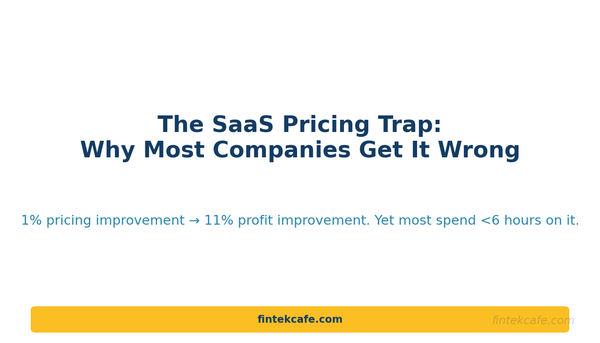
The SaaS Pricing Trap: Why Most Companies Get It Wrong
Per-seat pricing is dying, usage-based creates volatility, and most SaaS companies underprice by 30-50%. Pricing is the most underinvested function in tech.
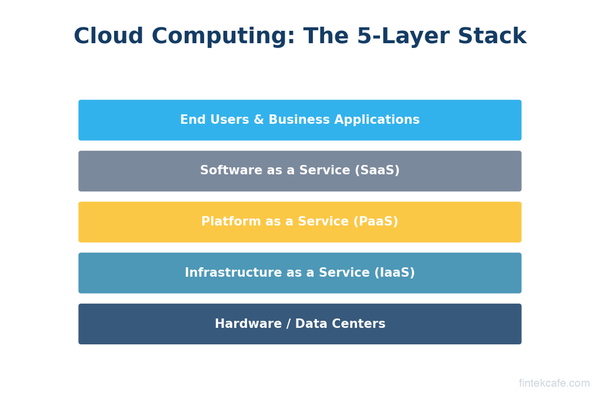
What Is Cloud Computing? A Complete Guide for Business Leaders
What is cloud computing and why does it matter for your business? A plain-English guide to IaaS, PaaS, SaaS, cost models, migration, and security for executives.
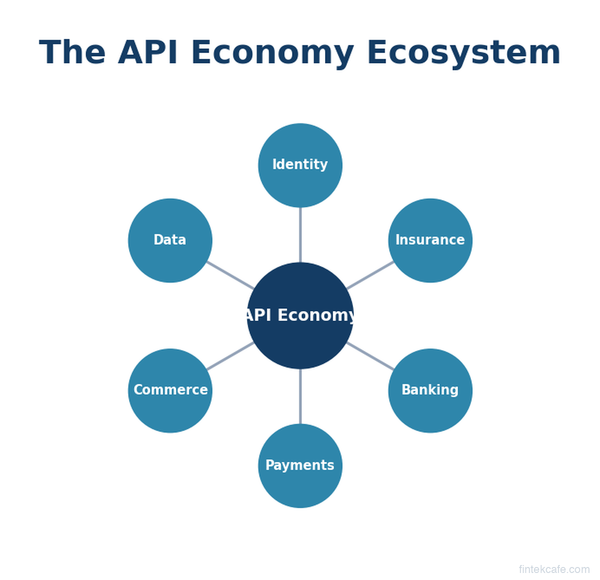
The API Economy Explained: How APIs Create Billion-Dollar Businesses
What is the API economy? Learn how APIs power Stripe, Twilio, and Plaid, why API strategy matters for every business, and how to evaluate API partnerships.