
ai
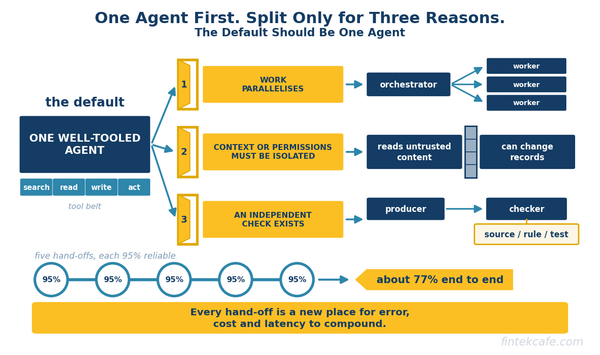
Multi-Agent Systems: When Splitting Work Across Agents Helps, and When It Multiplies Failure
Most tasks run better on one well-tooled agent. Multi-agent systems pay off only for parallel work, isolated context or independent checks.
Most tasks run better on one well-tooled agent. Multi-agent systems pay off only for parallel work, isolated context or independent checks.
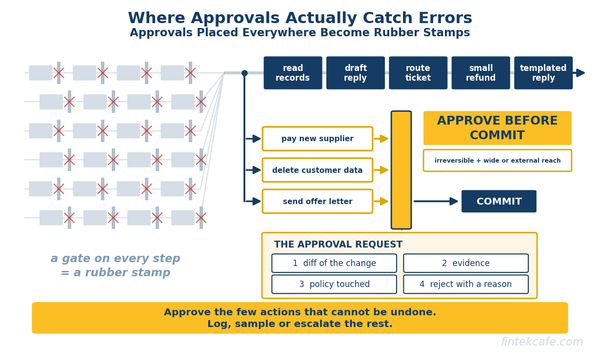
Agent approvals catch errors only at irreversible actions, with a clear diff, at a pace reviewers can read. Where to put them, and how to tell they work.
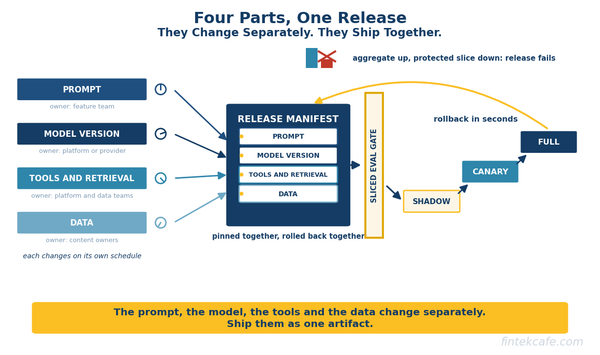
An LLM feature has four parts that change on their own. Release them as one versioned artifact behind an eval gate. The rules, tables and build order.
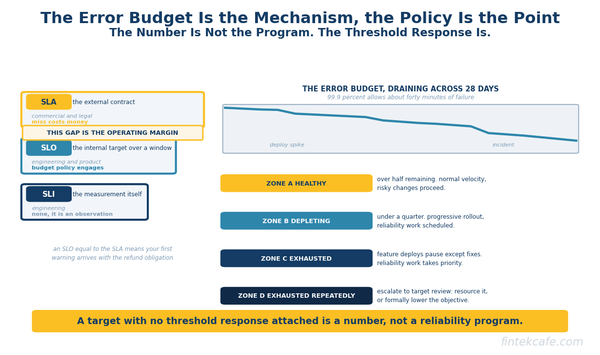
SLI, SLO, and SLA are three different things. How to pick targets users can perceive, and why the error budget policy is the only part that changes behavior.
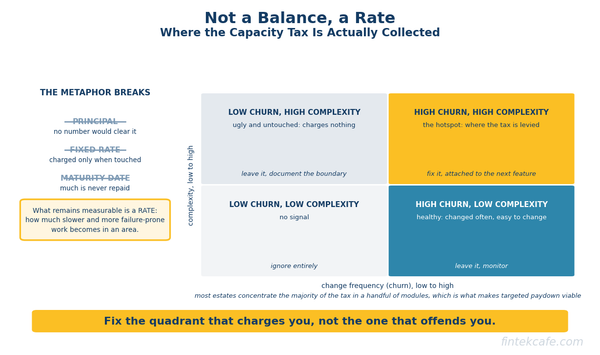
Technical debt has no principal and no fixed rate. The proxy metrics that work, why dedicated debt sprints fail, and how to frame it for a CFO.
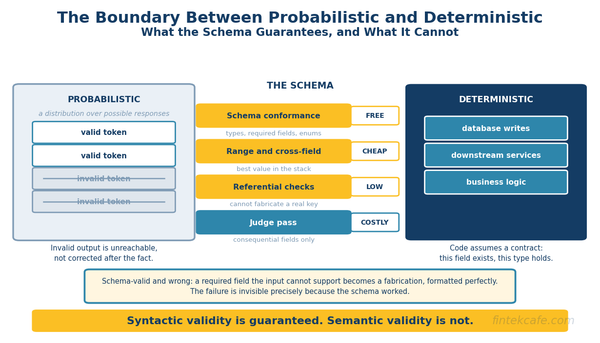
Constrained decoding against a schema, not prompt-and-parse, is how to get reliable JSON from an LLM. Schema design, validation layers, and failure modes.
Deep analysis across the systems, strategies, and economics that shape modern technology.
Premium Members Get: Exclusive deep-dive research · Architecture playbooks · Executive briefings · Full archive access