
The CIO Override: Why 2026 Is the Year IT Quietly Cancels the AI Pilots Marketing Demanded
The wave of generative AI pilots that swept through large enterprises between mid-2023 and the end of 2025 is being dismantled in 2026, and the dismantling is not happening for the reason most observers assume. The technology did not collapse. The model providers did not retreat. The pilots are being cancelled because the political configuration inside the enterprise has shifted, and the CIO now has the air cover to enforce return-on-investment gates that were waived on the way in.
For two and a half years, AI projects inside large companies were sponsored by the chief marketing officer, the chief digital officer, the board, or the chief executive directly. The CIO was expected to provide the infrastructure, the data access, and the security review on an accelerated schedule, and was discouraged from raising the kinds of objections that would have been raised against any other category of capital project. That period is ending. The 2026 CIO is enforcing the gates that were suspended for the AI category in 2023, and a significant portion of the pilot portfolio is failing those gates in sequence.
This is not a quiet course correction. It is a structural reordering of who decides what gets built and what gets killed inside the enterprise technology stack. Understanding the shift requires looking at the four post-mortem patterns that recur across the cancellations, the categories of projects that are absorbing the largest share of the cuts, and the framework that determines which pilots survive the override.
The Four Post-Mortem Patterns
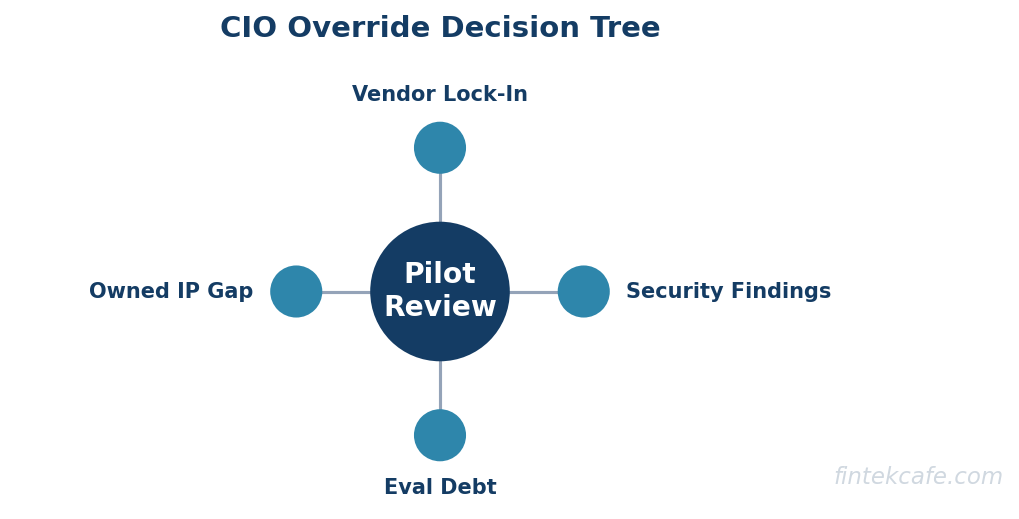
Across the cancellations and freezes that began landing in the first quarter of 2026, four patterns recur with enough consistency to be treated as categories rather than incidents.
Vendor Lock-In via Embedded Models
The first pattern is vendor lock-in that was not visible at procurement. A surprising share of the 2023-2024 generation of AI pilots embedded a specific model provider's API into business logic that is now difficult to disentangle. Prompt formats, tool-calling conventions, response schemas, and fine-tuning artifacts are all model-specific. The original procurement decisions assumed that swapping models would be straightforward. In practice, the cost of migration is high enough that the enterprise is structurally committed to whatever provider was selected in 2023, often without a renegotiation lever.
When the CIO audits the 2026 contract renewal, the leverage is one-sided. The provider knows the cost of migration and prices accordingly. The pilot that looked cheap at inception is now an expensive multi-year commitment that the business owner cannot easily reverse. This pattern is showing up in the post-mortem of cancelled pilots as the reason the program was killed before renewal rather than renewed at a higher rate.
Eval-Debt Accrual
The second pattern is what the engineering teams running these pilots have started calling eval-debt. The pilots launched without rigorous evaluation harnesses because the original sponsors valued speed and the visible demo over measurement. By 2026, the production systems have drifted, the model providers have shipped new versions that changed behavior, and the enterprise has no way to determine whether the current performance is acceptable, deteriorating, or improving.
Building the eval harness retrospectively is expensive. It requires labeled data, a golden test set, instrumentation, and a regression discipline that the original team did not implement. When the CIO requests the metrics that would justify continued investment, the metrics do not exist. The pilot cannot defend itself on the evidence the CIO is asking for, and the conversation ends with a freeze rather than a renewal.
Security Audit Findings on Prompt Injection and Data Exfiltration
The third pattern is the security audit. By 2026, the security organization has caught up on the AI category. Prompt injection attacks against retrieval-augmented systems, indirect injection through document ingestion, and data exfiltration through carefully constructed prompts are now standard items on the security review checklist. A meaningful share of the pilots launched in 2023 and 2024 cannot pass these checks without significant rework.
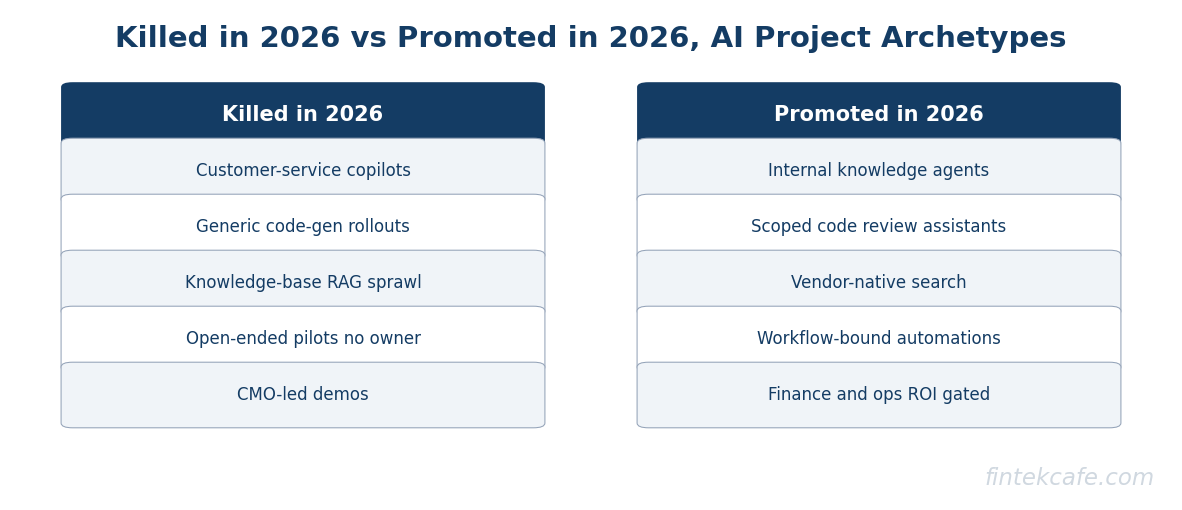
The customer-service copilot that was built to read tickets and respond to customers is vulnerable to crafted ticket content that exfiltrates internal data. The internal search assistant that was built on top of the document store is vulnerable to documents that contain instructions to leak. The code-generation tool that was given access to the repository is vulnerable to repository contents that instruct it to leak credentials. Each of these is now a finding on a security audit that the project owner cannot dismiss.
Infrastructure Spend Without Owned Intellectual Property
The fourth pattern is the strategic post-mortem. The original AI pilots were sold as a path to durable competitive advantage. By 2026, the CIO and the chief financial officer are asking what intellectual property the enterprise actually owns from two years of spending. The honest answer in most cases is that the enterprise owns prompts, some application glue code, and an integration with a vendor's API. The underlying model, the most expensive ingredient, belongs to the provider. The data flywheel that was supposed to create durable advantage has not materialized because the data flows back to the provider rather than into an asset the enterprise controls.
When framed this way, the spending looks like operational expense without an asset on the balance sheet. The CIO's argument to the board is that the next round of investment should produce owned intellectual property or measurable operational savings, and the pilots that cannot demonstrate either are being cancelled.
This is a Premium Article
Sign up for a Premium membership to read this article and get full access to strategic intelligence on technology and business.
Already a member? Sign in
Related Articles
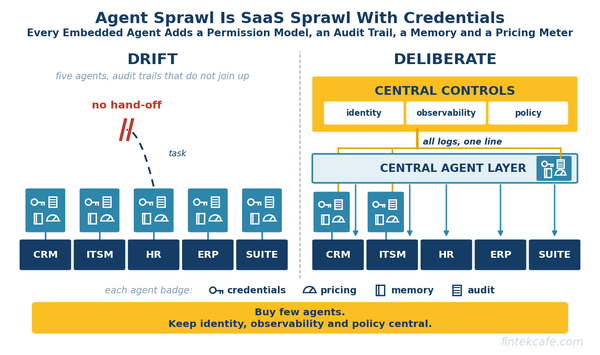
Every Software Vendor Now Sells an Agent, and Most Enterprises Should Buy Very Few of Them
Buying an agent from every system of record recreates SaaS sprawl one layer up. How CIOs should choose, and which controls must stay central.
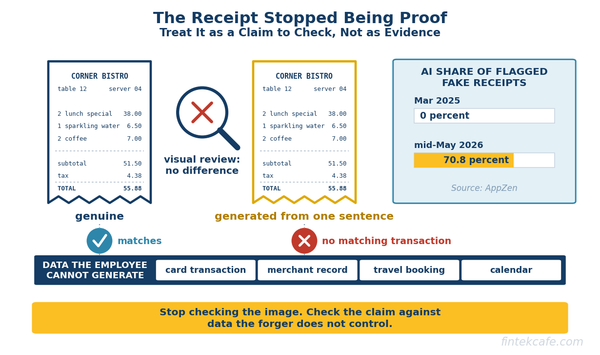
AI-Generated Fake Receipts: How Expense Fraud Changed and How Finance Teams Catch It
AI-generated fake receipts now beat visual review. How expense fraud changed, which detection still works, and the controls to use by company size.
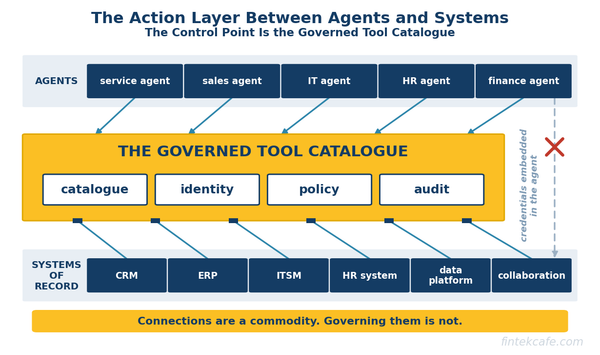
Integration Platforms Are the Quiet Winners of the Agent Era
Agents act through integrations. iPaaS and API vendors hold the connectors, credentials and audit trails, and MCP makes governing that layer worth more.