
Why Most Internal Developer Platforms Fail (And What Mature Ones Do Differently)
The all-hands slide reads "we built an Internal Developer Platform." There is a logo, a clever name, a Backstage instance with three tabs that load slowly, and a Kubernetes cluster that the platform team manages. The CTO is pleased. The promised outcomes are deployment frequency improvements, faster onboarding, and a happier engineering organization.
Eighteen months later, the engineers who actually ship code use the platform for two things: viewing dashboards and filing tickets. The deployment process still requires a Slack message to the platform team. New service onboarding still takes six weeks. Onboarding a new hire to first commit takes three weeks. The platform team has grown from four to eleven engineers. The deployment frequency has not moved.
This pattern is now common enough to be a category. Industry surveys from the past two years suggest that between 60 and 70 percent of Internal Developer Platforms launched since 2023 have failed to deliver measurable improvements in developer productivity. They have not been killed. They have been quietly downgraded to "internal tooling" while a new initiative gets pitched under a different name. The failure mode is structural, not technical. Four specific patterns recur, and the small population of successful platforms does four specific things the rest do not.
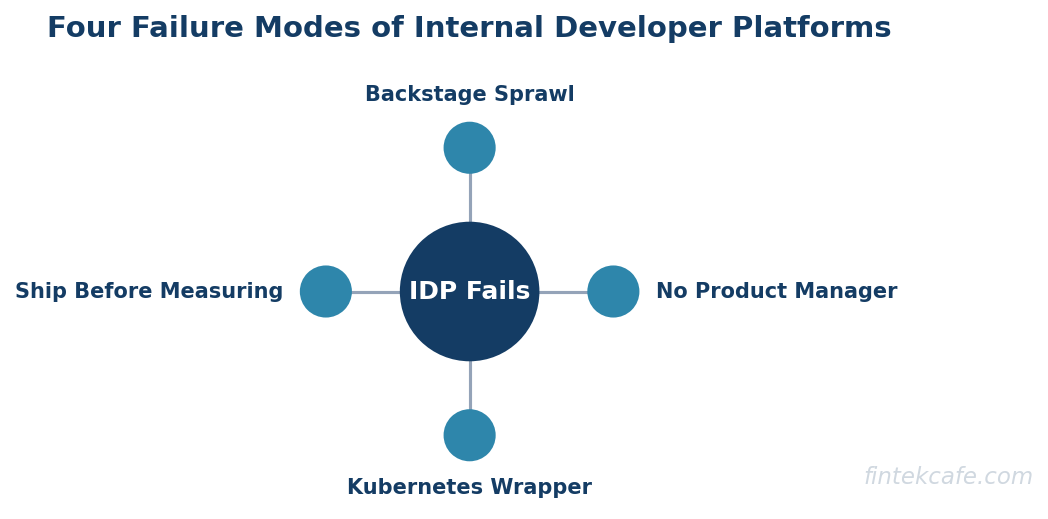
Failure Mode 1: The Kubernetes Wrapper
The most common pattern is the platform that is a Kubernetes wrapper with a friendlier name. The platform team learns Helm, Argo, and a service mesh. They write a few CRDs, glue together a CI runner, and call the result a developer platform.
The problem is that none of this raises the abstraction level for application engineers. A developer who wants to deploy a new service still needs to understand pods, namespaces, ingress controllers, secret management, and probably an internal RBAC model. The platform has rearranged the YAML rather than eliminating it. Application engineers still operate at the infrastructure layer. The cognitive load has been preserved, sometimes increased.
The original promise of a developer platform was that an engineer could go from idea to running service without writing infrastructure code. Mature platforms deliver that: a developer fills in a form or runs a single command, and a service is deployed with logging, metrics, secrets, alerting, and a pipeline already configured. The Kubernetes wrapper delivers the opposite. Every option is exposed, every choice is the developer's, and the platform's contribution is a shared cluster the developer must understand to use.
The diagnostic question is simple. Ask any application engineer to describe what the platform does for them. If the answer requires the words "namespace," "manifest," or "Helm values," the platform has shipped infrastructure with a logo.
Failure Mode 2: The Platform Without Product Management
The second pattern is the platform built by infrastructure engineers for infrastructure engineers. The platform team contains five strong systems engineers, a tech lead, and zero product managers. Roadmap decisions are made by whoever feels strongly in the standup. Features are added because they are technically interesting, not because evidence shows they reduce friction for the engineers using the platform.
The result is a platform that is internally beautiful and externally unusable. The CI system supports thirty configuration parameters. The deployment tool has eighteen flags. The observability stack offers six dashboards, four of which are aimed at platform engineers rather than application teams. The platform team is proud of the technical sophistication. The application teams cannot find the button to roll back a bad deploy.
This pattern emerges because platform engineering is treated as an infra project rather than a product. Without a product manager, a platform team optimizes for what engineers naturally optimize for: technical elegance, internal tooling, and reducing the platform team's own toil. Reducing the application team's toil is a separate problem that does not get solved unless someone is paid to solve it.
The most reliable indicator of this failure mode: the platform team cannot name the top three friction points for application engineers in the past quarter. They can describe their architecture in detail. They cannot describe what their users struggle with.
This is a Premium Article
Sign up for a Premium membership to read this article and get full access to strategic intelligence on technology and business.
Already a member? Sign in
Related Articles
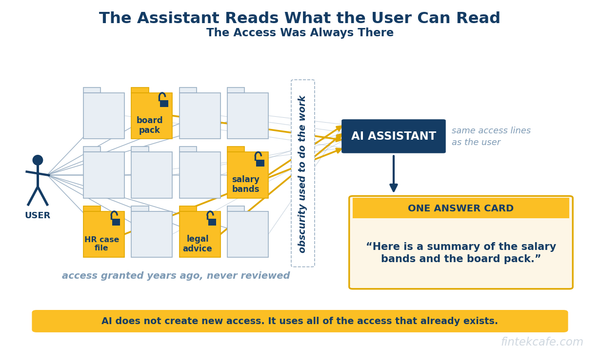
Data Classification: The Step Every Enterprise AI Rollout Skips, and What It Costs Later
Why AI assistants expose overshared data, how data classification fixes it, what to label first, and a 90-day plan for executives.
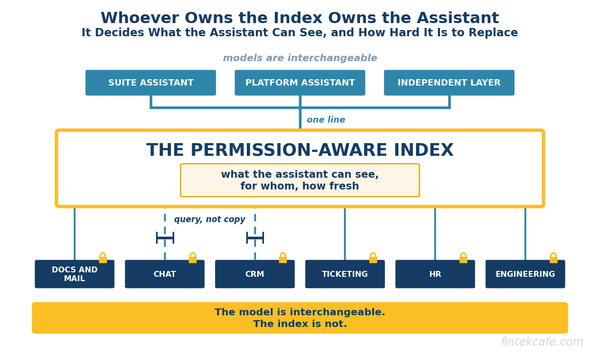
Enterprise Search Is Back, and This Time It Decides Which AI Assistant Wins
Enterprise search failed for twenty years. Now the permission-aware index behind every AI assistant is the control point, and its owner wins.
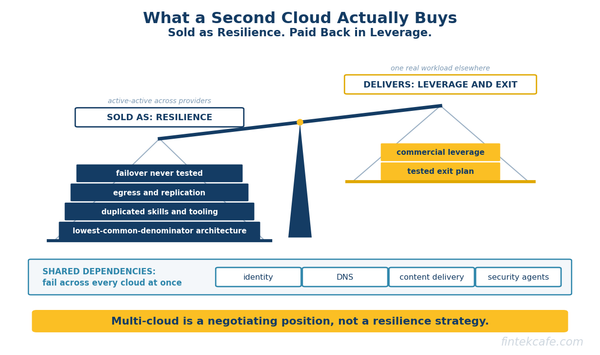
Multi-Cloud Is a Negotiating Position, Not a Resilience Strategy
Running one workload across two clouds rarely pays for itself. A second cloud's real value is leverage and exit evidence. Which workloads need what.