
The CTO's First 90 Days: What Actually Matters
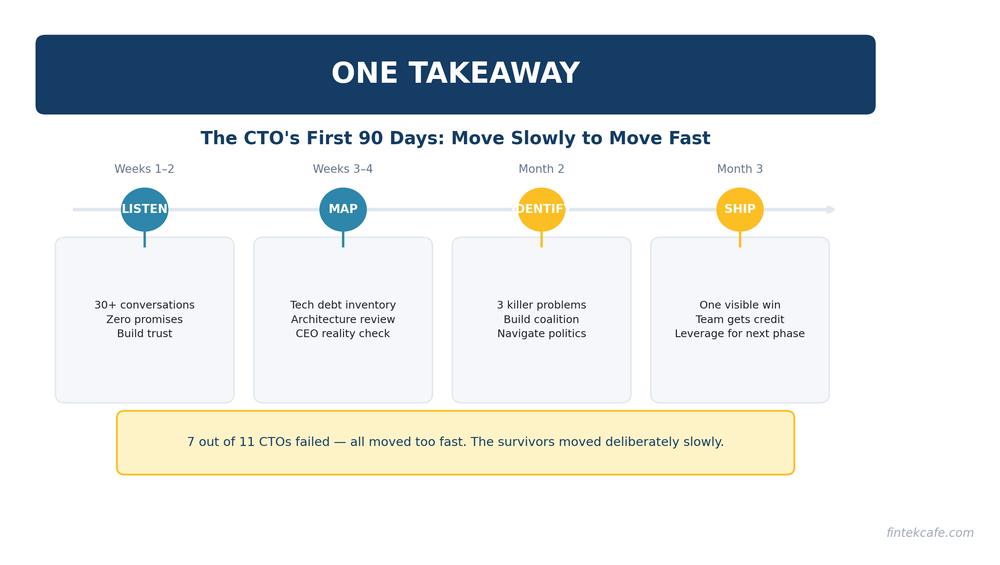
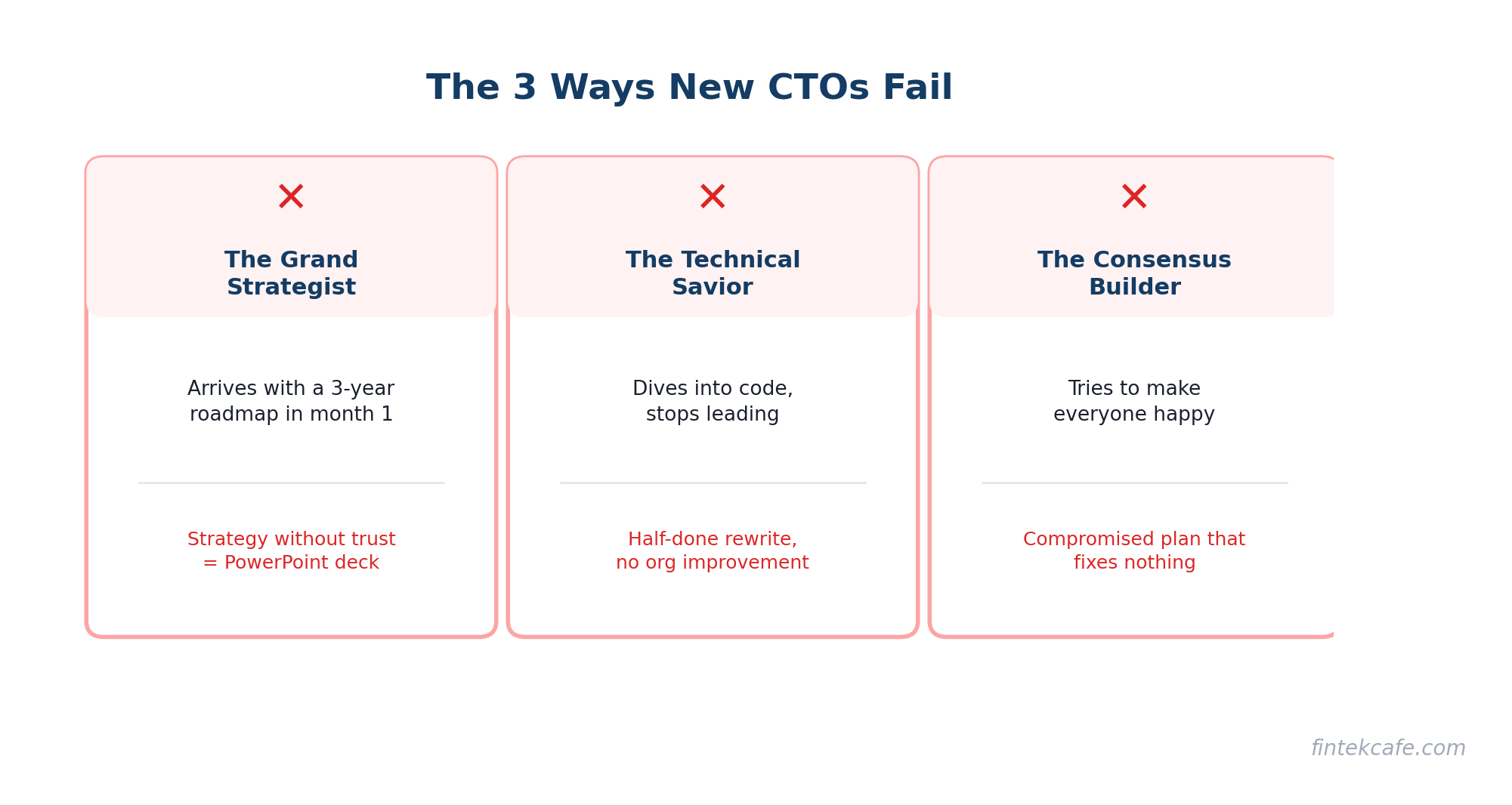
Research on CTO transitions reveals a consistent pattern. The majority of newly appointed CTOs do not survive their first 18 months. The pattern of failure is so consistent it's almost formulaic: arrive with big ideas, announce sweeping changes, alienate the team, discover the real problems are political not technical, and flame out within 18 months.
The CTOs who survived - and thrived - all did something counterintuitive. They moved slowly. Deliberately slowly. Not because they lacked urgency, but because they understood that a CTO's job isn't to write code or pick technology stacks. It's to build the organizational capacity to execute. And you can't do that if everyone is afraid of you.
Here's the week-by-week playbook that works, distilled from the leaders who got it right.
Weeks 1-2: Shut Up and Listen
I mean this literally. Your first two weeks should be almost entirely listening.
You were hired because the board or CEO believes something needs to change. They've told you their version of the problem. That version is probably wrong - or at best, incomplete. They see symptoms. You need to find causes. And causes live in the details that only the people doing the work can tell you.
The Listening Tour
Schedule 30-minute one-on-ones with every engineering manager, every tech lead, and a random sample of individual contributors. For teams larger than 100, you won't get to everyone - aim for at least 30 conversations in your first two weeks.
Ask three questions:
-
"What's the one thing that, if we fixed it, would make your job dramatically better?" This surfaces the real pain points. Not the strategic priorities the leadership team talks about in quarterly reviews - the daily friction that's grinding people down.
-
"What did we ship recently that you're proud of?" This tells you where the pockets of excellence are. You'll need these teams later as proof points and allies.
- "What are we not talking about that we should be?" This is where you'll hear about the things everyone knows but nobody says: the underperforming senior engineer who's been coasting for three years, the system that's held together with duct tape, the product decision that everyone knows is wrong.
What You're Actually Doing
You're not gathering information - you're building trust. Every person you talk to is evaluating whether you're safe. Whether you'll listen. Whether you'll credit their ideas or steal them. Whether you'll protect them from the politics above.
The single most important thing you can do in these two weeks is demonstrate that you value what people tell you. That means: take notes, follow up, and when someone tells you something brave, acknowledge it.
Do not - and I cannot stress this enough - do not make promises. Don't say "I'll fix that." Don't say "that's going to change." Just listen. The moment you start making promises, people stop telling you the truth and start telling you what they think you want to hear.
The Things You'll Be Tempted to Do (Don't)
- Reorganize the team. You don't understand the team yet. Any reorg you design now will be wrong.
- Pick a new tech stack. You don't understand the current constraints. That "terrible" legacy system might be the only thing keeping the lights on.
- Fire anyone. You don't have enough context to know who's truly underperforming versus who's been set up to fail by bad process.
- Ship a quick win. Quick wins in the first two weeks scream "I'm insecure and need to prove myself." The team will see through it instantly.
This is a Premium Article
Sign up for a Premium membership to read this article and get full access to strategic intelligence on technology and business.
Already a member? Sign in
Related Articles
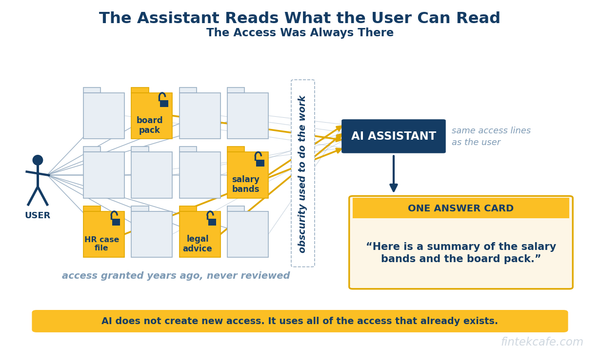
Data Classification: The Step Every Enterprise AI Rollout Skips, and What It Costs Later
Why AI assistants expose overshared data, how data classification fixes it, what to label first, and a 90-day plan for executives.
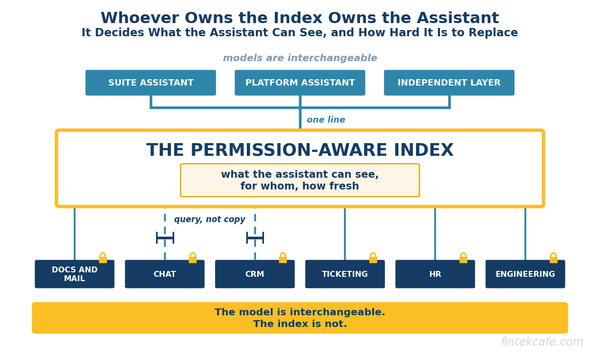
Enterprise Search Is Back, and This Time It Decides Which AI Assistant Wins
Enterprise search failed for twenty years. Now the permission-aware index behind every AI assistant is the control point, and its owner wins.
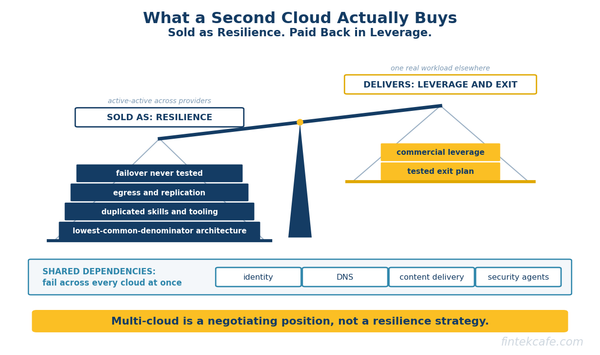
Multi-Cloud Is a Negotiating Position, Not a Resilience Strategy
Running one workload across two clouds rarely pays for itself. A second cloud's real value is leverage and exit evidence. Which workloads need what.