
The CFO's Guide to AI: What Finance Leaders Actually Need to Know
If you're a CFO who hasn't yet figured out how AI fits into your organization's financial strategy, you're running out of time to figure it out on your terms. The window between "exploring AI" and "being disrupted by a competitor who figured it out first" is closing faster than most finance leaders realize.
This isn't hyperbole. Klarna replaced 700 customer service agents with AI in 2024, saving $40 million annually. The company's AI assistant now handles two-thirds of all customer interactions. JPMorgan's AI systems review 12,000 commercial loan agreements per year, work that previously consumed 360,000 hours of legal and finance staff time. Walmart's AI-powered inventory management reduced out-of-stock items by 30% and excess inventory by 15%, with direct margin improvement measured in billions.
These aren't science projects. They're operational transformations with quantifiable P&L impact. And they're happening at companies that compete with yours.
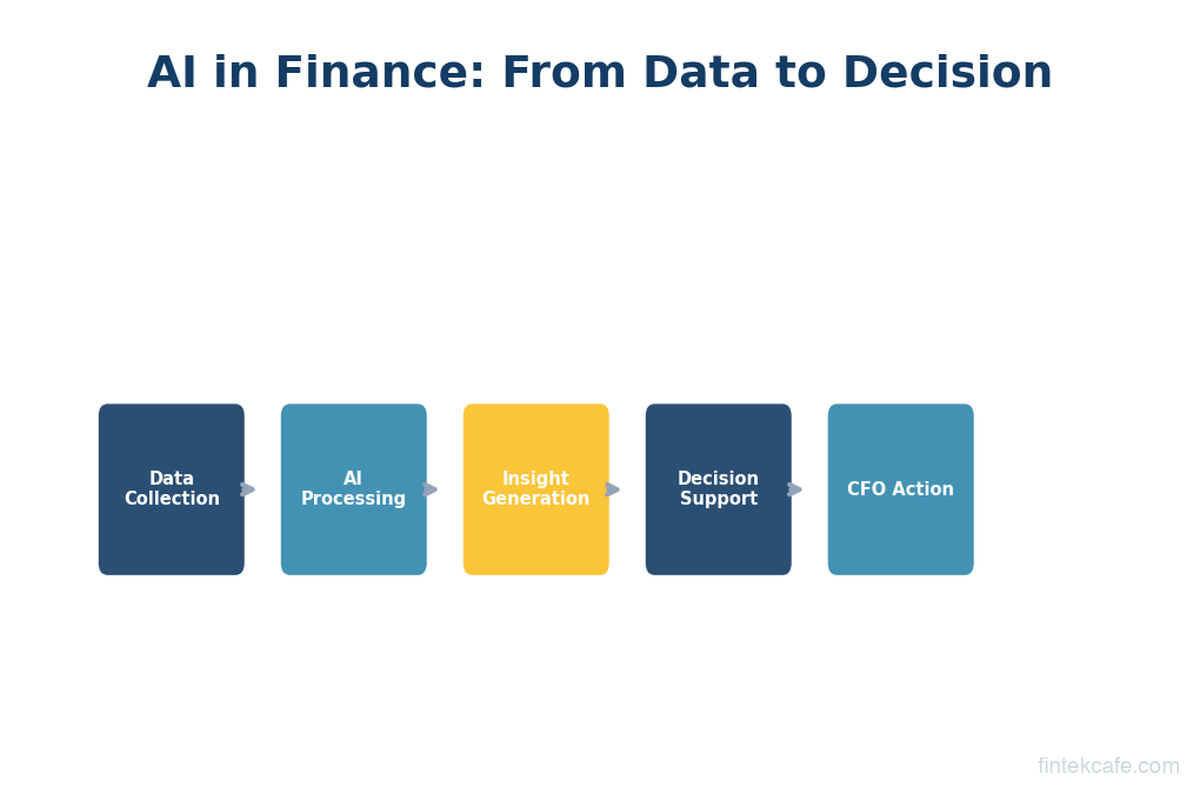
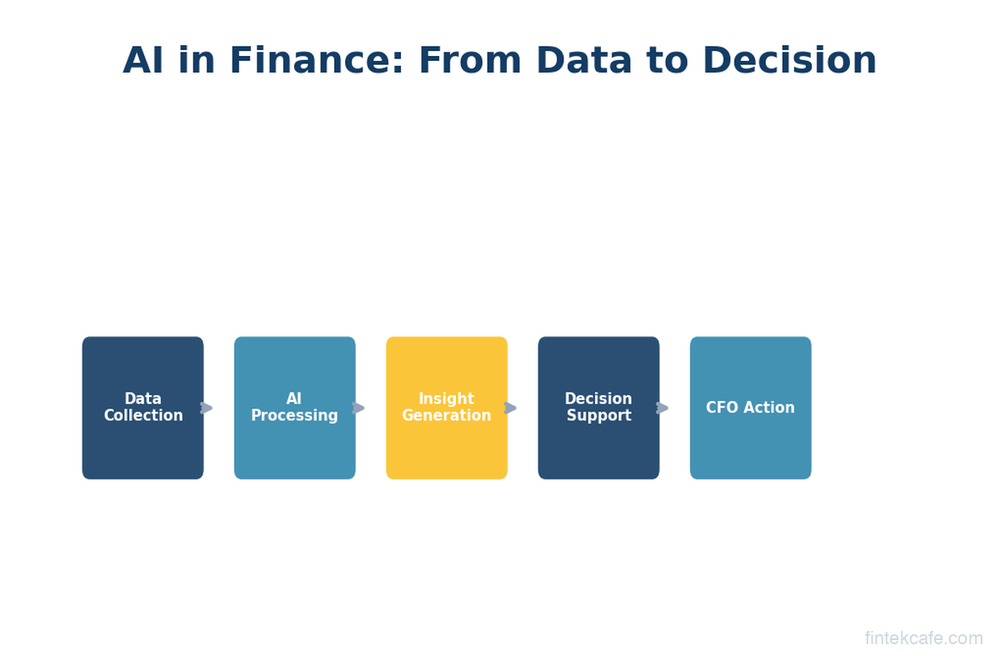
The CFO's role in AI isn't to become a technologist. It's to apply the same financial rigor to AI investments that you apply to every other capital allocation decision. That means understanding the ROI framework, knowing how to evaluate AI vendors, setting appropriate budgets, and building a finance team that can operate in an AI-augmented world.
Here's everything a finance leader needs to know, without the jargon.
Where AI Actually Changes Finance
AI's impact on the finance function falls into four categories, ordered by current maturity and adoption.
1. Automated Reporting and Close
The monthly close is the most obvious target for AI automation, and the most advanced in adoption.
Today's reality: most finance teams spend 5-10 business days closing the books each month. The process involves pulling data from multiple systems, reconciling intercompany transactions, calculating accruals, building journal entries, reviewing for errors, and generating management reports. It's largely manual, heavily dependent on institutional knowledge, and brittle (one person's absence can delay the entire process).
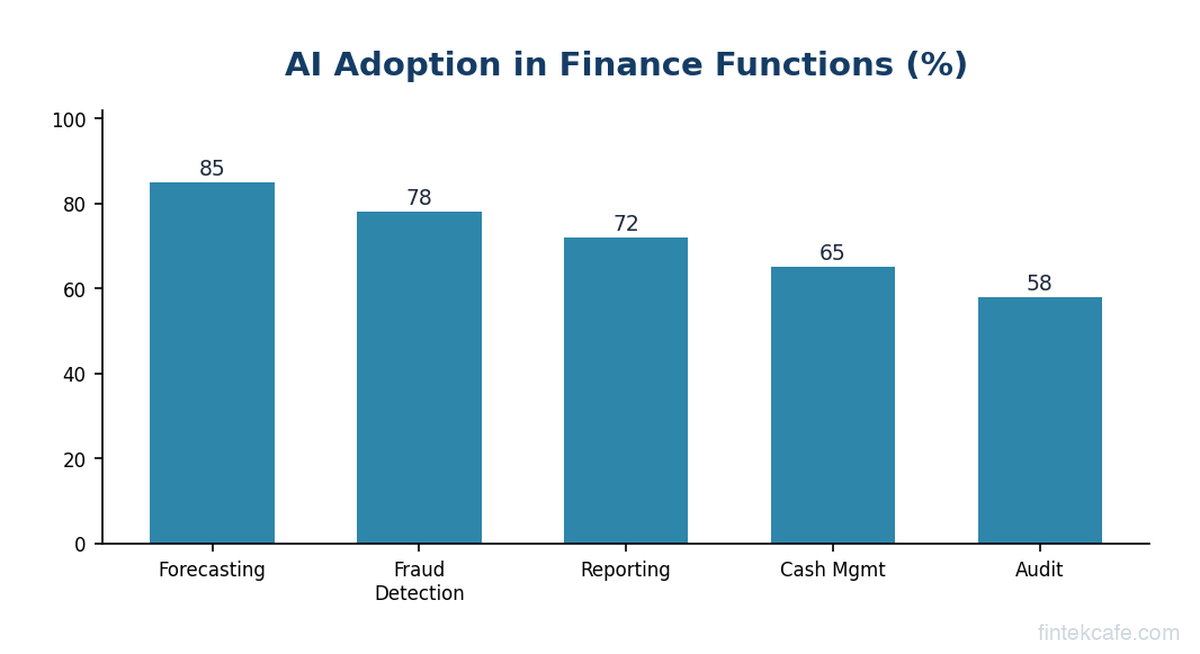
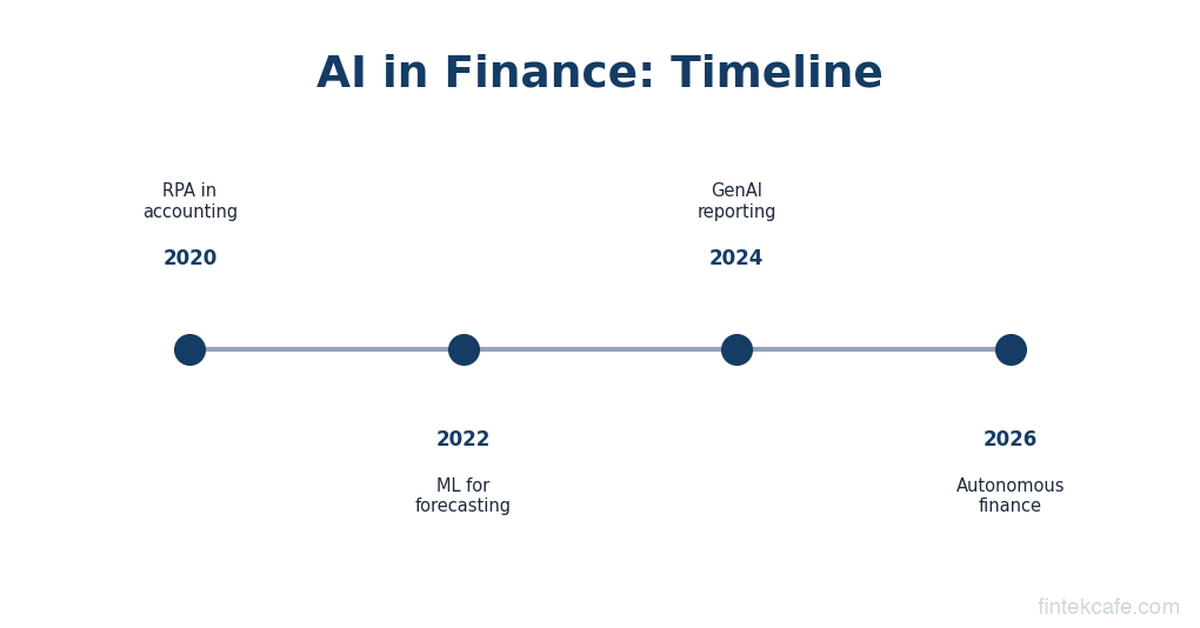
AI tools like Truewind, Docyt, and Vic.ai automate transaction categorization, reconciliation, and anomaly detection. They don't replace the Controller. They eliminate the 80% of close activities that are mechanical data processing, allowing the finance team to focus on the 20% that requires judgment.
The impact is measurable. Companies using AI-assisted close processes report reducing close time from 10 days to 3-5 days, reducing manual journal entries by 60-80%, and catching more errors (AI doesn't get tired at 11 PM on close night).
For the CFO, faster close means faster decision-making. If you're operating on month-old financial data because the close takes two weeks, you're making decisions in the dark. A 3-day close means near-real-time financial visibility.
2. Financial Planning and Forecasting
FP&A is being transformed from backwards-looking reporting to forward-looking intelligence.
Traditional FP&A: analysts pull last quarter's actuals, update a spreadsheet model with assumptions, generate a forecast that's usually wrong, present variance explanations that are mostly narratives about why the forecast was wrong, and repeat.
AI-powered FP&A: tools like Runway, Pigment, Mosaic, and Anaplan ingest actuals in real time, build forecasting models that learn from historical patterns, generate scenario analyses in minutes instead of weeks, and flag variances with AI-generated explanations before humans notice them.
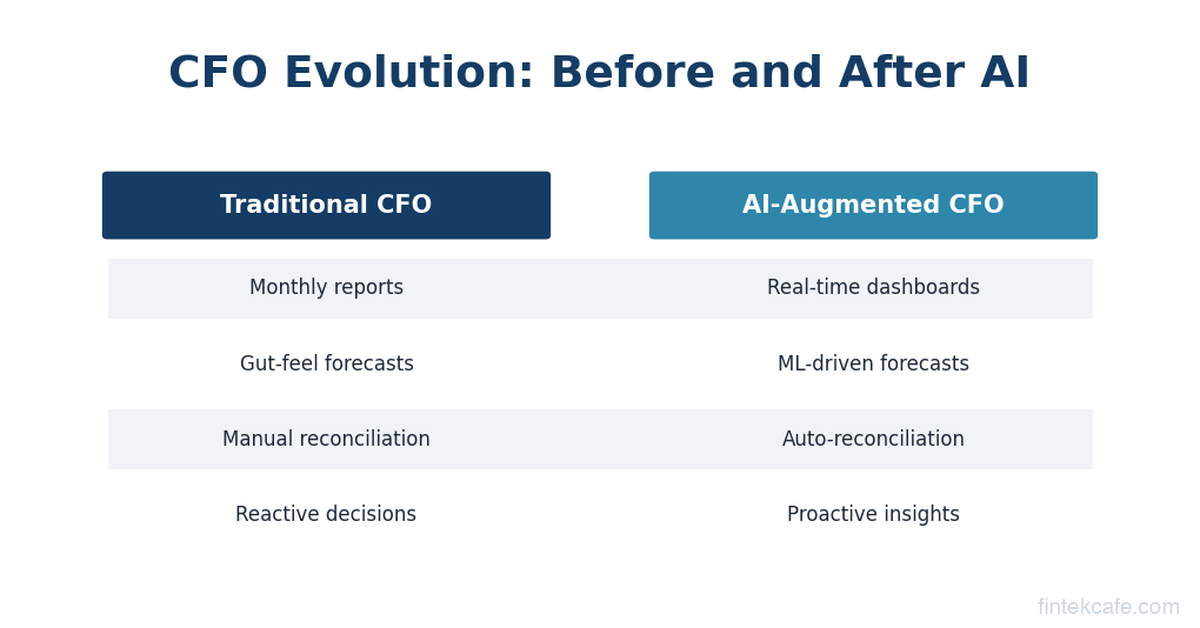
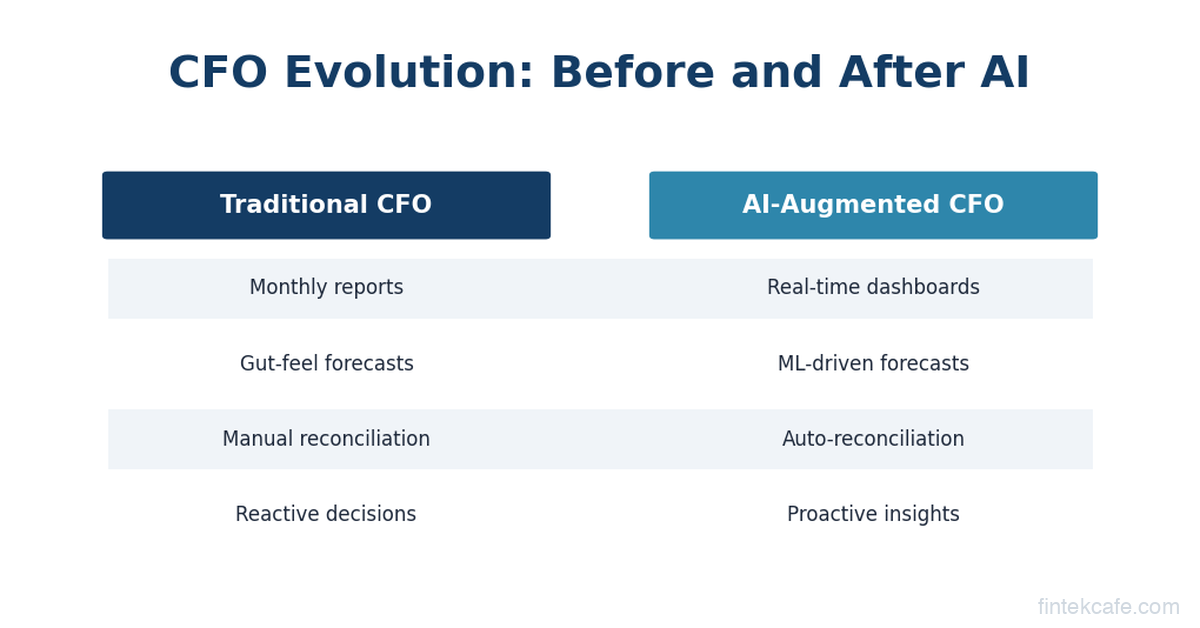
The shift is from periodic, assumption-driven forecasting to continuous, data-driven forecasting. Instead of updating the model monthly, the model updates itself. Instead of three scenarios (best case, base case, worst case), the CFO can run dozens of scenarios in real time: What happens if we lose our largest customer? What if raw materials increase 15%? What if we accelerate hiring by two months?
Runway specifically has gained traction with growth-stage companies. Its platform connects directly to the general ledger, bank accounts, HRIS, and billing systems, then builds a living financial model that updates with every new data point. The CFO stops maintaining the model and starts interrogating it.
This doesn't replace the FP&A team's judgment. It replaces their data wrangling. The humans shift from building models to asking better questions of the models. That's a significant upgrade in the finance function's strategic contribution.
3. Fraud Detection and Risk Management
AI-powered fraud detection is arguably the most mature enterprise AI application in financial services. The technology works, the ROI is proven, and the vendor ecosystem is robust.
Traditional fraud detection relies on rules: flag any transaction over $10,000, flag any login from a new device, flag any wire transfer to a sanctioned country. Rules catch known fraud patterns. They miss everything else. And they generate false positives at rates of 90-98%, meaning the vast majority of flagged transactions are legitimate, wasting enormous investigation resources.
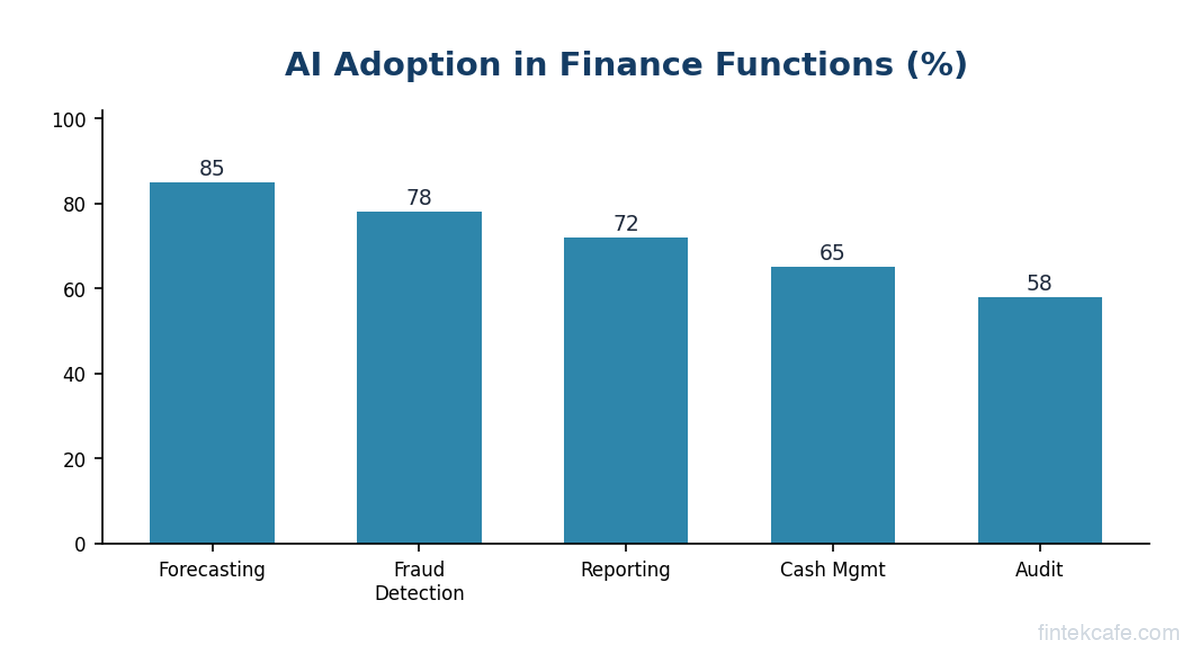
AI-based fraud detection (from vendors like Featurespace, Sardine, Stripe Radar, and Feedzai) uses machine learning to identify suspicious patterns that rules can't capture. A rules engine might miss a fraudster who makes three $3,200 transactions instead of one $10,000 transaction. An ML model spots the velocity pattern, the device fingerprint, the behavioral anomaly, and flags it.
The impact: AI fraud detection typically reduces false positive rates by 50-70% (saving investigation costs) while simultaneously improving fraud catch rates by 20-40% (reducing losses). For a company processing significant transaction volume, this translates to millions in annual savings.
For CFOs at companies that handle payments, lend money, or manage customer funds, AI-powered fraud detection isn't a "nice to have." It's table stakes. If your fraud team is still running primarily on rules-based systems, you're overspending on investigation labor and under-catching actual fraud. The fraud detection architecture we've covered previously goes deeper on the technical implementation.
4. Revenue Forecasting and Pricing Optimization
This is the frontier, less mature than the other three categories but with potentially the highest impact.
AI-powered revenue forecasting goes beyond traditional projection. It incorporates external data (market trends, competitor pricing, economic indicators, weather patterns for seasonal businesses) alongside internal data to build more accurate predictions. Companies like Clari, Gong, and People.ai use AI to analyze sales pipeline data and predict which deals will close with significantly more accuracy than sales team estimates.
Pricing optimization uses AI to identify the price sensitivity of different customer segments and adjust pricing dynamically. Airlines and hotels have done this for decades with simpler models. Modern AI enables the same approach for B2B software, professional services, and e-commerce. A/B testing at scale, combined with ML models that predict conversion at different price points, can improve revenue per customer by 5-15% without increasing volume.
For the CFO, this translates to more accurate revenue projections (which improves planning and investor communication) and higher revenue yield (which directly improves margins).
This is a Premium Article
Sign up for a Premium membership to read this article and get full access to strategic intelligence on technology and business.
Already a member? Sign in
Related Articles
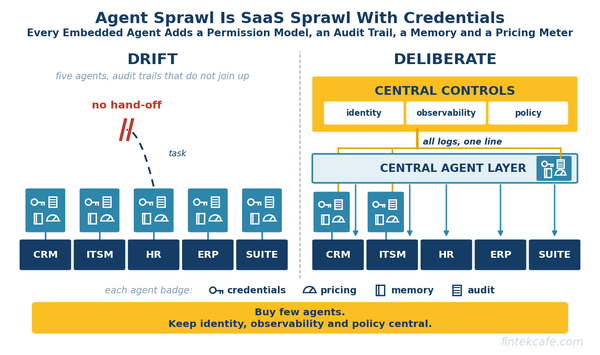
Every Software Vendor Now Sells an Agent, and Most Enterprises Should Buy Very Few of Them
Buying an agent from every system of record recreates SaaS sprawl one layer up. How CIOs should choose, and which controls must stay central.
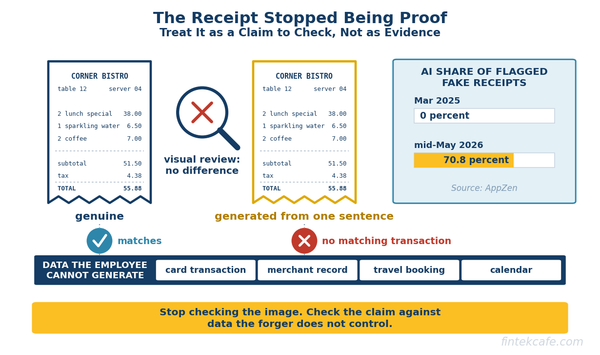
AI-Generated Fake Receipts: How Expense Fraud Changed and How Finance Teams Catch It
AI-generated fake receipts now beat visual review. How expense fraud changed, which detection still works, and the controls to use by company size.
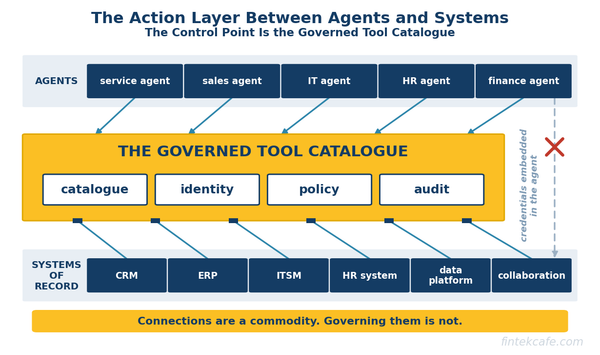
Integration Platforms Are the Quiet Winners of the Agent Era
Agents act through integrations. iPaaS and API vendors hold the connectors, credentials and audit trails, and MCP makes governing that layer worth more.