
Build vs Buy in AI Infrastructure: A Decision Framework for Executives
In 2022, Capital One announced they had built their own machine learning platform from scratch. Custom feature stores, custom model training pipelines, custom serving infrastructure - the entire stack, built internally by hundreds of engineers. At the same time, dozens of mid-sized banks were signing enterprise agreements with Salesforce Einstein and Microsoft Azure AI, paying $5-20 million a year to access capabilities that Capital One was building by hand.
Both decisions were correct.
That is the trap in the build vs buy AI debate. The question is not which path is universally better. The question is which path is right for your specific capability, your specific competitive position, and your specific data. Get it right, and you have a durable advantage or a fast deployment. Get it wrong in either direction, and you either waste $50 million building what you could have bought for $2 million, or you outsource the thing that was supposed to make you different.
This framework cuts through the noise.
The Core Insight Most Executives Miss
Here is the question that should drive the decision: Does this AI capability differentiate our product in the market?
Not: "Can we build this?" (You almost certainly can, given enough engineers and time.)
Not: "Is building cheaper?" (It almost never is, once you account for the full cost.)
Not: "Does our CTO prefer open source?" (Preference is not strategy.)
The differentiation question is the only one that matters at the strategic level. Everything else is implementation detail.
Capital One builds its own ML platform because its underwriting model - the logic that decides which customers to approve, at what credit limit, at what rate - is the product. It is the difference between Capital One and every other credit card issuer. Outsourcing that to a vendor would mean outsourcing the thing that determines whether they win or lose.
JPMorgan uses Microsoft's Azure OpenAI infrastructure for internal productivity tools - summarizing research reports, drafting memos, answering employee HR questions. These capabilities are not JPMorgan's competitive advantage. They are administrative overhead. Buying them from Microsoft and deploying in weeks rather than building them over months is the right call.
Two companies. Two opposite decisions. Both correct.
This is a Premium Article
Sign up for a Premium membership to read this article and get full access to strategic intelligence on technology and business.
Already a member? Sign in
Related Articles
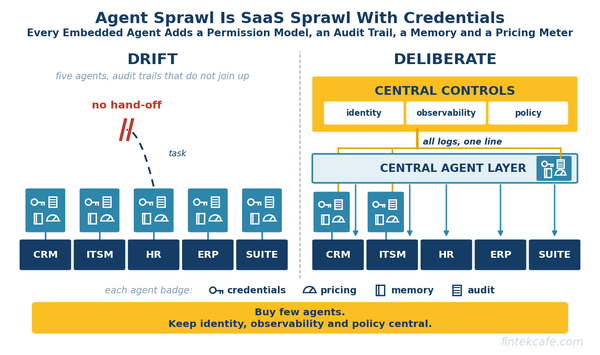
Every Software Vendor Now Sells an Agent, and Most Enterprises Should Buy Very Few of Them
Buying an agent from every system of record recreates SaaS sprawl one layer up. How CIOs should choose, and which controls must stay central.
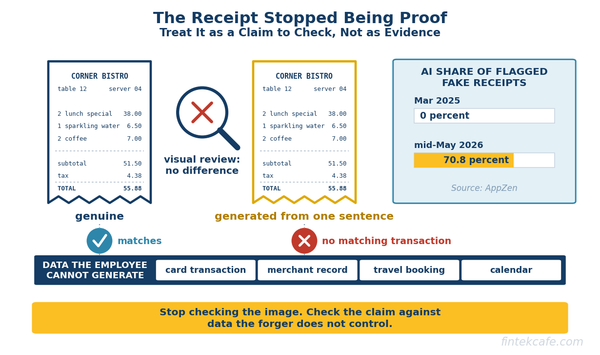
AI-Generated Fake Receipts: How Expense Fraud Changed and How Finance Teams Catch It
AI-generated fake receipts now beat visual review. How expense fraud changed, which detection still works, and the controls to use by company size.
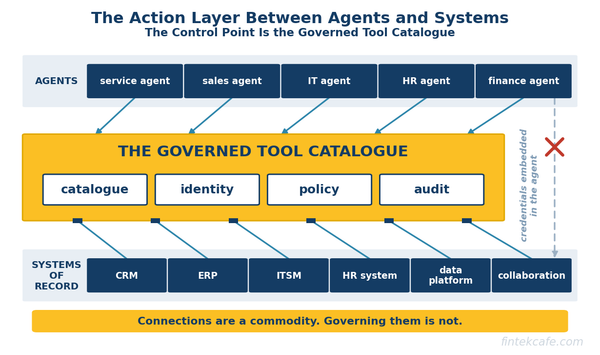
Integration Platforms Are the Quiet Winners of the Agent Era
Agents act through integrations. iPaaS and API vendors hold the connectors, credentials and audit trails, and MCP makes governing that layer worth more.