
The Great AI Talent Repricing: Why ML Engineer Compensation Is About to Fall
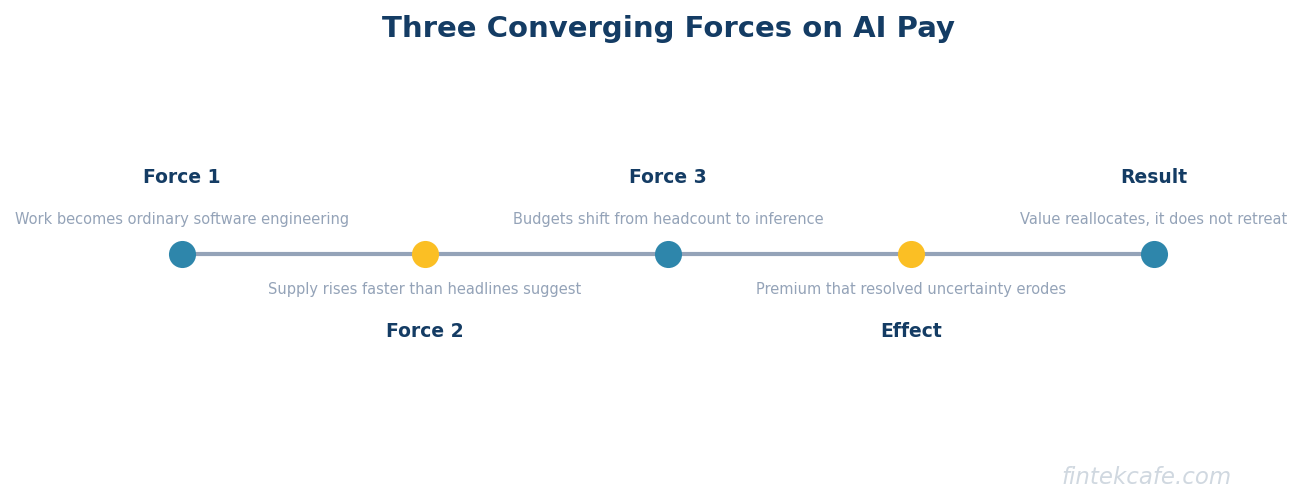
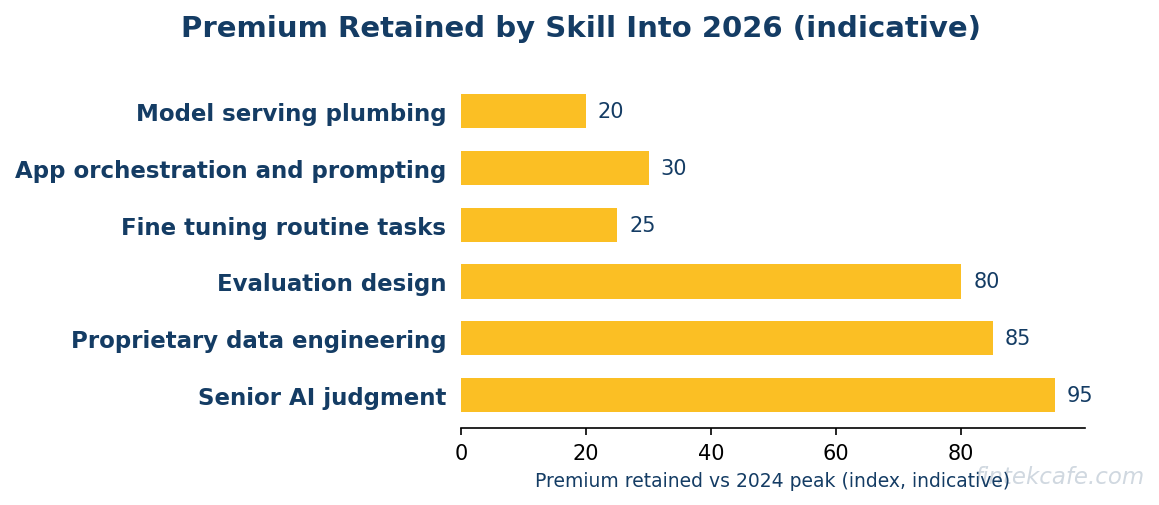
The compensation premium attached to the title machine learning engineer is about to compress, and the cause is not an AI winter. The cause is the opposite. The work is succeeding, spreading, and becoming ordinary software engineering faster than the labor market has repriced. Over the four quarters that follow the publication of this analysis, the evidence points toward flat-to-declining real compensation for the broad middle of the AI engineering market, even as total enterprise spending on AI continues to climb. The two trends are not contradictory. The money is moving from headcount to inference and infrastructure, and the scarce skill is moving from building models to deciding where models belong.
This is a contrarian claim against the recent past. The 2023 through 2025 period produced compensation packages for anyone who could credibly discuss a transformer that bore little relationship to the value delivered, because demand outran a tiny supply and buyers had no way to distinguish signal from fluency. That gap is closing. The forces closing it are structural, not cyclical, which means the repricing is durable rather than a dip that reverses when the next funding cycle arrives. The leaders who understand which parts of the skill set are commoditizing and which parts are becoming more valuable will restructure hiring, retention, and build-versus-buy decisions ahead of the market. The leaders who extrapolate the 2024 bidding war into 2027 will overpay for the wrong skills and underpay for the right ones.
The Starting Point: A Premium Detached From Delivered Value
To see why the premium falls, start with why it rose. Between early 2023 and late 2024, the supply of practitioners who had shipped anything involving large language models was vanishingly small relative to the number of companies that had decided, often at board level, that they needed an AI strategy immediately. The result was a classic supply shock. Compensation for senior machine learning and applied AI roles at well-funded technology companies and financial institutions reached levels that, in many published ranges, sat fifty to one hundred percent above comparable senior backend engineering roles, before equity and signing incentives that frequently doubled the headline.
The premium was rational for the buyer at the time, because the buyer could not tell the difference between a candidate who could productionize a retrieval system and a candidate who could only describe one. Faced with that uncertainty, buyers paid up for any credible signal, and credentials, conference talks, and a fluent vocabulary became expensive proxies for a competence that was hard to verify. A premium paid to resolve uncertainty is not the same as a premium paid for delivered value, and the two diverge the moment the uncertainty resolves. That is what is now happening.
Force One: The Work Is Becoming Ordinary Software Engineering
The first force is the commoditization of the work itself. In 2023, building a useful application on top of a language model required a meaningful amount of research-adjacent skill. Teams fine-tuned models, managed their own serving infrastructure, hand-built retrieval pipelines, and wrote evaluation harnesses from scratch. Each of those tasks rewarded a scarce specialist.
By 2026, foundation models from the major labs are capable enough out of the box that the fine-tuning step is unnecessary for most application-layer work, managed inference platforms remove the serving problem, and retrieval, orchestration, and evaluation are increasingly handled by mature open-source frameworks and vendor primitives. The work that remains looks like ordinary application software engineering with a probabilistic dependency attached. A competent senior software engineer can now learn the application-layer AI patterns in weeks rather than the year of accumulated practice the early movers required.
The pattern is the same one that played out with web development, mobile development, and cloud infrastructure. Each began as an exotic specialty commanding a premium and ended as a baseline expectation of the general engineering population once the tooling matured. The table below tracks the migration of AI engineering tasks from specialist scarcity toward general competence.
| Task in 2023 | Who could do it then | Who can do it in 2026 | Compensation effect |
|---|---|---|---|
| Stand up a model serving stack | ML infrastructure specialist | Any backend engineer using a managed endpoint | Premium gone |
| Build a retrieval pipeline | Applied research engineer | Mid-level engineer with a framework | Premium compressing |
| Write an evaluation harness | Research-adjacent specialist | Product engineer with vendor tooling | Premium compressing |
| Fine-tune a model for a task | Scarce specialist | Rarely necessary at the application layer | Demand falling |
| Prompt and orchestrate an agent | Early-mover specialist | Generalist engineer, now a baseline skill | Premium gone |
| Design an evaluation strategy for a regulated workflow | Almost nobody | Still scarce | Premium rising |
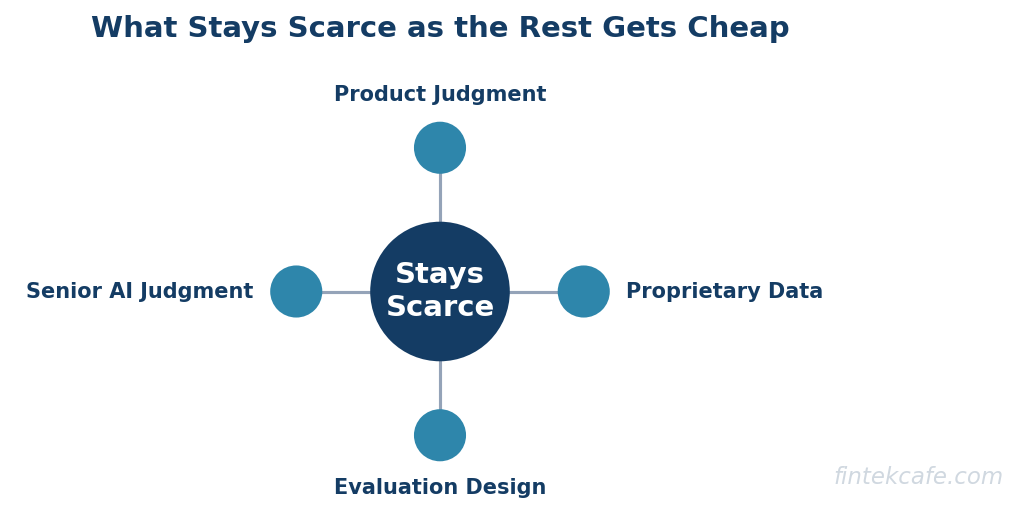
The last row is the point the headline narrative misses. As the routine work commoditizes, the difficulty does not disappear. It relocates to the parts of the problem that the tooling cannot absorb.
This is a Premium Article
Sign up for a Premium membership to read this article and get full access to strategic intelligence on technology and business.
Already a member? Sign in
Related Articles
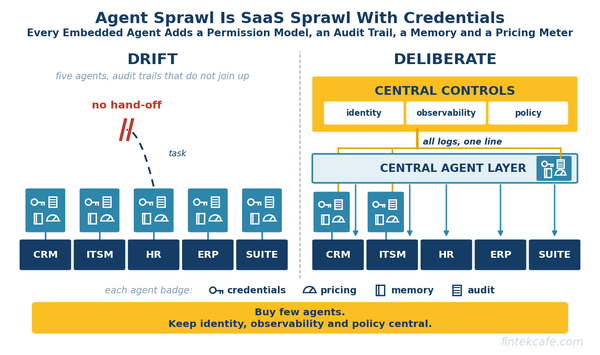
Every Software Vendor Now Sells an Agent, and Most Enterprises Should Buy Very Few of Them
Buying an agent from every system of record recreates SaaS sprawl one layer up. How CIOs should choose, and which controls must stay central.
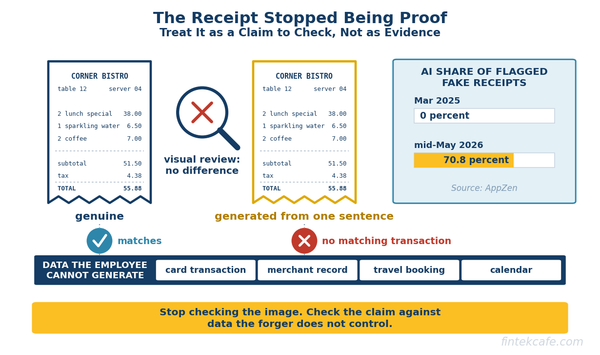
AI-Generated Fake Receipts: How Expense Fraud Changed and How Finance Teams Catch It
AI-generated fake receipts now beat visual review. How expense fraud changed, which detection still works, and the controls to use by company size.
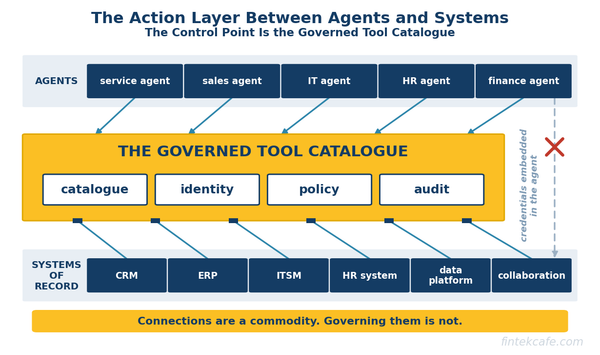
Integration Platforms Are the Quiet Winners of the Agent Era
Agents act through integrations. iPaaS and API vendors hold the connectors, credentials and audit trails, and MCP makes governing that layer worth more.