
AI Agents Are the New SaaS: Here's Why Most Will Fail
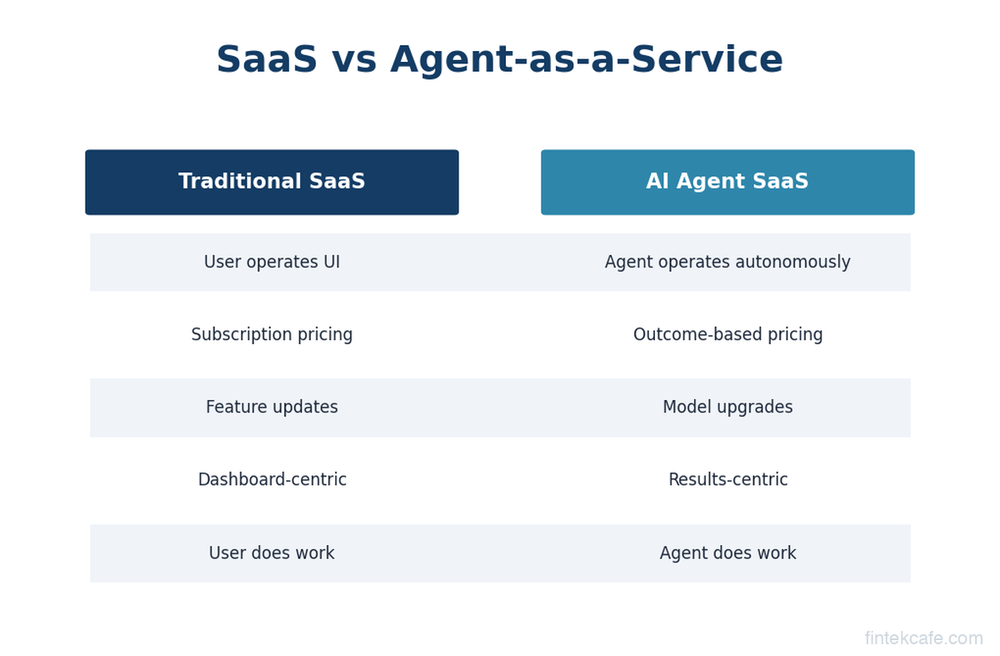
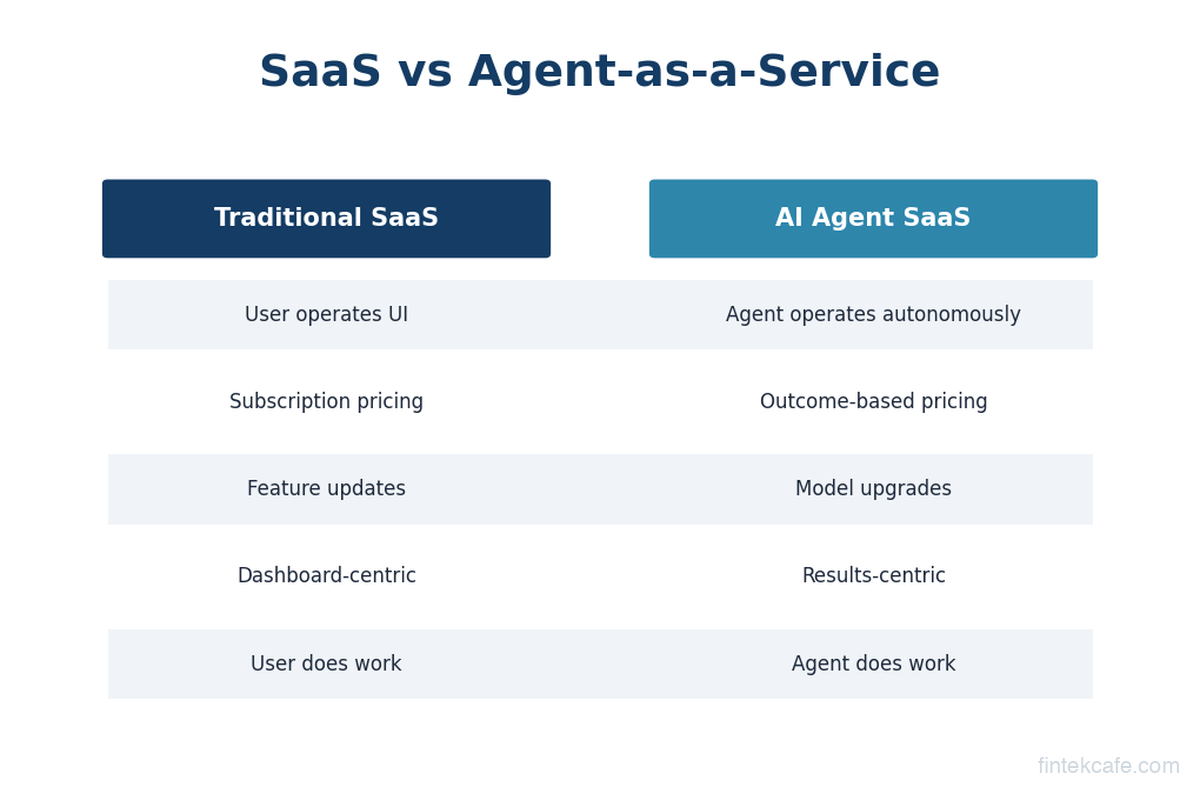
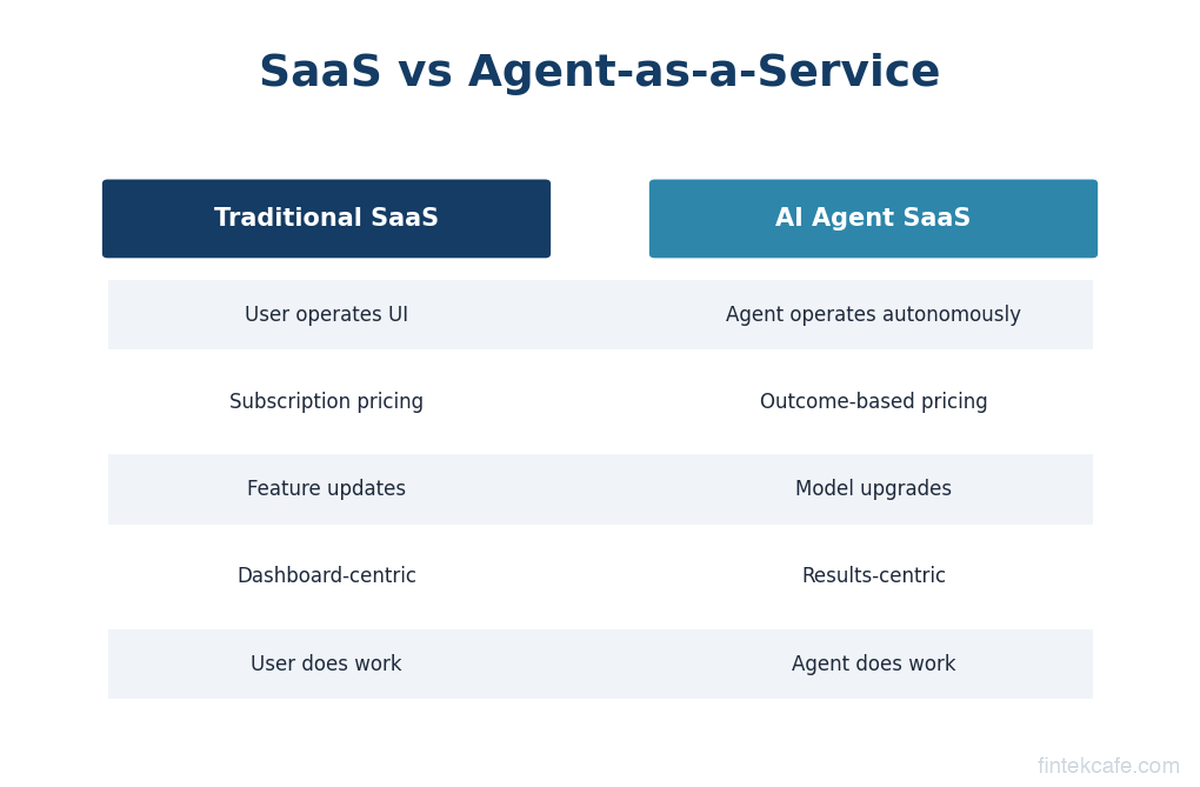
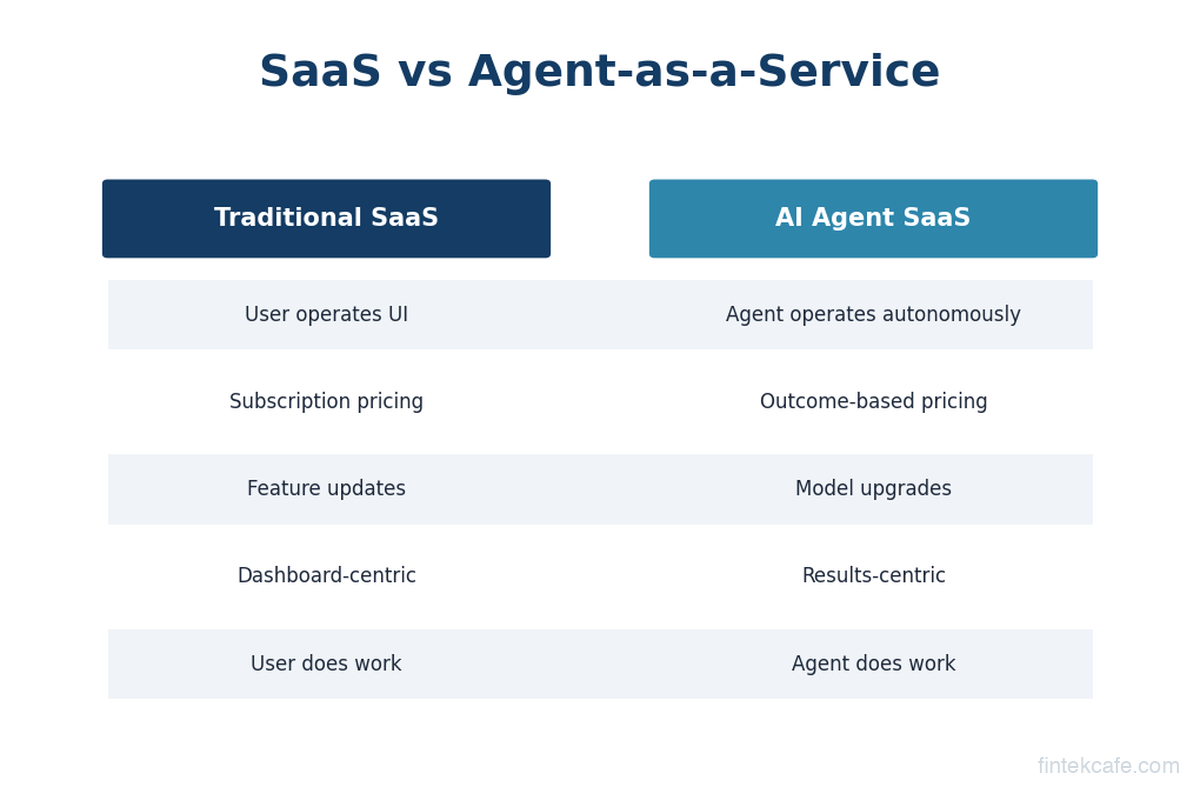
In 2010, you could build a SaaS company by putting a CRUD app in the cloud and calling it revolutionary. Investors funded thousands of them. Most died quietly within three years.
In 2026, you can build an "AI agent" company by wrapping an API call to Claude or GPT-4 in a nice UI and calling it autonomous. Investors are funding thousands of them. Most will die quietly within three years.
The hype cycle is nearly identical. The failure modes will be too.
The Wrapper Problem
Walk through any YC demo day in 2025 or 2026, and you'll see the same architecture repeated dozens of times: take an LLM API, add a system prompt with domain-specific instructions, wire up a few tool calls, build a chat interface, and pitch it as an "AI agent for [industry]."
This is the equivalent of what happened in early SaaS. Thousands of startups realized you could spin up a web app, host it in the cloud, and charge a monthly fee. The technology itself was not the moat. The moat had to come from somewhere else: data, distribution, workflow integration, network effects. The companies that understood this (Salesforce, Workday, ServiceNow) survived. The companies that thought "cloud-hosted software" was a value proposition unto itself did not.
The AI agent landscape has the same structural problem. The underlying models (Claude, GPT-4, Gemini, Llama) are available to everyone. The orchestration frameworks (LangChain, CrewAI, AutoGen) are open source. The tool-calling patterns are well-documented. If your entire product is "GPT-4 with a custom prompt that knows about accounting," you have approximately zero defensibility. Anyone can replicate your product in a weekend.
This isn't theoretical. It's already happening. The AI coding assistant space has fragmented into dozens of near-identical products. AI writing assistants are commodity. AI customer service bots are everywhere, and most are interchangeable. The "wrapper" generation of AI agents is heading toward the same fate as the wrapper generation of SaaS: margin compression, feature parity, and a race to zero.
The Orchestration Layer Trap
The slightly more sophisticated version of the wrapper problem is the orchestration layer trap. These companies don't just wrap a single model. They build multi-agent systems, chain multiple LLM calls together, add planning and reflection loops, and create impressive demos where agents collaborate to complete complex tasks.
The demos are genuinely impressive. The production reliability is genuinely terrible.
Here's the core issue: LLMs are probabilistic systems. Each call has some failure rate: hallucinations, misunderstood instructions, tool calls with wrong parameters, reasoning chains that go off the rails. When you chain multiple LLM calls together, the error rates compound. If each individual call has a 95% success rate (which is optimistic for complex tasks), a chain of five calls has a combined success rate of about 77%. A chain of ten calls drops to 60%.
This math is devastating for enterprise use cases. A financial services company cannot deploy an AI agent that gets the answer wrong 23-40% of the time. A healthcare company cannot deploy one that hallucinates 1 in 5 responses. The accuracy requirements in regulated industries are not "pretty good." They're "provably correct, auditable, and explainable."
This is why most enterprise buyers remain deeply skeptical of autonomous AI agents. They've seen the demos. They've run the pilots. And the gap between demo performance and production performance is a chasm. Accenture, Deloitte, and McKinsey are all building AI agent practices, and every one of their client reports includes the same caveat: this technology is not ready for unsupervised deployment in mission-critical workflows.
The companies that ignore this reality and ship agents that make consequential decisions without human oversight will eventually generate a headline-making failure. When (not if) an AI agent at a financial institution executes a trade it shouldn't have, or an AI agent at a healthcare company generates a recommendation that harms a patient, the regulatory backlash will reshape the entire industry. We're one bad incident away from a compliance framework that makes SR 11-7 look permissive.
This is a Premium Article
Sign up for a Premium membership to read this article and get full access to strategic intelligence on technology and business.
Already a member? Sign in
Related Articles
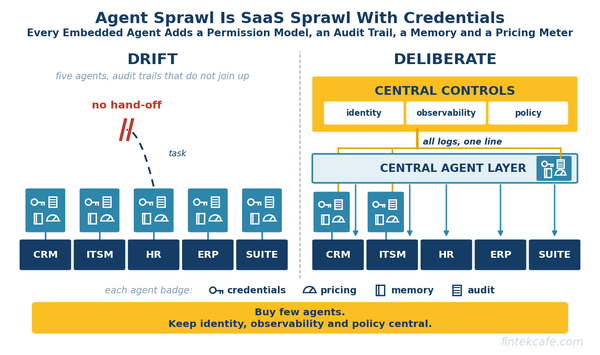
Every Software Vendor Now Sells an Agent, and Most Enterprises Should Buy Very Few of Them
Buying an agent from every system of record recreates SaaS sprawl one layer up. How CIOs should choose, and which controls must stay central.
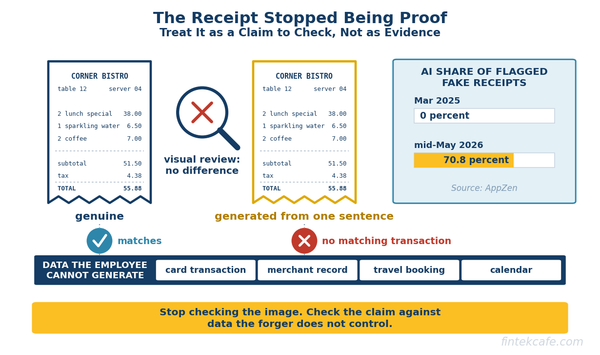
AI-Generated Fake Receipts: How Expense Fraud Changed and How Finance Teams Catch It
AI-generated fake receipts now beat visual review. How expense fraud changed, which detection still works, and the controls to use by company size.
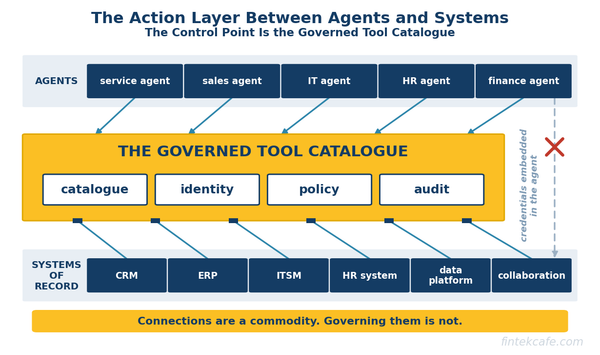
Integration Platforms Are the Quiet Winners of the Agent Era
Agents act through integrations. iPaaS and API vendors hold the connectors, credentials and audit trails, and MCP makes governing that layer worth more.