
Why Stripe Is Quietly Becoming the AWS of Finance (And Why Banks Should Be Terrified)
In 2006, Amazon did something that confused Wall Street analysts. It started renting out its server infrastructure to other companies. "Why would an online bookstore sell computing power?" they asked. The answer, of course, is that Amazon was never really a bookstore. It was an infrastructure company that happened to sell books.
Stripe is pulling the same move right now. And almost nobody is paying attention.
The Payment Processor That Isn't
Ask most people what Stripe does and they'll say "online payments." That's like saying Amazon Web Services hosts websites. Technically true. Strategically meaningless.
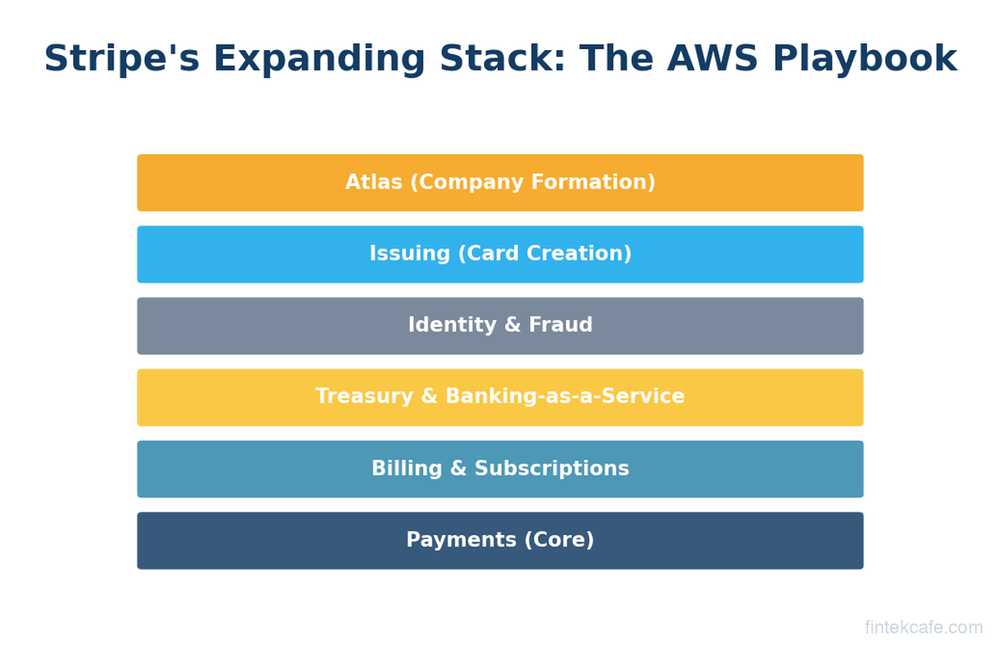
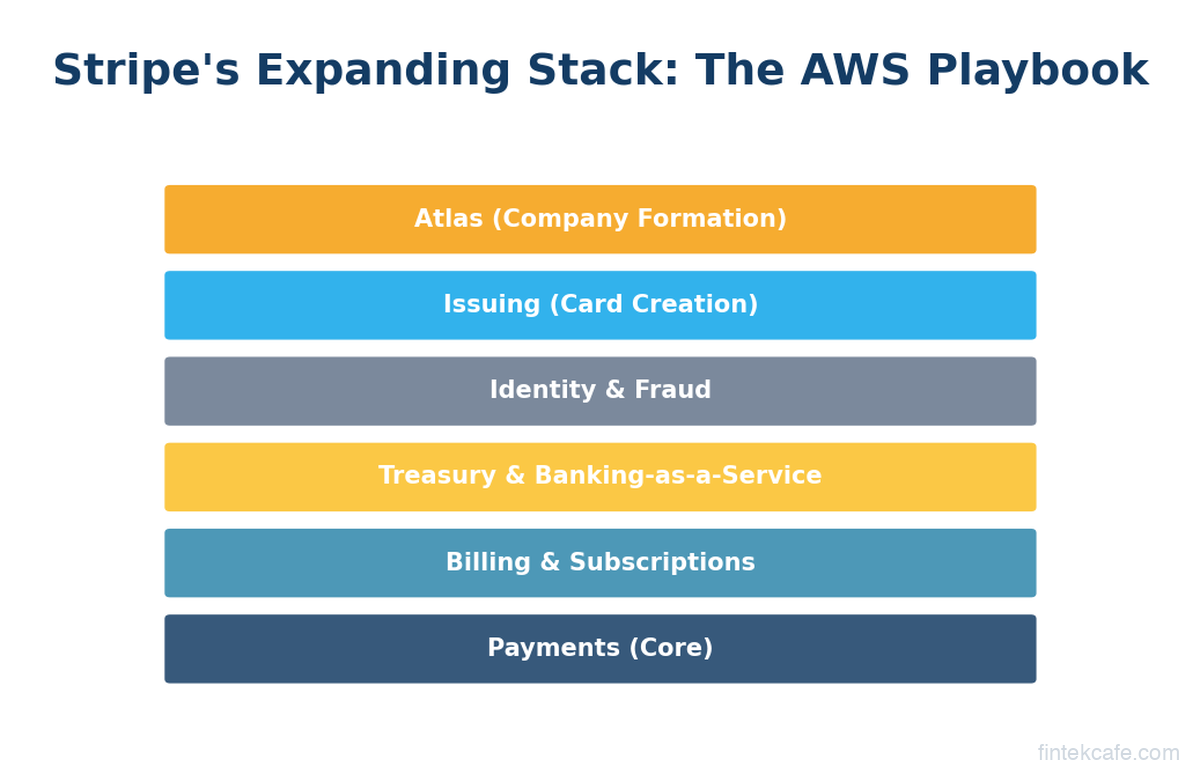
Here's what Stripe actually offers today: payments, billing, invoicing, revenue recognition, tax calculation, fraud prevention, identity verification, banking-as-a-service (Treasury), card issuing, corporate cards, lending (Stripe Capital), financial reporting, data pipelines, and a climate contribution product. Oh, and they just acquired Bridge for over a billion dollars to add stablecoin infrastructure.
That's not a payment processor. That's a financial operating system.
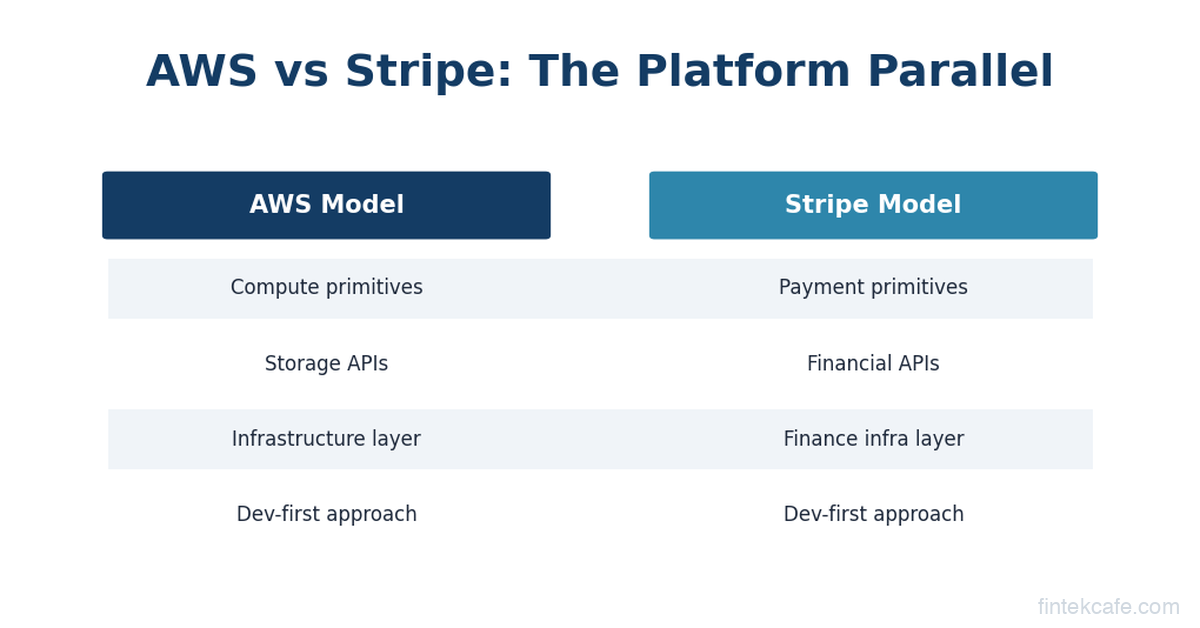
The parallel to AWS is almost eerie. Amazon started with basic compute (EC2) and storage (S3), then expanded into databases, machine learning, IoT, and dozens of other services. Each new service made the platform stickier. Each new customer generated data that improved every other service. The flywheel spun faster and faster until leaving AWS became nearly unthinkable for most companies.
Stripe started with a simple payments API. Seven lines of code to accept a credit card. Beautiful. But that was the wedge, not the product.
The Infrastructure Layer Nobody Saw Coming
Let's walk through what Stripe has built, because the scope is genuinely staggering.
Stripe Treasury lets any platform embed bank accounts directly into their product. A marketplace like Shopify can offer its merchants business bank accounts without becoming a bank. The accounts are FDIC-insured through partner banks, but Stripe handles all the plumbing. The merchant sees Shopify's brand. The money flows through Stripe's pipes.
Stripe Issuing lets companies create, manage, and distribute virtual and physical payment cards. Your favorite expense management startup? Probably running on Stripe Issuing. The cards are programmable, meaning companies can set real-time spending controls, automatically categorize transactions, and build custom approval workflows.
Stripe Identity verifies real humans. Upload an ID, take a selfie, Stripe confirms you are who you claim to be. This sounds simple until you realize that every fintech company needs this, and building it in-house is a nightmare of document parsing, liveness detection, and regulatory compliance across 30+ countries.
Stripe Tax automatically calculates and collects the right amount of sales tax, VAT, and GST in every jurisdiction. For a company selling globally, this alone can save months of engineering time and millions in compliance costs.
Stripe Revenue Recognition automates ASC 606 / IFRS 15 compliance. If you've ever watched your finance team spend two weeks closing the books because of complex revenue schedules, you understand why this matters.
Stripe Capital offers loans to businesses based on their payment data. No lengthy application. No bank relationship required. Stripe already knows your revenue, your growth rate, your seasonality. It can underwrite you in minutes, not weeks.
Each of these products shares a common architecture: APIs that developers love, built on top of Stripe's core payment data, sold to companies that already use Stripe for something else. Sound familiar? That's the AWS playbook, executed in financial services.
This is a Premium Article
Sign up for a Premium membership to read this article and get full access to strategic intelligence on technology and business.
Already a member? Sign in