
Why AI Won't Replace Your CFO (But Will Replace Their Entire Team)
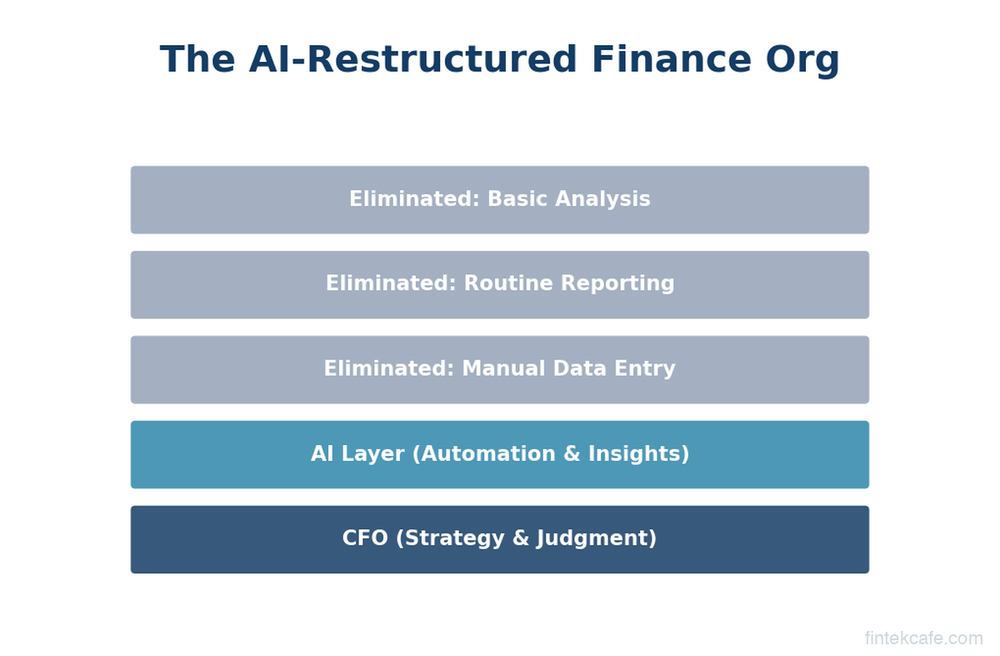
The hot take making the rounds at every finance conference this year is that AI will "transform the CFO role." Consultants sell this vision where the CFO becomes some kind of data-powered oracle, making real-time decisions with perfect information.
That's not what's actually going to happen.
What's actually going to happen is simultaneously less dramatic and more disruptive. The CFO's job won't change much. The strategic judgment calls, the board presentations, the capital allocation debates, the investor relationships, the gut calls on whether to hire or cut, these remain stubbornly human. AI is bad at ambiguity, politics, and stakeholder management. CFOs live in ambiguity, politics, and stakeholder management.
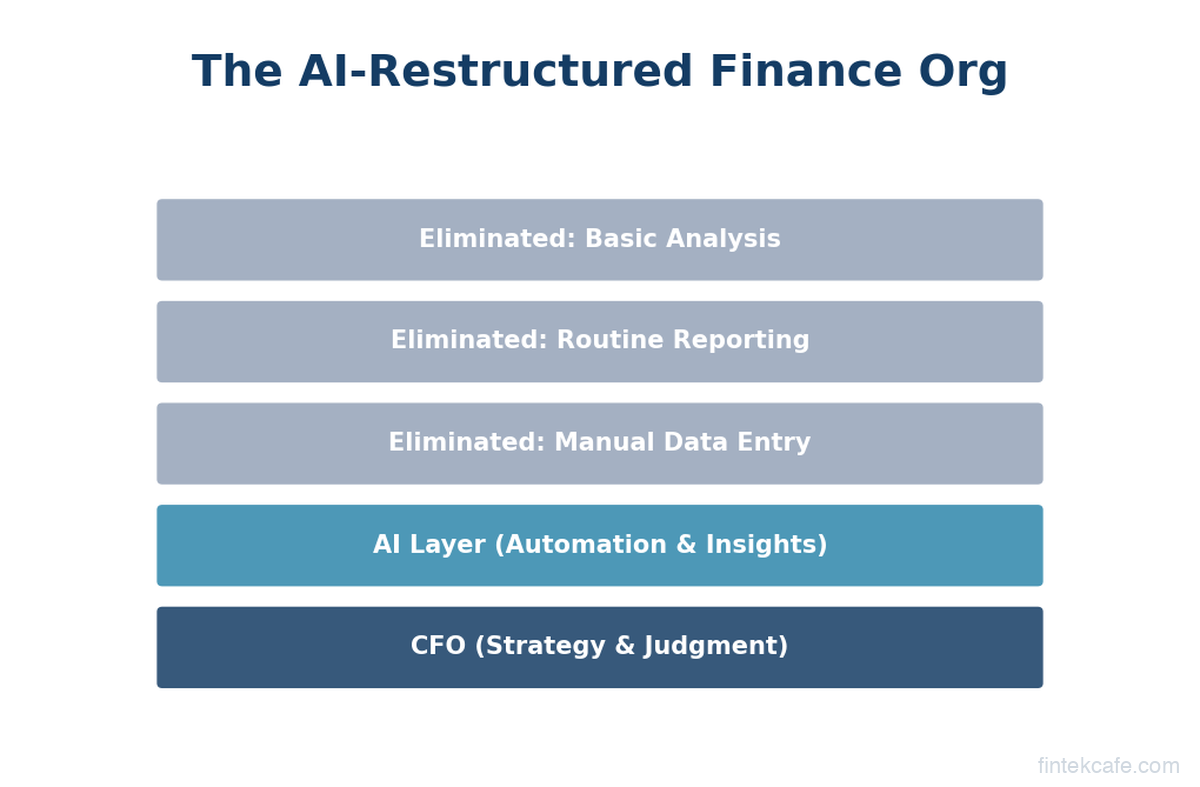
But the 40-person team that supports the CFO? That's about to become a team of 8.
What Finance Teams Actually Do All Day
Before we talk about what AI replaces, let's be honest about what FP&A analysts, accounting staff, and financial controllers actually spend their time doing.
It's not analysis. It's data wrangling.
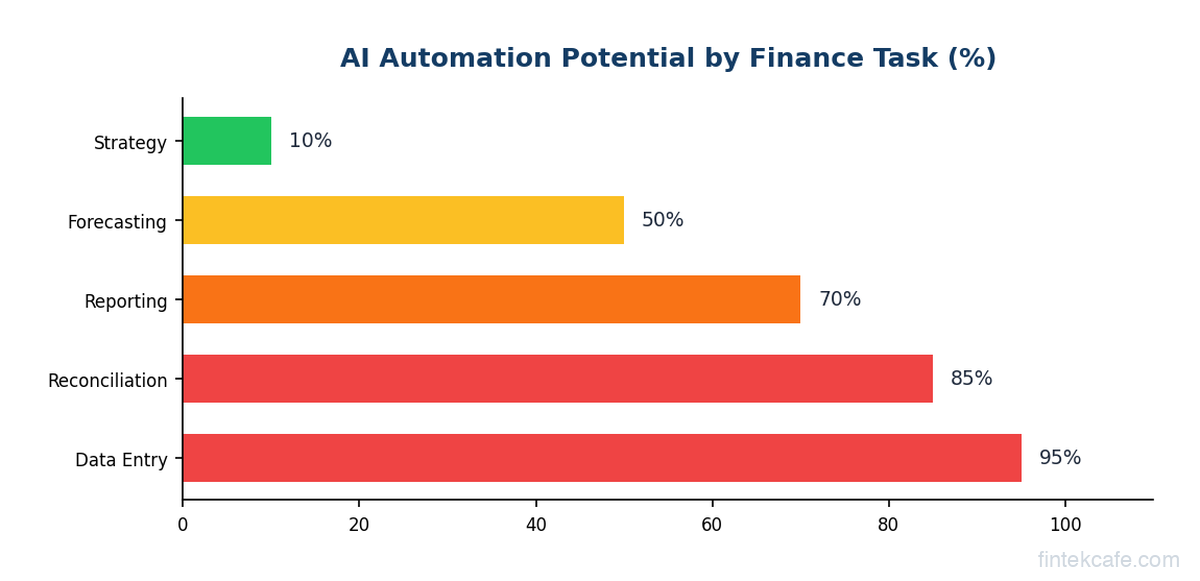
A typical FP&A analyst at a mid-market company spends roughly 70-80% of their week pulling data from various systems, reconciling numbers that don't match, building Excel models that are really just complicated lookup tables, formatting reports for different audiences, and chasing down department heads for variance explanations.
The actual analysis, the "why did this happen and what should we do about it" part, gets maybe 20% of their time. Often less.
This isn't a failure of talent. These are smart people trapped in a broken workflow. The finance function at most companies runs on a combination of ERPs that don't talk to each other, spreadsheets that break when someone accidentally deletes a row, and institutional knowledge that lives in one person's head.
A former FP&A director at a Series D fintech once described her team's monthly close process to me as "15 people spending two weeks doing work that a well-designed system could do in 20 minutes, plus three days of actual thinking."
That 20-minute part is exactly what AI is about to automate. The three days of thinking is what humans keep doing.
The Tools That Are Quietly Replacing Finance Teams
This isn't hypothetical. The tools already exist and they're gaining traction fast.
Runway Financial builds AI-powered financial models that update automatically as actuals flow in. Instead of an analyst spending Monday morning pulling last week's numbers and updating 47 linked spreadsheets, the model is already current when the CFO sits down with their coffee. Variance analysis that used to take a day happens instantly. Scenario modeling that required a dedicated analyst can be generated in minutes.
Mosaic does something similar for real-time financial analytics, collapsing the lag between when things happen and when the finance team knows about them. The traditional finance cadence (monthly close, quarterly reporting, annual planning) exists because humans can only process data so fast. When AI handles the processing, the cadence can collapse to continuous.
Pigment is replacing the sprawling Excel models that underpin enterprise financial planning. Their platform handles the kind of multi-dimensional planning (by product, geography, channel, customer segment) that currently requires teams of analysts maintaining interconnected spreadsheets.
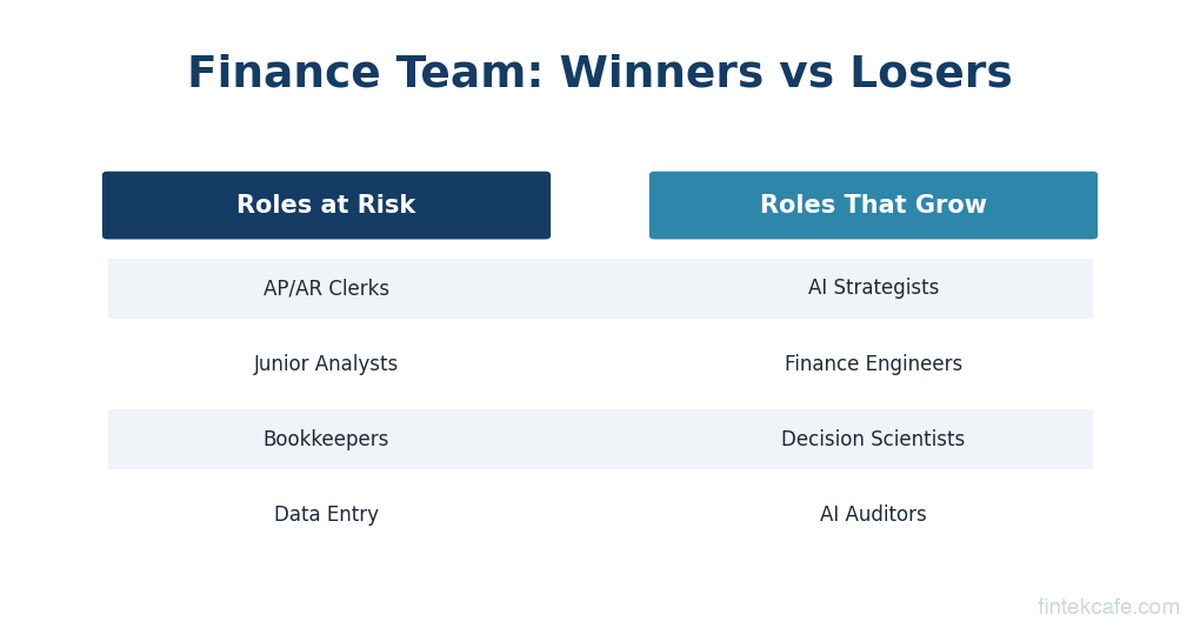
Truewind, Puzzle, and Layer are automating bookkeeping and accounting workflows. Transaction categorization, reconciliation, accrual calculations, the tedious mechanical work that junior accountants spend years doing before they earn enough experience to do anything interesting.
Then there's the general-purpose AI layer. Large language models can already read a financial statement, identify anomalies, draft variance commentary, and generate board-ready narratives. They're not perfect. But they're better than a tired analyst at 11 PM on close night, and they're getting better every quarter.
This is a Premium Article
Sign up for a Premium membership to read this article and get full access to strategic intelligence on technology and business.
Already a member? Sign in