
The Real Reason Apple Killed Its Credit Card (And What It Tells Us About Big Tech in Finance)
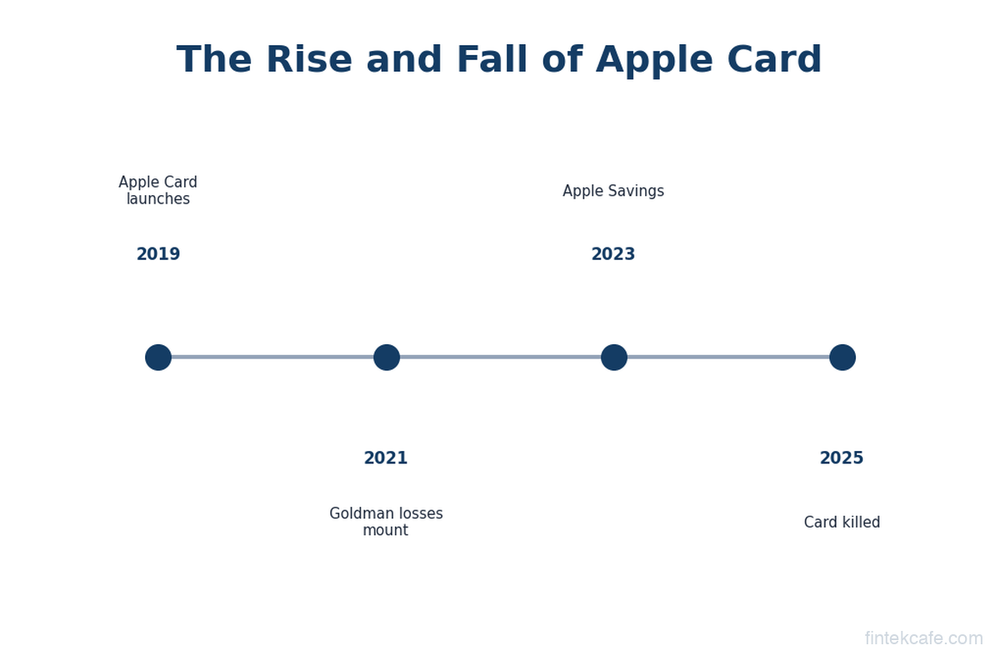
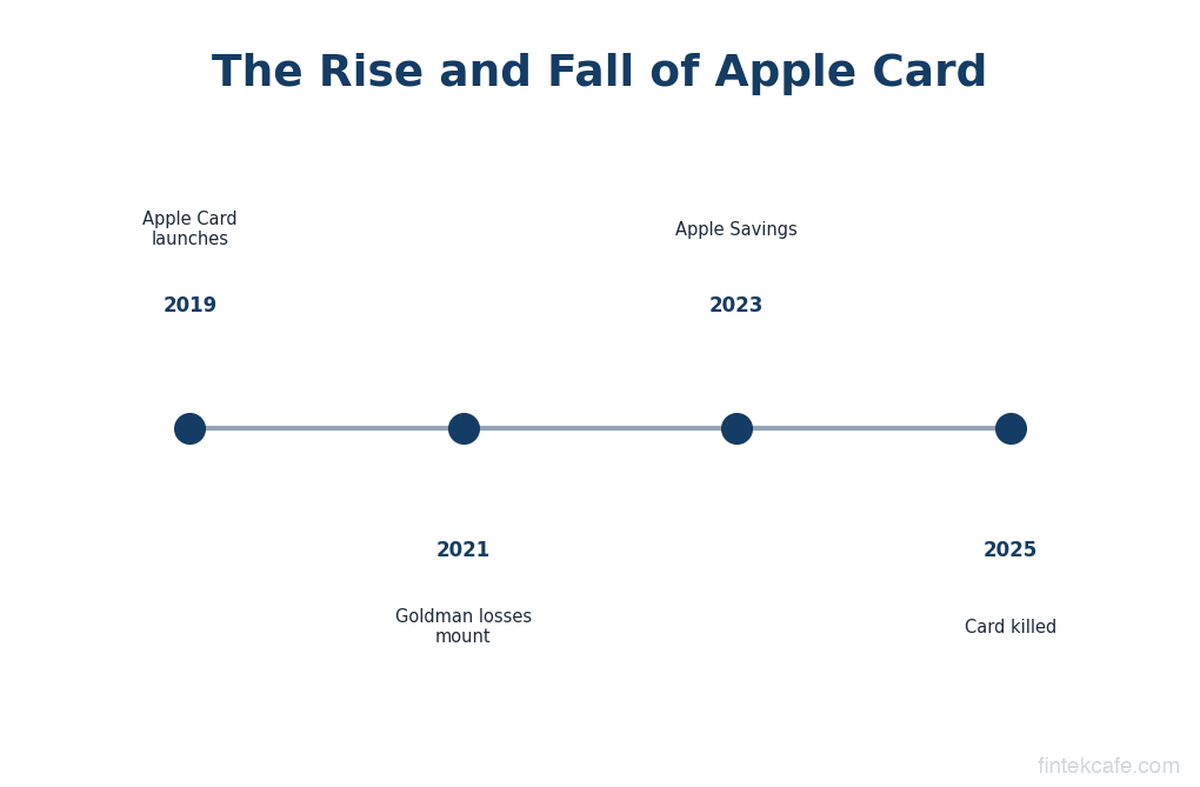
When Apple launched Apple Card in 2019, the tech press declared it the beginning of the end for traditional banking. Apple's design sensibility, Goldman's balance sheet, a titanium card that felt like a piece of jewelry. The future had arrived.
Six years later, Apple Card is effectively dead. Goldman hemorrhaged billions on the partnership. Apple quietly shopped the program to other banks, eventually landing on a deal to transition it away from Goldman entirely. The BNPL product, Apple Pay Later? Also killed. The high-yield savings account? Moved along with the card.
The conventional story is that Goldman botched the execution. They underestimated credit losses, built technology that couldn't handle consumer-scale volumes, and lost something like $3 billion on the whole adventure.
That's all true. But it misses the more important story.
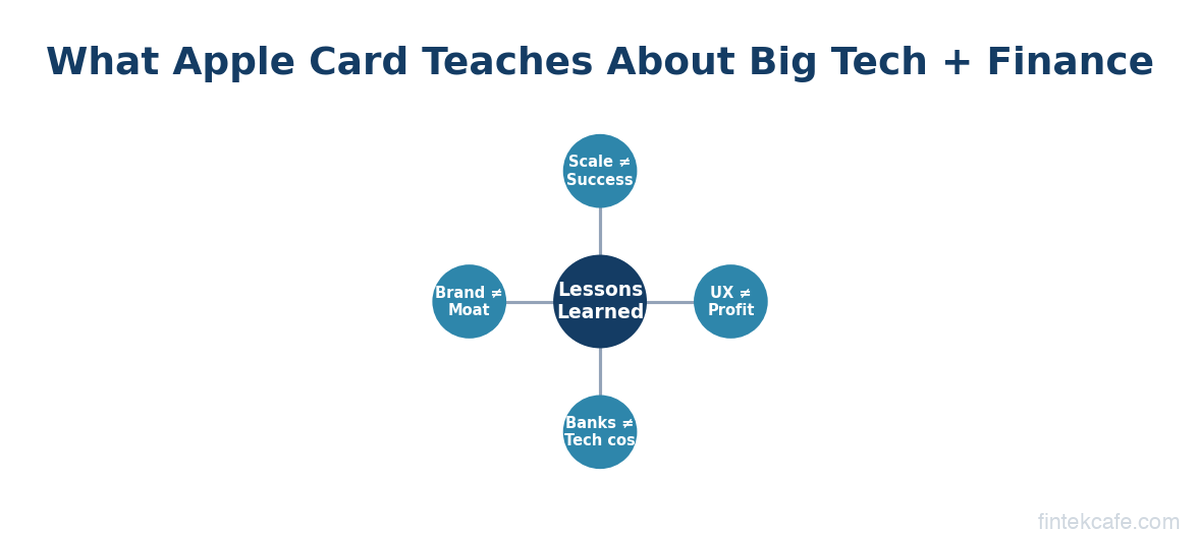
Apple killed its credit card because Apple realized that being a bank is a terrible business for a company like Apple. And that realization tells us something profound about the future of Big Tech in finance.
The Apple Card Post-Mortem
Let's reconstruct what actually happened.
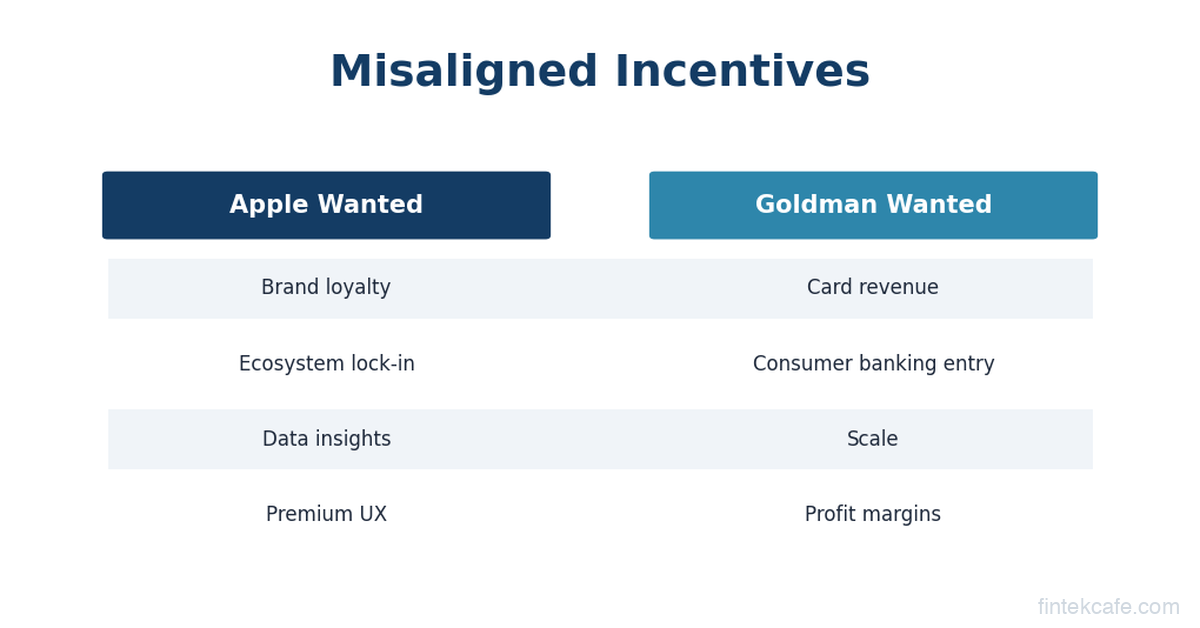
Goldman Sachs, under David Solomon, wanted to build a consumer banking franchise. Marcus (their consumer brand) was supposed to be the digital bank that disrupted the incumbents. The Apple partnership was the crown jewel: instant distribution to hundreds of millions of iPhone users.
Apple wanted a financial product that reinforced its ecosystem lock-in. If your credit card lives in Apple Wallet, earns cashback through Apple Pay, and shows you spending insights in the Apple ecosystem, you're less likely to switch to Android. The card was a retention tool, not a revenue play.
The mismatch was there from day one, but the excitement papered over it.
Goldman quickly discovered that consumer lending is nothing like investment banking. Credit losses were higher than modeled. Customer acquisition costs were brutal. The technology stack, built hastily on top of Goldman's enterprise infrastructure, buckled under consumer volumes. Regulatory compliance for consumer products required expertise Goldman didn't have.
By 2023, Goldman had lost over $3 billion on its consumer banking adventure. The Apple Card portfolio alone was reportedly responsible for a significant chunk of those losses. Solomon, facing intense board pressure, reversed course and began exiting consumer banking entirely.
But here's what most analysts miss: Apple wasn't unhappy just because Goldman was losing money. Apple was unhappy because the entire structure revealed something uncomfortable about financial services.
The Margin Problem Nobody Talks About
Apple is the most profitable consumer technology company in history. Its gross margins hover around 45%. Its services business (App Store, iCloud, Apple Music, AppleCare) runs at margins above 70%. When Apple enters a new product category, it expects to generate Apple-level returns.
Credit cards don't generate Apple-level returns. They don't generate anything close.
The credit card business runs on net interest margin (the spread between what you earn lending money and what you pay to borrow it), interchange fees (a percentage of each transaction), and annual fees. After accounting for credit losses, fraud, customer acquisition, regulatory compliance, and operations, even the best card programs generate single-digit returns on assets.
For a company like JPMorgan Chase, which has a massive balance sheet and amortized infrastructure, those returns are fine. Cards are one of dozens of product lines, and they drive cross-selling into deposits, mortgages, and wealth management.
For Apple, those returns are embarrassing. Every dollar of capital and engineering talent allocated to a credit card program is a dollar not allocated to something that generates 10x the return. The opportunity cost is staggering.
This is the insight that took Apple several years and billions of Goldman's dollars to internalize: financial services are a low-margin business that requires enormous regulatory overhead, massive capital reserves, and operational complexity that has nothing to do with Apple's core competencies.
Apple Pay, by contrast, is beautiful in its simplicity. Apple takes a small cut of every tap-to-pay transaction. No credit risk. No regulatory capital requirements. No consumer complaints about interest rates or credit limits. Pure, high-margin infrastructure rent. That's an Apple-worthy business.
This is a Premium Article
Sign up for a Premium membership to read this article and get full access to strategic intelligence on technology and business.
Already a member? Sign in