
The Quiet Death of Neobanks:And What Actually Replaces Them
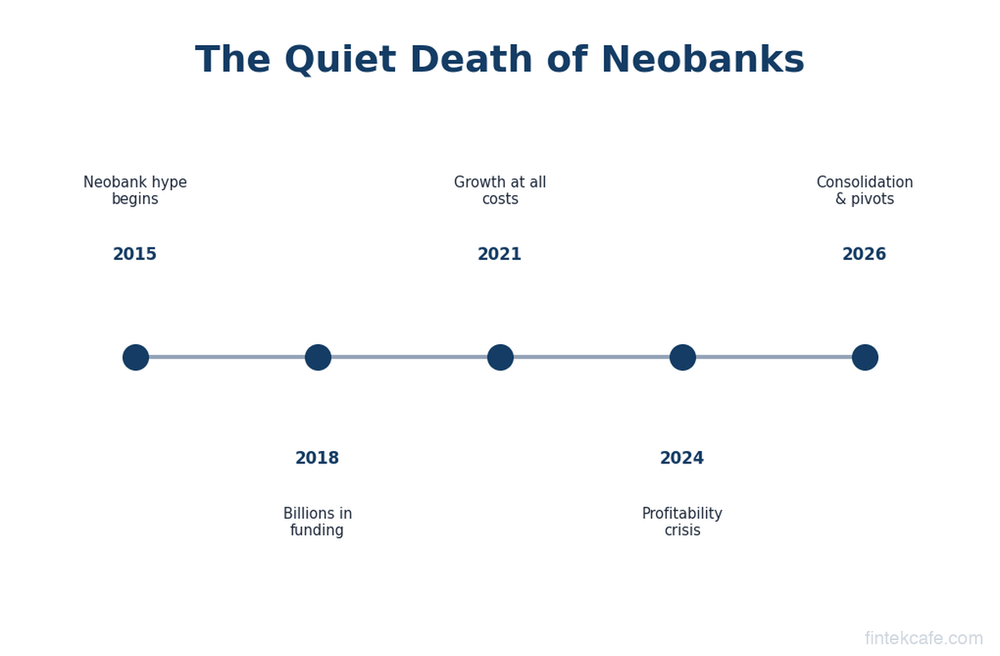
Nobody is going to announce the death of neobanks. There won't be a press release. No one will ring a bell.
Instead, it's happening the way most disruptions end: quietly, gradually, and then all at once. The standalone digital bank, the category that was supposed to kill traditional banking, is being absorbed and replaced by something entirely different.
And most people in fintech haven't noticed yet.
The Scoreboard Doesn't Lie
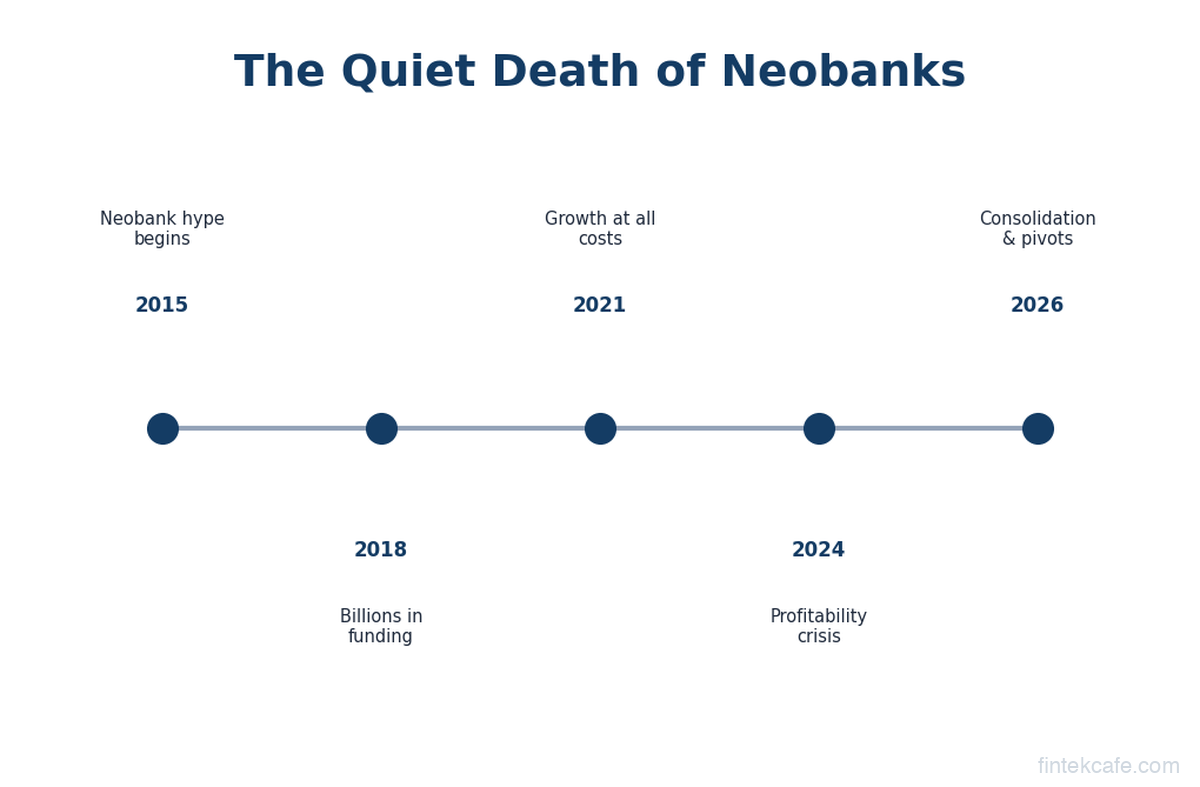
Let's look at the numbers without the narrative.
Chime was supposed to be America's neobank champion. At its peak in 2021, it was valued at $25 billion. The S-1 filing that was supposed to validate the entire neobank thesis keeps getting delayed. Why? Because the closer you look at Chime's economics, the harder it is to justify a premium valuation. The company generates most of its revenue from interchange fees (the small cut merchants pay when customers swipe their cards). That's a razor-thin margin business that gets worse, not better, as the Durbin Amendment continues to compress interchange for larger issuers. Chime has been profitable on an adjusted basis, but the path to the kind of profitability that justifies a $25B price tag remains unclear.
N26, Europe's most-hyped neobank, pulled out of the United States entirely in 2022. The company that was going to be a global digital bank couldn't make the economics work in the world's largest banking market. In its home market of Germany, N26 has been hit with regulatory restrictions from BaFin, limiting new customer onboarding. A global digital bank that can't expand globally and can't grow in its home market. That's not a setback. That's a category failure.
Monzo in the UK has been on a long, painful march toward profitability. After years of losses, the company finally reported its first annual profit in 2024. That's a genuine achievement. But Monzo succeeded by doing something interesting: it stopped trying to be a neobank. It started cross-selling loans, investment products, and premium subscriptions. It became, in effect, a regular bank with a good app. The neobank thesis (that a better UX alone could build a massive business) was abandoned in favor of the oldest business model in finance: take deposits, lend them out, earn a spread.
Revolut is the one neobank that bulls still point to as proof the model works. And Revolut is genuinely impressive: profitable, growing, and expanding aggressively. But look at what Revolut actually is. It's not a bank. It's a super-app. It offers crypto trading, stock investing, international transfers, travel insurance, phone insurance, lounges, and a dozen other products. Revolut works because it rejected the neobank model and built a financial services conglomerate instead. If your best example of a successful neobank is a company that succeeded by not being a neobank, your thesis has a problem.
This is a Premium Article
Sign up for a Premium membership to read this article and get full access to strategic intelligence on technology and business.
Already a member? Sign in