
How to Get Into Fintech: Career Guide for 2026
Fintech is hiring. Despite the broader tech slowdown that started in 2022, financial technology companies continue to grow headcount in key areas. Stripe added over 1,000 employees in 2024-2025. Ramp more than tripled its workforce. Plaid, despite layoffs in 2023, resumed hiring for engineering and compliance roles.
The industry is also reshaping what "fintech" means. Five years ago, fintech meant neobanks and payment apps. Today, it includes AI-powered lending platforms, embedded finance infrastructure, regulatory technology, blockchain settlement systems, and financial data providers. The career opportunities have expanded accordingly.
Whether you're a banker wondering if there's life beyond spreadsheets, a software engineer looking for more meaningful work, an MBA student evaluating industries, or a career changer starting fresh, this guide covers how to actually get into fintech in 2026, with real salary data, specific company recommendations, and honest advice about what works.
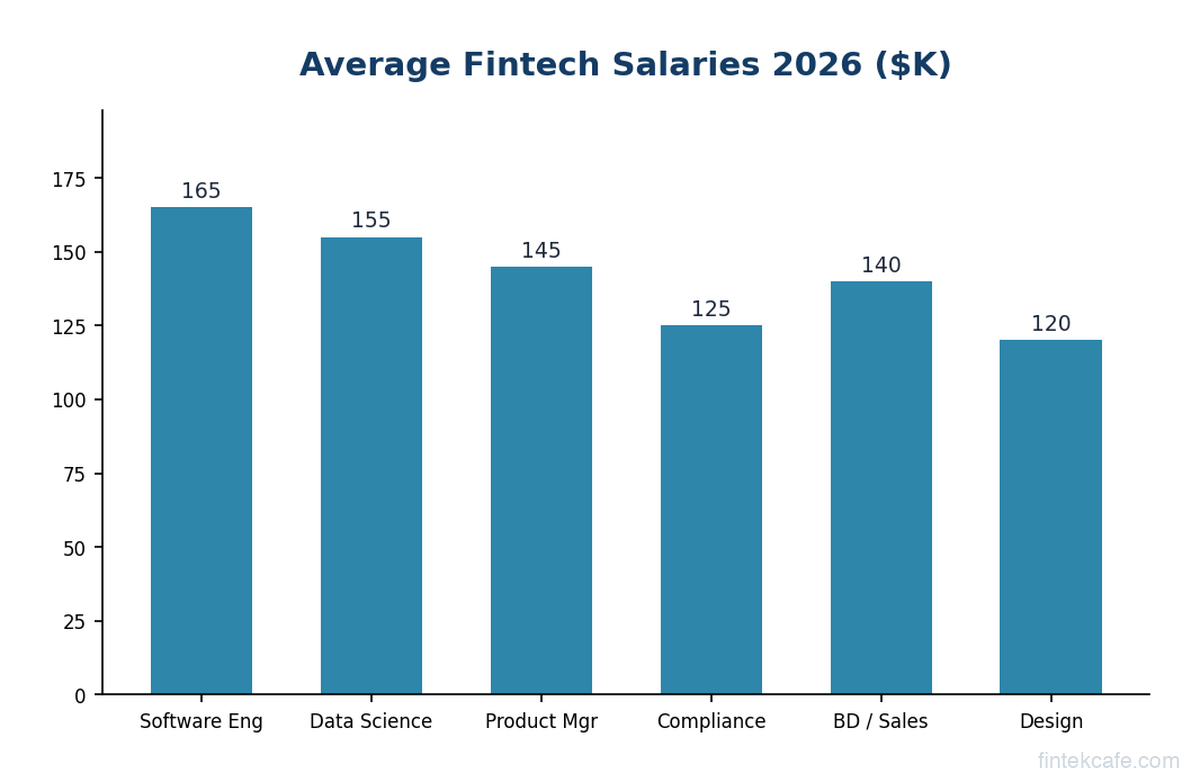
The Key Roles in Fintech (And What They Actually Pay)
Fintech companies need the same functional roles as any technology company, but with domain-specific twists. Here are the roles with the highest demand and strongest career trajectories.
Product Manager
What you do: Define what gets built and why. In fintech, this means translating regulatory requirements, payment flows, and compliance constraints into product specifications that engineers can execute. You're the person who decides what the loan application flow looks like, how the fraud detection alert works, or what the merchant onboarding experience should be.
Why fintech PM is different: Every product decision has regulatory implications. Adding a feature to a payment product might require a compliance review. Changing how a lending product collects data might trigger fair lending analysis. Fintech PMs need to be comfortable with legal and compliance teams being involved in every sprint.
Salary ranges (US, 2026):
- Associate PM: $110,000 - $140,000 base + equity
- PM: $140,000 - $180,000 base + equity
- Senior PM: $170,000 - $220,000 base + equity
- Director/Group PM: $200,000 - $280,000 base + equity
- VP of Product: $250,000 - $350,000+ total compensation
Top hiring companies: Stripe, Plaid, Ramp, Brex, Affirm, Marqeta, Toast, Adyen
Software Engineer
What you do: Build the systems that move money, detect fraud, process applications, and serve millions of concurrent users. Fintech engineering demands reliability and correctness at levels that most consumer apps never face. When your code has a bug, money moves to the wrong place.
Why fintech engineering is different: Latency matters enormously (a payment authorization must complete in under 2 seconds). Security requirements are non-negotiable (PCI DSS compliance for card data, SOC 2 for infrastructure). Idempotency is critical (a payment must never be processed twice). And auditability is mandatory (regulators need to trace every transaction).
Salary ranges (US, 2026):
- Junior Engineer (L3): $120,000 - $160,000 base + equity
- Mid-Level (L4): $160,000 - $210,000 base + equity
- Senior (L5): $200,000 - $280,000 base + equity
- Staff (L6): $260,000 - $380,000 total compensation
- Principal/Distinguished: $350,000 - $500,000+ total compensation
In-demand specialties: Distributed systems, real-time payment processing, machine learning for fraud/credit, infrastructure/platform engineering, security engineering.
Top hiring companies: Stripe, Square (Block), Plaid, Coinbase, Robinhood, Adyen, Wise, Revolut
Data Scientist / Machine Learning Engineer
What you do: Build the models that power credit decisions, fraud detection, risk assessment, and personalization. Fintech is one of the most data-rich industries, which means ML engineers have massive datasets and clear, measurable business impact.
Why fintech ML is different: Model explainability isn't optional. When an ML model denies someone a loan, regulators (and the law) require that you can explain why. The Equal Credit Opportunity Act (ECOA) mandates adverse action notices. The EU AI Act classifies credit scoring as high-risk AI. Fintech ML engineers must balance predictive accuracy with regulatory interpretability.
Salary ranges (US, 2026):
- ML Engineer: $150,000 - $200,000 base + equity
- Senior ML Engineer: $200,000 - $270,000 base + equity
- Staff ML Engineer: $260,000 - $370,000 total compensation
- Head of ML/AI: $300,000 - $450,000+ total compensation
Top hiring companies: Upstart, Stripe, Plaid, Affirm, SoFi, Zest AI, Featurespace, Sardine
Compliance and Risk
What you do: Ensure the company follows applicable laws and regulations. This includes anti-money laundering (AML), know-your-customer (KYC), sanctions screening, fair lending, consumer protection, data privacy, and banking regulations. You also build the policies and procedures that the rest of the company follows.
Why this role is booming: Regulators are paying far more attention to fintech than they did five years ago. The CFPB has expanded its fintech oversight. The OCC and Federal Reserve have issued new guidance on bank-fintech partnerships. The EU's Digital Operational Resilience Act (DORA) creates new compliance obligations. Every fintech company needs more compliance professionals.
Salary ranges (US, 2026):
- Compliance Analyst: $80,000 - $120,000
- Compliance Manager: $120,000 - $160,000
- Senior Compliance Manager: $150,000 - $200,000
- Director of Compliance: $180,000 - $250,000
- Chief Compliance Officer: $250,000 - $400,000+ (at larger fintechs)
Top hiring companies: Stripe, Coinbase, Robinhood, Chime, Plaid, Revolut, SoFi, Ramp
Business Development / Partnerships
What you do: Build relationships with banks, card networks, regulators, and enterprise customers. In fintech, BD is where the industry's complexity creates the most opportunity. Someone has to negotiate the banking partnerships, close the enterprise payment deals, and manage the card network relationships.
Why fintech BD is different: You need to understand both the technology and the regulation. A BD lead at a BaaS company is simultaneously selling a technology product and navigating banking regulation. A BD lead at a card issuing platform needs to understand interchange economics, network rules, and compliance requirements. This combination of business acumen and domain expertise is rare and valuable.
Salary ranges (US, 2026):
- BD Associate: $90,000 - $130,000 base + commission
- BD Manager: $130,000 - $180,000 base + commission
- Senior BD / Partnerships Lead: $170,000 - $240,000 base + commission
- VP of Partnerships: $220,000 - $350,000+ total compensation
Top hiring companies: Marqeta, Unit, Plaid, Stripe, Adyen, Fiserv, FIS
Design (Product/UX)
What you do: Design the interfaces for financial products. This sounds straightforward until you realize that financial products have unique constraints: regulatory disclosure requirements, error states that involve real money, accessibility standards for financial services, and user flows that must balance simplicity with legal compliance.
Salary ranges (US, 2026):
- Product Designer: $120,000 - $170,000 base + equity
- Senior Product Designer: $160,000 - $220,000 base + equity
- Design Lead/Manager: $190,000 - $260,000 total compensation
Top hiring companies: Stripe, Robinhood, Cash App (Block), Chime, Mercury, Ramp
How to Break In From Your Current Industry
From Banking or Traditional Finance
Your advantage: You understand financial products, regulatory frameworks, and how money actually moves. Most engineers and PMs at fintech companies don't have this knowledge. Your ability to explain why a compliance requirement exists, or how a wire transfer settles, or what a bank's risk appetite means in practice is genuinely valuable.
Your challenge: You may not be familiar with agile development, product-led growth, or the pace of technology companies. Banking culture (hierarchical, consensus-driven, risk-averse) is very different from fintech culture (flat, fast-moving, experimental).
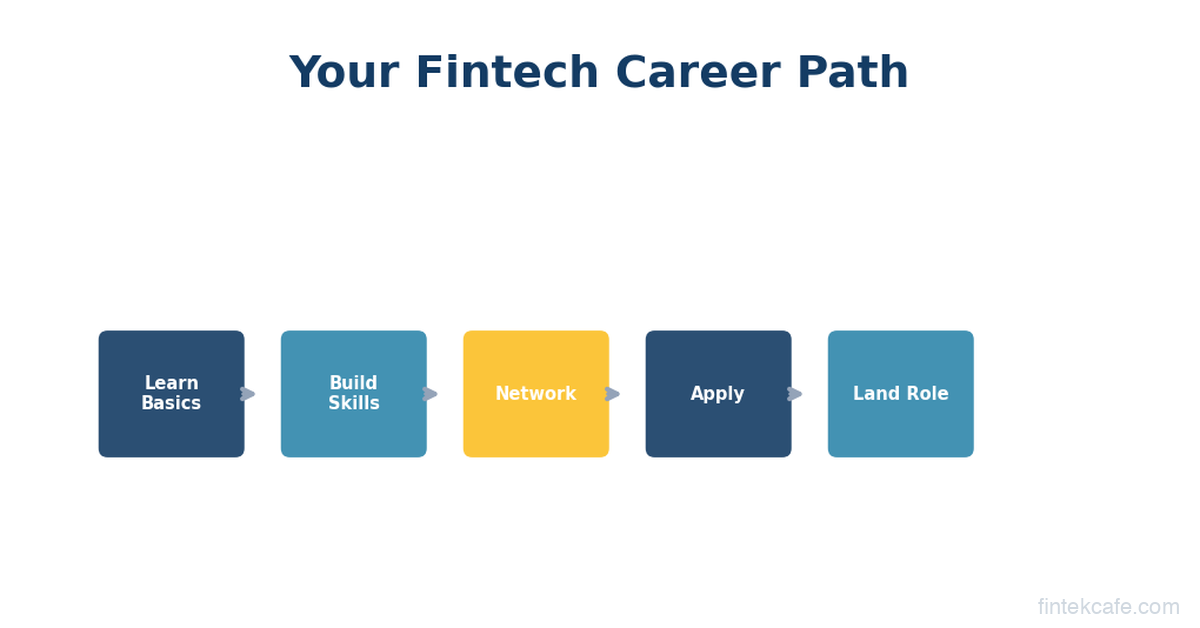
Best entry points: Product management (your domain expertise is directly applicable), compliance and risk (same skills, better culture), business development (your bank relationships are valuable), and strategy roles at growth-stage fintechs that need people who understand the traditional financial system.
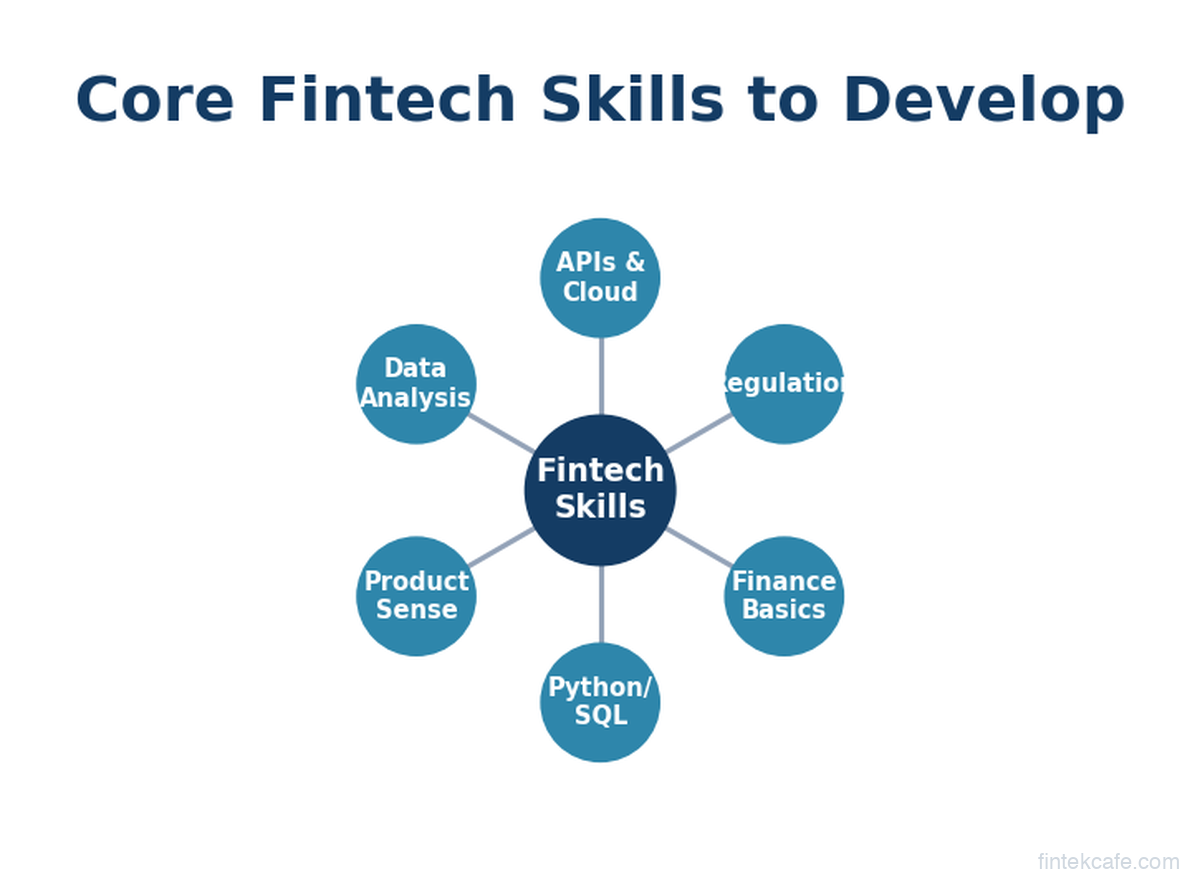
Tactical advice: Build a basic understanding of APIs and how software products are built. You don't need to code, but you need to speak the language. Take a product management course (Reforge is popular in fintech circles). Start following fintech publications (FinTekCafe, Fintech Takes by Alex Johnson, Net Interest by Marc Rubinstein, Fintech Blueprint by Lex Sokolin). Apply to companies that specifically value financial services experience: Plaid, Stripe, Marqeta, Ramp, and compliance-focused startups.
From Software Engineering (Non-Fintech)
Your advantage: You can build things. That's the most fundamental requirement. Fintech companies are, at their core, technology companies that happen to work with money.
Your challenge: You don't understand the domain. Payments, lending, compliance, and banking regulation are complex and nuanced. The learning curve is real.
Best entry points: Infrastructure and platform engineering (least domain-specific), payment processing (clear engineering problems), fraud detection (interesting ML challenges), and developer tools (companies like Plaid and Stripe that build APIs for other developers).
Tactical advice: Learn the basics of how payments work (authorization, clearing, settlement). Understand what PCI DSS requires. Read about common fintech architectures. Build a side project that touches a financial API (Plaid, Stripe, or a crypto exchange API). In interviews, demonstrate genuine curiosity about the financial domain, not just the technical stack.
From Management Consulting
Your advantage: You can structure problems, build frameworks, and communicate with executives. Consultants tend to learn new domains quickly, which matters in an industry as complex as fintech.
Your challenge: You may struggle with the specificity that fintech requires. Consulting rewards broad thinking across many industries. Fintech rewards deep knowledge of one domain. You'll also need to adjust to a less structured environment.
Best entry points: Strategy and operations roles at growth-stage fintechs, product management (if you have some technical aptitude), chief of staff roles, and corporate development.
Tactical advice: Pick a fintech sub-sector and go deep. Don't position yourself as a generalist consultant who "can learn anything." Position yourself as someone who deeply understands payments (or lending, or compliance tech) and happens to also have strong strategic and analytical skills. The specificity is what gets you hired.
From a Non-Traditional Background
Your advantage: Diversity of thought. Fintech companies are realizing that homogeneous teams (all engineers, all bankers) build products that miss entire customer segments. People with backgrounds in education, healthcare, government, and social services bring perspectives that improve products.
Your challenge: You'll need to invest more time in building domain knowledge and demonstrating relevant skills. The bar isn't lower, but the path is less obvious.
Best entry points: Customer success and operations (learn the product from the customer side), compliance and regulatory affairs (especially if you have a legal or policy background), marketing and content (if you can write clearly about complex financial topics), and community management.
Tactical advice: Get certified. The Certified Anti-Money Laundering Specialist (CAMS) credential is highly valued and doesn't require prior financial services experience. The Certified Financial Planner (CFP) or Chartered Financial Analyst (CFA) Level 1 signal seriousness about the domain. Take online courses on payments, lending, and banking regulation.
Top Fintech Companies Hiring in 2026
Tier 1: Established Leaders (Strong Brand, Competitive Comp)
Stripe (payments infrastructure, 8,000+ employees). Consistently rated one of the best places to work in tech. Engineering-driven culture. Strong in payments, billing, treasury, and identity. Comp is top-of-market. Remote-friendly but with hubs in San Francisco, Dublin, and Singapore.
Plaid (financial data, ~1,500 employees). Connects apps to bank accounts. Essential infrastructure for fintech. Strong engineering and product culture. Returned to growth hiring after 2023 restructuring.
Block/Square (payments + Cash App, 12,000+ employees). Two distinct product lines: Square (merchant payments) and Cash App (consumer finance). Large scale, public company. Bitcoin exposure through Cash App.
Tier 2: High-Growth (Rapid Scaling, Equity Upside)
Ramp (corporate cards/spend management). One of the fastest-growing fintechs by revenue. Strong engineering culture. Valued at $7.65 billion. Actively hiring across all functions.
Mercury (startup banking). Banking platform for startups and SMBs. Has become the default bank for YC companies. Strong product and design culture.
Sardine (fraud prevention). AI-powered fraud detection. Founded by former Coinbase and Revolut leaders. Growing rapidly as fraud costs increase industry-wide.
Tier 3: Established Public Companies
Robinhood (brokerage). Post-IPO, more mature culture. Strong engineering and product roles. Crypto trading is growing.
SoFi (consumer finance). Full-stack financial services: lending, investing, banking. Has a bank charter. More traditional finance culture than most fintechs.
Affirm (BNPL/lending). One of the largest BNPL providers. ML-heavy underwriting. Public company with startup energy.
International Options
Wise (international transfers, London). One of the most profitable fintechs globally. Strong engineering culture. Remote-friendly across Europe.
Revolut (neobank, London). Aggressive growth, now profitable. 40+ million users. Known for intense work culture but strong career growth.
Nubank (neobank, Sao Paulo). Largest digital bank in the world by customers (100+ million). Growing presence in Mexico and Colombia.
What Certifications Actually Matter
Not all certifications are equal. Here's an honest assessment.
Worth getting:
- CAMS (Certified Anti-Money Laundering Specialist): The gold standard for compliance roles. Respected across traditional finance and fintech. Costs about $2,000 and requires 40 hours of study.
- AWS Solutions Architect (for engineers): Demonstrates cloud infrastructure skills relevant to fintech platforms.
- Google or Meta Analytics Certification (for growth/marketing roles): Free or low-cost, shows data literacy.
Helpful but not essential:
- CFA Level 1: Signals financial literacy. Useful if you're coming from a non-finance background and targeting product or strategy roles. But it's expensive, time-consuming, and many fintech hiring managers don't value it as much as traditional finance does.
- PMP: Useful for program management roles but doesn't differentiate you in fintech specifically.
Probably not worth the time:
- Blockchain-specific certifications: The space moves too fast for certifications to stay current. Demonstrable experience (projects, contributions) matters more.
- Generic "fintech certificates" from online course platforms: Hiring managers don't recognize most of these. Your time is better spent reading, building projects, and networking.
The Interview Process: What to Expect
Fintech interviews typically follow the standard tech interview format with domain-specific additions.
For engineering roles: Expect system design questions with financial context. "Design a payment processing system that handles idempotency." "Design a real-time fraud detection pipeline." You'll also get standard coding challenges, but the follow-up questions often involve financial constraints (What happens if this transaction is processed twice? How do you handle partial failures in a multi-step payment flow?).
For product roles: Case studies involving regulatory trade-offs. "A regulator wants you to add additional friction to your onboarding flow. How do you balance compliance with conversion?" "You're launching a lending product in a new state. Walk me through your go-to-market strategy, including compliance considerations."
For compliance roles: Expect scenario-based questions. "A customer is flagged for suspicious activity. Walk me through the SAR filing process." "How would you design a KYC program for a crypto exchange that serves both US and EU customers?" Knowledge of specific regulations (BSA, AML, ECOA, UDAP/UDAAP) is tested directly.
For all roles: Demonstrate genuine interest in the financial domain. The fastest way to fail a fintech interview is to treat it like a generic tech interview. Mention specific fintech trends, regulatory developments, or industry challenges. Show that you've read about the company's specific products and competitive landscape.
Practical Steps: Your 90-Day Plan
Days 1-30: Build Foundation
- Subscribe to fintech newsletters (Fintech Takes, Net Interest, FinTekCafe, a]16z Fintech, CB Insights)
- Read "The Anatomy of the Swipe" to understand payments
- Set up a Stripe developer account and process a test payment
- Connect to a Plaid sandbox account to understand financial data APIs
- Identify 10 target companies and follow their engineering blogs
Days 31-60: Build Credibility
- Start writing about fintech on LinkedIn (even short posts showing you understand the space)
- Attend 2-3 fintech meetups or virtual events (Money20/20 recordings, Fintech Meetup, local events)
- Complete a relevant certification (CAMS if targeting compliance, AWS if targeting engineering)
- Build a small project using a financial API
- Connect with 10-15 people at target companies on LinkedIn (genuine engagement, not cold pitching)
Days 61-90: Start Applying
- Tailor your resume to highlight transferable skills with fintech framing
- Apply to 15-20 roles across your target companies
- Practice domain-specific interview questions
- Leverage any connections you've built for referrals (referrals significantly increase interview rates at most fintechs)
- Prepare a "why fintech" story that's specific and genuine, not generic
Key Takeaways
-
Fintech is hiring across all functions. Product, engineering, compliance, data science, BD, and design all have strong demand. The industry needs more people with financial domain knowledge, not fewer.
-
Salary ranges are competitive with broader tech. Senior engineers at top fintechs earn $250,000-$380,000+ total compensation. Compliance roles pay $150,000-$250,000+ at the director level. Equity upside at growth-stage companies adds significant value.
-
Your existing industry is your superpower. Bankers bring regulatory knowledge. Engineers bring building skills. Consultants bring strategic frameworks. The key is translating your experience into fintech context.
-
Domain knowledge is the differentiator. The people who get hired and advance fastest are those who understand both the technology and the financial services domain. Invest time in learning how payments, lending, and compliance actually work.
-
The market favors specialists. "I want to work in fintech" is too broad. "I want to build fraud detection systems at a payment company" or "I want to lead compliance for a neobank expanding into lending" gives you a story that resonates with hiring managers.
Preparing for fintech interviews? Our courses cover the technical and financial knowledge that hiring managers test for, from payment processing and banking infrastructure to AI and compliance frameworks.
Frequently Asked Questions
Do I need a computer science degree to work in fintech?
No. Engineering roles typically require strong programming skills, but many successful fintech engineers are self-taught or came through bootcamps. For non-engineering roles (product, compliance, BD, design), a CS degree is not expected at all. What matters more than any specific degree is demonstrable knowledge of both technology concepts and financial services. A finance major who can speak intelligently about APIs is often more valuable than a CS major who doesn't understand payments.
What's the best fintech sub-sector for career growth in 2026?
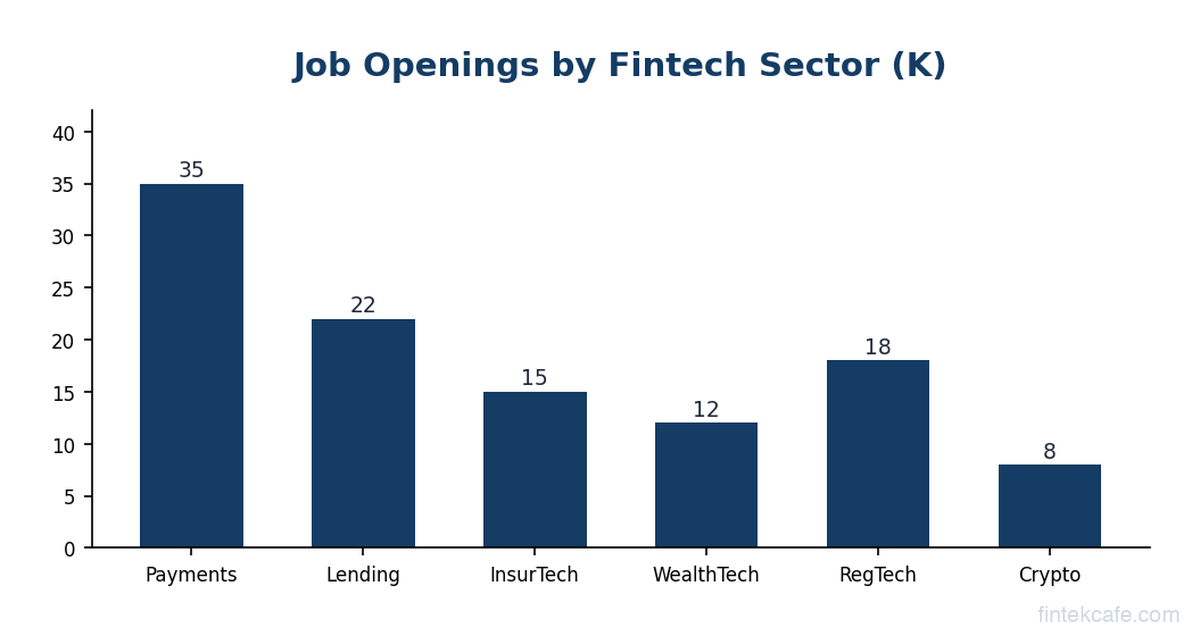
AI and machine learning applied to financial services is the highest-growth area. Fraud detection, credit underwriting, and regulatory technology (RegTech) all have massive demand for skilled people. Embedded finance infrastructure is also growing fast. Crypto and blockchain, while still hiring, have stabilized after the 2022-2023 downturn and are more selective. If you want stability and growth, payments infrastructure and compliance technology are the safest bets.
How long does it take to break into fintech from another industry?
Most career changers land their first fintech role within 3-6 months of focused effort. The timeline depends on how transferable your skills are. A bank compliance officer can transition to fintech compliance in weeks. A marketing professional with no financial background might need 3-4 months to build enough domain knowledge to be competitive. Engineers with strong system design skills can transition quickly if they invest time in understanding the financial domain.
Is fintech stable, or is it still going through layoffs?
The broad layoffs of 2022-2023 have largely ended. Companies that over-hired during the 2020-2021 boom have right-sized. The survivors are growing again, and many are profitable or approaching profitability. Stripe, Ramp, Mercury, Wise, and Revolut are all actively hiring. That said, smaller startups (especially in crypto, neobanking, and BNPL) remain riskier. Targeting companies with strong unit economics and clear paths to profitability reduces your risk.
Related Articles
How Central Bank Digital Currencies Will Change Finance
What are CBDCs and how will they change banking? A complete guide to central bank digital currencies, from China's digital yuan to the EU's digital euro.
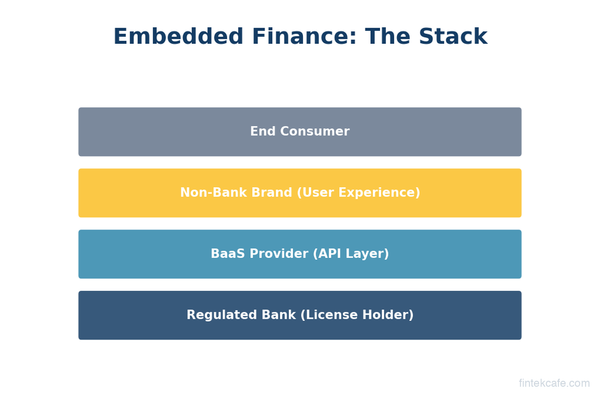
What Is Embedded Finance? How Non-Banks Are Becoming Banks
What is embedded finance and why are non-banks offering financial services? A complete guide to embedded payments, lending, insurance, and banking as a service.
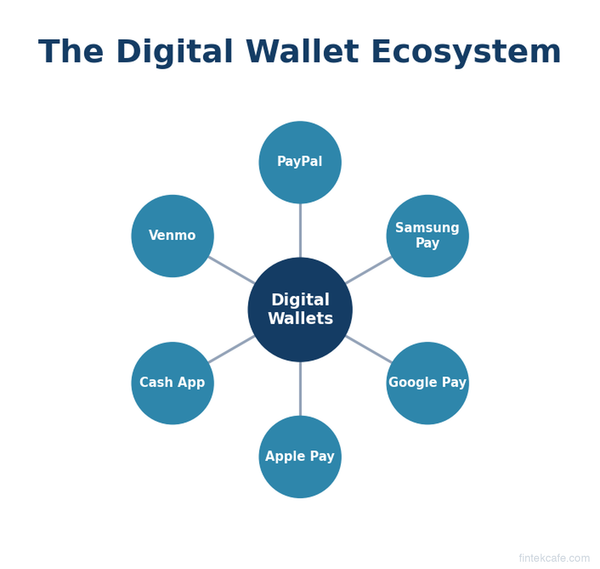
The Complete Guide to Digital Wallets: Apple Pay, Google Pay, and Beyond
How digital wallets work, including Apple Pay, Google Pay, and Samsung Pay. Tokenization, NFC, security, merchant adoption, and what's next for mobile payments.